The Boy in the Box: Sixty-Five Years Without a Name
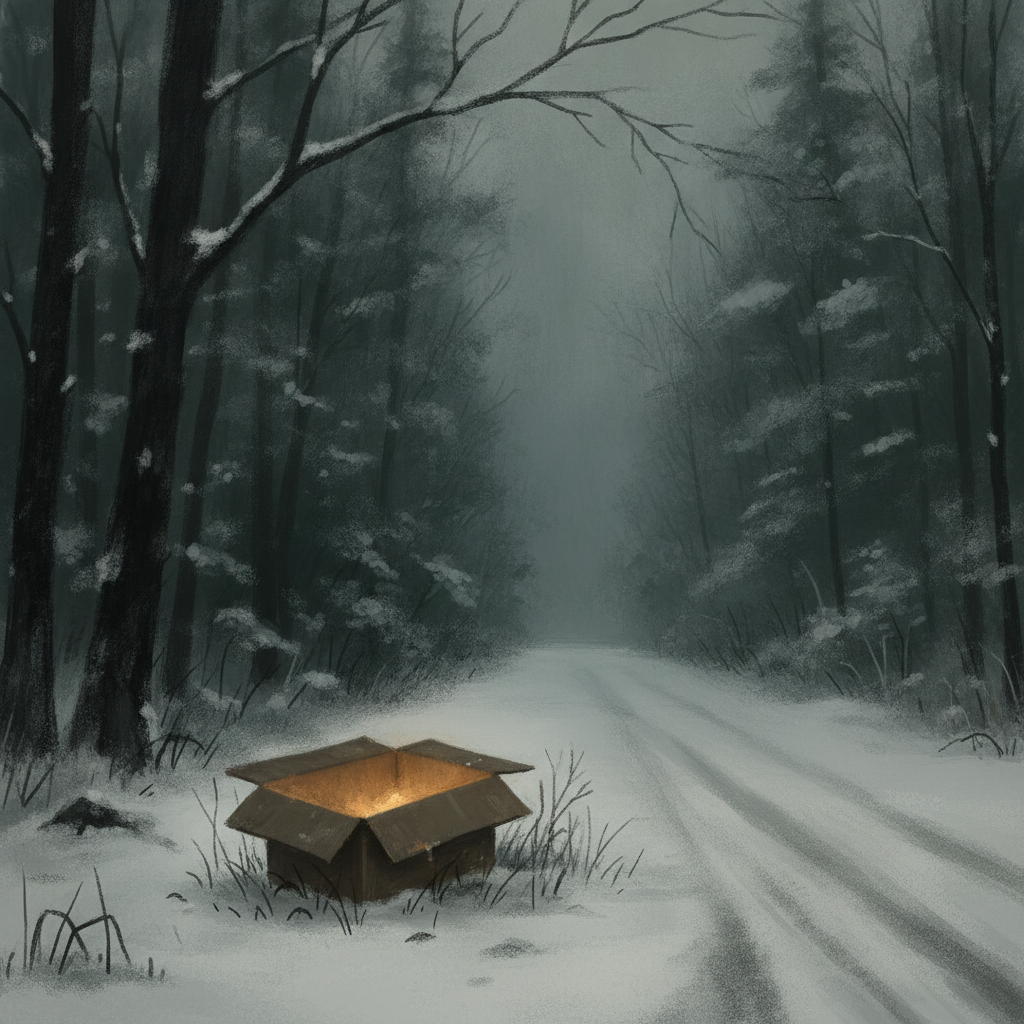
On the afternoon of February 25, 1957, a young man named John Stachowiak pushed his way through the underbrush off Susquehanna Road, in the Fox Chase section of northeast Philadelphia, and stopped at a battered cardboard box lying among the briars. Inside, wrapped loosely in a cheap plaid blanket, was the body of a small boy. Stachowiak, a student, was not even the first to find him. A man checking his muskrat traps had noticed the box days earlier and walked away without a word; Stachowiak himself, who had stopped along the roadside near a Catholic home for wayward girls, waited a full day before he could bring himself to go to the police, reportedly afraid of what officers might ask him. Two people had now looked at a dead child and chosen silence before the investigation even began. The box itself was heartbreakingly ordinary. It had once held a bassinet sold by the J.C. Penney store in nearby Upper Darby, the kind of thing a young family buys for a nursery. What was left inside it would haunt the city for sixty-five years.
The child was between four and six years old, blue-eyed, unclothed, severely malnourished, and marked from head to foot with bruises. The medical examiner concluded he had died of blunt trauma to the head. And yet someone had cared for his body around the time of death. His hair had been cut recently and crudely, so recently that loose clumps of it still clung to his skin. His fingernails and toenails were clean and neatly clipped. His right hand and the soles of his feet were wrinkled and waterlogged, as though he had been bathed or submerged not long before he was found. Small surgical scars marked his ankle, his groin, and his chin. At some point in his short life, someone had taken this boy to doctors. He had been, in the most literal sense, looked after.
Philadelphia responded with one of the largest identification efforts in its history. The child's fingerprints were taken and circulated. Because the flyers needed a face people might recognise, investigators dressed the body and photographed it propped upright, so the image would look more like a living child than a corpse. Detectives traced the box back to the retailer, examined the blanket, and catalogued the odd scattering of objects found nearby: a man's blue corduroy cap, a child's scarf, and a man's white handkerchief embroidered with the letter "G". Roughly 400,000 flyers bearing the boy's photograph went out across the region, some of them mailed alongside the city's gas and electric bills so that they would reach every household; the Philadelphia Inquirer called it the greatest circularization the city had ever mounted. The response reached well beyond the city, the boy's face running in newspapers and posted in store windows across the region. Detectives chased more than eleven thousand tips over the years. They checked his feet against every set of infant footprints Philadelphia hospitals had on file, hoping a birth record would surface; none matched. The objects found beside him, the cap, the scarf and the monogrammed handkerchief, sat in an evidence file for decades without ever yielding a match. No parent, no school, no hospital, no neighbour came forward. Remington Bristow, an investigator with the medical examiner's office, worked the case on his own time and at his own expense until his death in 1993, and never learned the answer. The case became known as the Boy in the Box, and for a generation it stood as the city's most famous unsolved death. The file passed from one generation of detectives to the next like an inheritance no one had asked for, and the child was reburied under a headstone that read America's Unknown Child.
The name, when it finally came, arrived by a road no 1957 detective could have imagined. The boy had first been exhumed in 1998, with the support of the Vidocq Society, so that DNA could be extracted from a tooth, then reburied at Ivy Hill Cemetery under a stone that read America's Unknown Child. It was not enough. He was exhumed a second time in 2019, and the remains this time were so badly degraded that the science nearly failed. Early attempts to read the sample came back empty, and more than one laboratory concluded the bone was simply too far gone before the work finally broke through. It took the genealogist Colleen Fitzpatrick and her team at Identifinders International, working with specialists in several countries, roughly two and a half years simply to coax a usable DNA profile out of the ruined bone, combining cutting-edge extraction of single nucleotide polymorphisms with investigative genetic genealogy. A distant cousin's profile in a public database opened the family tree; a first cousin was persuaded to upload her own DNA to GEDmatch; and a court order finally unsealed a birth certificate. On December 8, 2022, Philadelphia police stood before the cameras and gave the boy his name. He was Joseph Augustus Zarelli, born January 13, 1953, a child of West Philadelphia.
The identity answered one question and sharpened every other. His parents, both long dead, were named at last: Augustus John Zarelli and Mary Elizabeth Abel, a couple who were never married and who each went on to marry other people. They had parted around the time the boy's body was found in the woods. Neither of them ever reported him missing. He had siblings, some still living, who asked only for privacy. Police said carefully that they "have our suspicions" about who was responsible, but that they would name no one while the homicide file remained open, and they appealed, sixty-five years on, for anyone who had known the Zarelli household to come forward at last. No arrest followed the naming, and the case remained, officially, an open homicide. Sixty-five years after a city of two million people held up his photograph four hundred thousand times, the boy in the box finally had a name, and his killing remained unsolved.
Conclusions and Open Questions
Even with a name, the case refuses to fully make sense, and the questions it raises are as sharp as ever. How does a small child starve slowly, over months, in a great American city, and no one misses him? The surgical scars show that doctors had treated him more than once; the trimmed nails and the fresh bath show that someone was still tending his body even as, or after, they broke it. Were the care and the cruelty coming from the same hands? Why cut a dead or dying child's hair at all, and why strip him naked yet leave a monogrammed handkerchief and a corduroy cap in the brush beside him? And there is a wider silence to answer for: a boy with surgical scars had passed through the hands of doctors and nurses, and a boy that malnourished did not waste away overnight, yet no admitting clerk, family physician or pharmacist ever recognised the photograph mailed to their own home.
Over the decades, investigators offered competing answers, none of them proven. Remington Bristow, guided by his own account by a New Jersey psychic, came to believe the boy was the son of the stepdaughter of a man who ran a foster home about a mile and a half away, quietly disposed of to hide an unwed birth. The theory's strength was its geography and two chilling coincidences at the home, a matching bassinet and similar blankets. Its weakness was close to fatal: investigators established that every foster child there was accounted for, and a later re-examination cleared the family entirely.
The forensic sculptor Frank Bender studied the child's face, thought he detected shaped, plucked eyebrows, and argued the boy might have been raised as a girl, the crude haircut a hurried unmasking. It is a haunting idea, but it rests almost entirely on Bender's reading of a single photograph. Then, in 2002, a woman known only as "M" confessed that her abusive mother had bought a boy around 1954, kept him in the basement, and beaten him to death after he vomited during a bath, then cut his hair and clipped his nails. The bath detail matched the waterlogged skin almost too well, and investigators found parts of her account credible; but she had a documented history of mental illness, neighbours insisted no boy had ever lived there, and her story could never be corroborated nor entirely dismissed.
The identification quietly raises one more possibility it does not answer. Some argue that a child so cared for by doctors, then starved and beaten in secret, then washed and groomed and laid in a box, sat at the centre of a household performing two contradictory rituals, tenderness and destruction, over a long time, not in a single frantic moment. One theory holds that the people who killed Joseph Zarelli may also have been the people who raised him. It is speculation, and the file does not confirm it. What is certain is only this: a child does not vanish in plain sight because the world is careless, but because the adults around him each, for a private reason, agree to look away. He has his name now. He is still waiting for the rest.