Globsters: The Beach Monsters That Turned Out to Be Whales
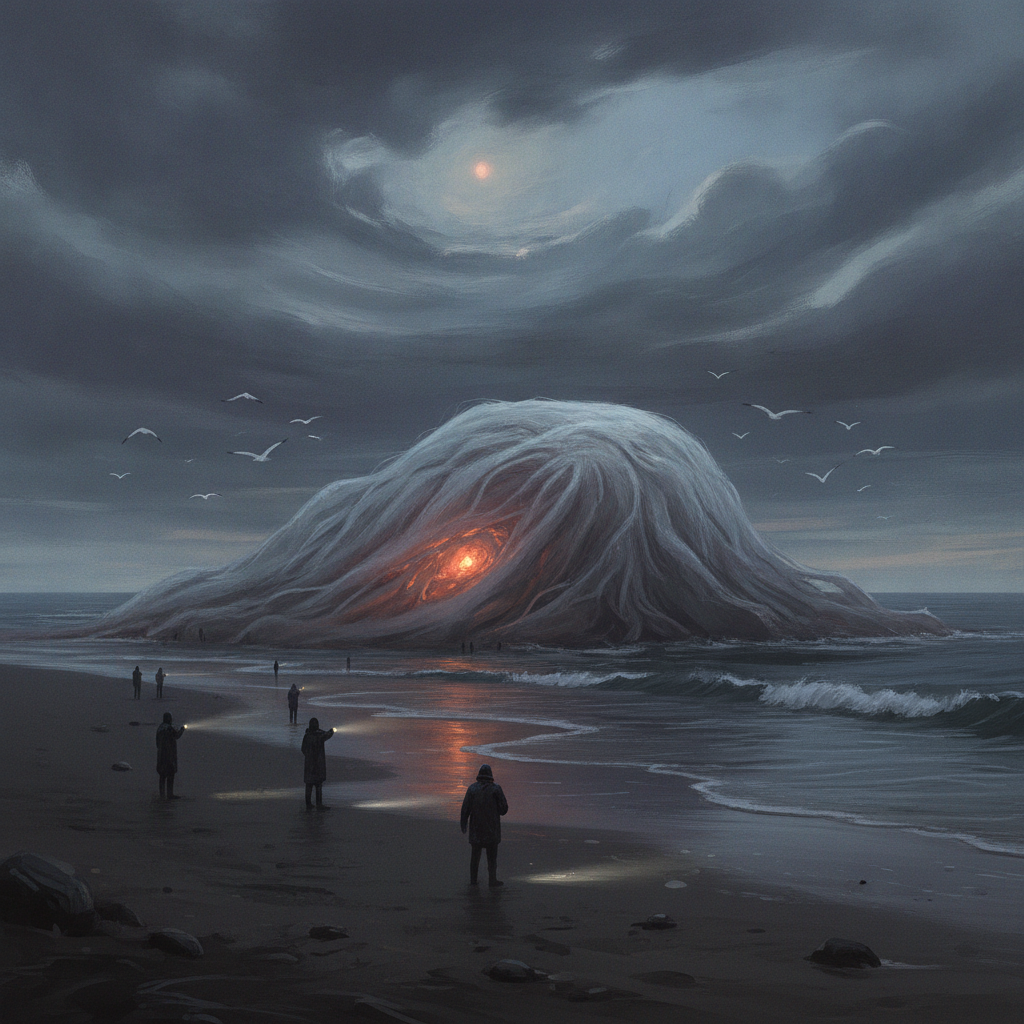
On the morning of November 30, 1896, two boys named Herbert Coles and Dunham Coretter were riding their bicycles along the sand of Anastasia Island, just south of St. Augustine on the Atlantic coast of Florida, when the beach in front of them stopped making sense. Half-buried in the dune line lay a pale mountain of flesh, vast and rounded and utterly still, the color of old ivory. It had no head they could find, no eyes, no fins, nothing that told them which end was which. The boys pedaled back into town, and by the next day their story had reached the one man in St. Augustine with the training to test it.
That man was Dr. DeWitt Webb, founder of the St. Augustine Historical Society and Institute of Science, and, as it happens, the only person of any academic training who would ever examine the carcass where it lay. When he reached it on December 1, he found that the exposed portion alone measured roughly eighteen feet long and seven feet wide. He estimated its weight at "nearly five tons, if not more." The flesh was tough, pale and rubbery. Where the sand had drifted away there were blunt stumps, projections that Webb read as the severed roots of enormous arms. He photographed the mass, measured it, and concluded that what had washed onto his beach was the body of a colossal octopus, far larger than any known to science.
You have used your free reads for this month.
Unlock all 208 documented mysteries - in 8 languages, ad-free.
Get full access