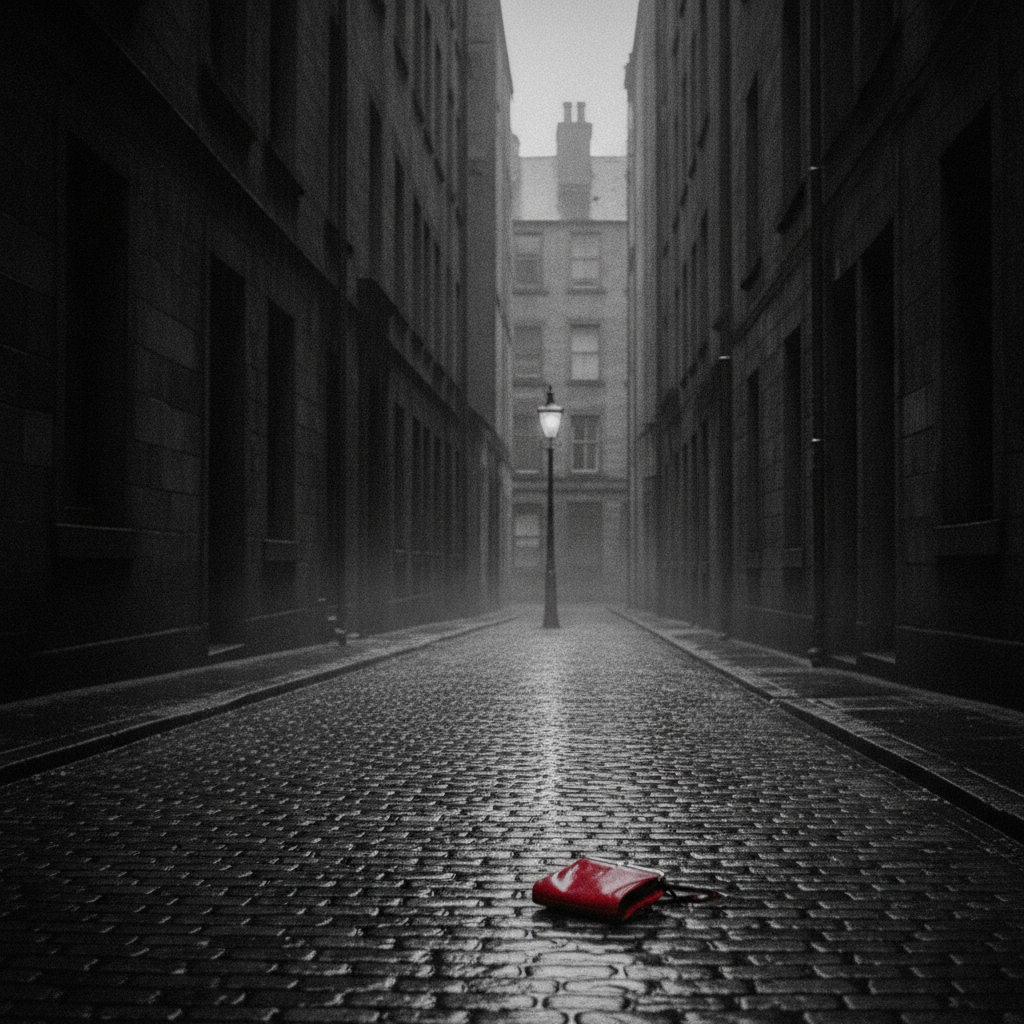
Bible John: The Glasgow Dance-Hall Killer Nobody Ever Named
In the late 1960s, a night out dancing in Glasgow very often meant one place: the Barrowland Ballroom.
Glasgow is the largest city in Scotland, in the United Kingdom, about 75 km by road west of the capital, Edinburgh. The Barrowland was a big dance hall in the east of the city. On Thursday and Saturday nights it held a special evening for dancers over 25. Married people, divorced people and people separated from their partners came to dance, to drink and to meet someone.
Between February 1968 and October 1969, 3 women went to the Barrowland on one of those nights. None of them came home. Each was found dead soon after, beaten and strangled, not far from where she lived.
The police came to believe that one man killed all 3. A witness who spent hours with him said he quoted the Bible. The newspapers named him "Bible John".
**More than 55 years later, nobody knows who he was. The case was never solved, and it is still open.**
The first night: February 1968
Patricia Docker was 25. She worked as an auxiliary nurse. She was married but separated from her husband, and she had a little boy, born in 1964. In April 1967 she came back to Glasgow from England with her son, and the 2 of them lived with her parents.
On Thursday 22 February 1968 she went out dancing. Her parents believed she was going to a different dance hall, in the city centre. When she did not come home that night, they assumed she had stayed with a friend.
The next morning, 23 February, her body was found in the doorway of a lock-up garage, in a back lane on the south side of the city, a few streets from her home.
She was naked. She had been strangled, probably with a belt. Her face and head had been badly beaten.
Her shoes were lying at the scene. Almost everything else was gone: her clothes, her handbag, her watch, her jewellery. Only her wedding ring was still on her finger.
The doctor who examined her body found no clear sign of sexual assault. He noted that she was menstruating. At the time it seemed a minor detail. Later it would matter a great deal.
The police believed she had died around midnight, possibly somewhere else, and that her body had been left in the lane afterwards.
A slow start
The first days of the investigation went in the wrong direction. Detectives asked questions at the hall her parents had named. Only 3 days after her death did they learn that she had probably spent the evening at the Barrowland, at the over-25s night.
By then the trail was cold. Nobody at the Barrowland could say for certain whom she had danced with, or whom she had left with.
The detectives tried another route. If she had gone home with a man, perhaps they had taken a taxi. By March 1968 the police had questioned about 700 of the 1,300 taxi drivers in the city. None of them remembered her.
Some of her things turned up in the water. Her handbag, her underwear and her lipstick were recovered from the River Cart, a small river that runs through the south of the city. The case of her watch and a bracelet were found in water near the scene. Her clothes were never found.
Then the case went quiet. For 18 months, nothing happened.
The second night: August 1969
Jemima McDonald was 31 or 32 years old - the sources give both ages. She was a mother of 3 children. When she went out, her sister Margaret looked after the children, as the family always did.
On Saturday 16 August 1969 she went dancing at the Barrowland. People saw her dancing there. At about 00:30 on 17 August she left the hall with a man. At about 00:40 a neighbour saw her at the entrance of an empty, half-ruined tenement building not far from her home.
That was the last time anyone who knew her saw her alive.
She did not come back for her children. On the Monday, a rumour went around the neighbourhood that young children had been seen coming out of the derelict building, talking about a body inside. Her sister went in that morning to look.
She found Jemima lying face down. Her shoes and her stockings were beside her. She had been beaten in the face and strangled, possibly with her own stockings. She had been dead for about 30 hours.
Her handbag was never found. And, like Patricia Docker 18 months earlier, she had been menstruating.
The police connect the 2 cases
Now the detectives saw a pattern. 2 women, both mothers, both at the same dance hall on an over-25s night. Both beaten and strangled close to home. Both handbags taken. Both menstruating at the time of death.
This time there were witnesses. People at the hall had seen Jemima McDonald with a man. They described him as slim, 25 to 35 years old, 183 to 188 cm tall, with short hair. Some said the hair was fair, some said ginger, some said dark brown with fair streaks.
An artist drew his face from their descriptions. It was the first such drawing that the Crown Office, the prosecution service of Scotland, allowed the police to release to the press. Newspapers printed it.
Undercover detectives began going to the Barrowland and to other dance halls, dancing among the crowd and watching the men. At times there were 16 of them.
No one came forward. No one was found.
The third night: October 1969
On Thursday 30 October 1969, Helen Puttock, 29, went to the Barrowland with her older sister, Jean Langford.
At the hall the 2 sisters met 2 men. Both men said their name was John.
Jean's partner said he came from a district on the south side of the city and that he worked on roofs. At the end of the night he walked off alone to catch a bus. He was never identified either, and many years later the police appealed for him to come forward.
Helen's partner was different. He was tall, slim, well dressed, polite and well spoken. He never said where he lived.
At one point Jean tried to buy cigarettes from a machine in the hall. The machine took her money and gave her nothing. The man's manner changed at once. He demanded to see the manager, argued angrily, asked who the local member of parliament was, and called the hall a "den of iniquity".
He showed Helen some kind of identity card. When Jean asked to see it too, he refused. He tapped the side of his nose and told her, in effect, that nosy people should mind their own business.
Over the evening he talked about himself. He said he did not drink at the New Year, because, as he put it, he prayed. He quoted from the Bible, including a passage about adulterous women being stoned. Asked whether he supported Rangers or Celtic, the 2 big football clubs of the city, he said he was agnostic. He said he had once worked in a laboratory, that his family had a caravan by the sea at Irvine, a town on the coast south-west of Glasgow, and that a cousin of his had once scored a hole in one at golf.
He also gave a surname. Later, Jean could not remember it with certainty, and she offered the police 3 possible versions.
The taxi
After midnight the 3 of them took a taxi from the city centre towards the west of the city, a ride of about 20 minutes. Jean was dropped off first, near her own home. She said goodbye to her sister in the taxi. She never saw her again.
The taxi went on with Helen and the man towards Helen's flat. The driver later told the police that the man had no money for the fare, so Helen paid from her own purse. The driver took some wrong turns, and Helen asked him to stop in her street.
As they got out, the driver saw the man grab her. He thought they were a couple having a small quarrel. He drove away.
The man on the night bus
At about 02:00 on 31 October, the driver, the conductor and the passengers of a night bus saw a man walking fast along a main road in the west of the city. He got on the bus.
He matched Jean's description. He looked untidy. There was mud on his jacket and a red mark or scratch under one eye. During the ride he kept pushing a shirt cuff back up into the sleeve of his jacket, as if it had lost its fastening.
He paid his fare from a red purse. Helen's red purse was later found to be missing.
He got off at a junction closer to the city centre. Nobody saw where he went next. Detectives first thought he had crossed the river on a small ferry, but the ferrymen did not remember him.
Later that morning a man walking his dog found Helen's body in the back garden of her building, beside a drainpipe.
She had been partly undressed, beaten in the face, raped, and strangled with one of her own stockings. There was a deep bite mark on her wrist. Her handbag was gone, and its contents were scattered nearby. Grass and weed stains on her shoes showed that she had fought.
She was menstruating. Her sanitary towel had been placed under her armpit.
Beside her body lay a man's cufflink.
**This is everything the record holds about the killer himself: a description, a bite mark, a cufflink, and traces of his semen on her stockings. From the moment he stepped off that bus, he disappears from the documents completely.**
The biggest manhunt in Scotland
Now the police had what they had lacked twice before: a witness who had spent hours with the killer, talking to him and sitting beside him in a taxi.
Jean described him in detail. 25 to 30 years old. 178 to 183 cm tall. Slim. Blue-grey eyes. Reddish or sandy hair, cut short at the back - unusually short for 1969. A good brown suit. A military-style leather watch strap. Short leather boots. And 2 details that seemed priceless: his 2 upper front teeth overlapped, and a tooth at the back on the right was missing.
Within hours of the body being found, a new drawing was made from her description. When Jean was shown the drawing made after the second murder, she said it looked "just like him".
A senior official of the Glasgow School of Art painted a portrait of the man from her memories. In June 1970 the police also used a photofit, a face assembled from photographs of separate features. It was the first time that method was used for a murder suspect in Scotland.
The detective superintendent who led the hunt appeared again and again on television and in the newspapers. On 18 September 1970 the BBC broadcast a documentary appeal.
More than 100 detectives worked on the case full time. They took about 50,000 statements. In the first year alone they questioned more than 5,000 possible suspects.
Every lead, one by one
The teeth looked like the best lead. Every dentist in and around Glasgow was asked to search the records for a male patient with overlapping front teeth and a missing upper tooth on the right. It produced nothing.
The haircut was unusual for the time, so more than 450 hairdressers were shown the drawing. That produced nothing either.
Men who looked like the drawing were reported by neighbours, colleagues and strangers. Many were questioned. One man arrested outside the Barrowland in 1969 gave the police a false name. Decades later, when DNA testing became possible, his own sample cleared him.
The undercover detectives in the dance halls found no suspect. The owners of the Barrowland complained that the police presence was driving their customers away.
More than 300 line-ups
The heaviest weight fell on Jean Langford.
Every time the police found a man who might be the killer, they asked her to look at him in an identity parade: a row of men standing side by side while the witness searches for the face she remembers.
She attended more than 300 identity parades. She looked at hundreds of tall, slim, fair-haired men. Every time, she said the same thing: that is not him.
Every one of those men was cleared.
She died in September 2010, aged 74. She was the only person known to have held a long conversation with the man the newspapers called Bible John, and she never saw his face again.
Where the case stands
The case was never solved. Officially, it is still open.
Several things worked against the detectives from the start. In 1968 and 1969 there was no DNA testing. The first murder was linked to the Barrowland 3 days late. The killer took his victims' handbags, which might have held clues. The clothes of the first victim were never found.
Some experts also doubt the basic assumption. Critics say the police decided too quickly that one man killed all 3 women. They point to the 18-month gap between the first and second murders, which they consider long for a serial killer. A British criminologist disagreed and said such a gap is not unusual.
The sources also disagree on one point. The doctor found no clear sign of sexual assault on the first victim, while some later accounts state that all 3 women were raped.
One piece of evidence survived: the semen on Helen Puttock's stockings. In time it became possible to extract DNA from it. That DNA has been compared with every serious suspect since. So far it has matched none of them.
In 2004 the police announced a partial match of about 80% between the DNA from the third crime scene and DNA taken from a man in a minor crime 2 years earlier. They believed that man might be a relative of the killer, and they began testing several men. No solution was ever announced.
In 2023 a podcast claimed that corrupt police officers might have protected the killer at the time. Police Scotland said it was assessing the claims. No result has been published.
The suspects and the theories
Over the years many people have tried to put a name to Bible John. Only 2 suspects were ever examined publicly by the authorities. Both are dead, and in both cases the evidence pointed away from them.
**Theory 1: a former soldier who died in 1980.** John Irvine McInnes had served in the Scots Guards, a regiment of the British Army. He took his own life in 1980, aged 41. A business card from a furniture store where he had worked was found at the scene of the third murder. In 1996 the police exhumed his body from a cemetery south-east of Glasgow to compare his DNA with the semen. The problem: Jean Langford had seen him in identity parades and insisted he was not the man. The DNA result in 1996 was inconclusive, and in July 1996 the Crown officially cleared him. In 2005 improved DNA testing ruled him out completely.
**Theory 2: a convicted serial killer.** Peter Tobin was convicted between 2007 and 2009 of murdering 3 women in Scotland and England. He died in prison on 8 October 2022, aged 76. In the late 1960s he lived in Glasgow. A British criminologist argued in a 2010 book that he was Bible John. The problem: he was 168 cm tall, far shorter than every witness described, and he had a distinctive scar under one eye that nobody mentioned. A police operation opened in 2006 found that he was in Brighton, in the south of England, at the time of the last 2 murders. His DNA did not match the sample. Jean Langford said he was not the man. The co-author of the 2010 book later withdrew that view.
**Theory 3: there was never just one killer.** Some researchers think the 3 murders were not the work of a single man, and that the name "Bible John" joined together cases that may have had different killers. The evidence: the long gap between the first 2 murders, the differences between the descriptions, and the doubts about whether the first victim was raped. The problem: the shared details are hard to explain as coincidence - the same hall, the same kind of night, the handbags taken, the strangling with clothing, and above all the fact that all 3 women were menstruating.
Other names have been proposed in books and podcasts. None of those men has been charged, and none has been confirmed by DNA.
What remains open is simple. The man had a face that hundreds of police officers studied, a voice that one witness listened to for hours, and DNA that has been kept in a laboratory for more than 50 years. Still, nobody knows his name.