The Chicago Tylenol murders: 7 dead, poison on the shelf, and no one ever charged
Early on the morning of Wednesday 29 September 1982, a 12-year-old girl named Mary Kellerman woke up feeling ill.
She lived with her parents in Elk Grove Village, a quiet suburb on the northwest edge of Chicago, the third-largest city in the United States. She had a cold and a sore throat. She went into her parents' bedroom. They gave her 1 capsule of Extra-Strength Tylenol, the most common headache pill in America.
A short time later she collapsed. Paramedics took her to hospital. She died there the same day.
Nobody yet knew why. A healthy child had taken one pill and was dead.
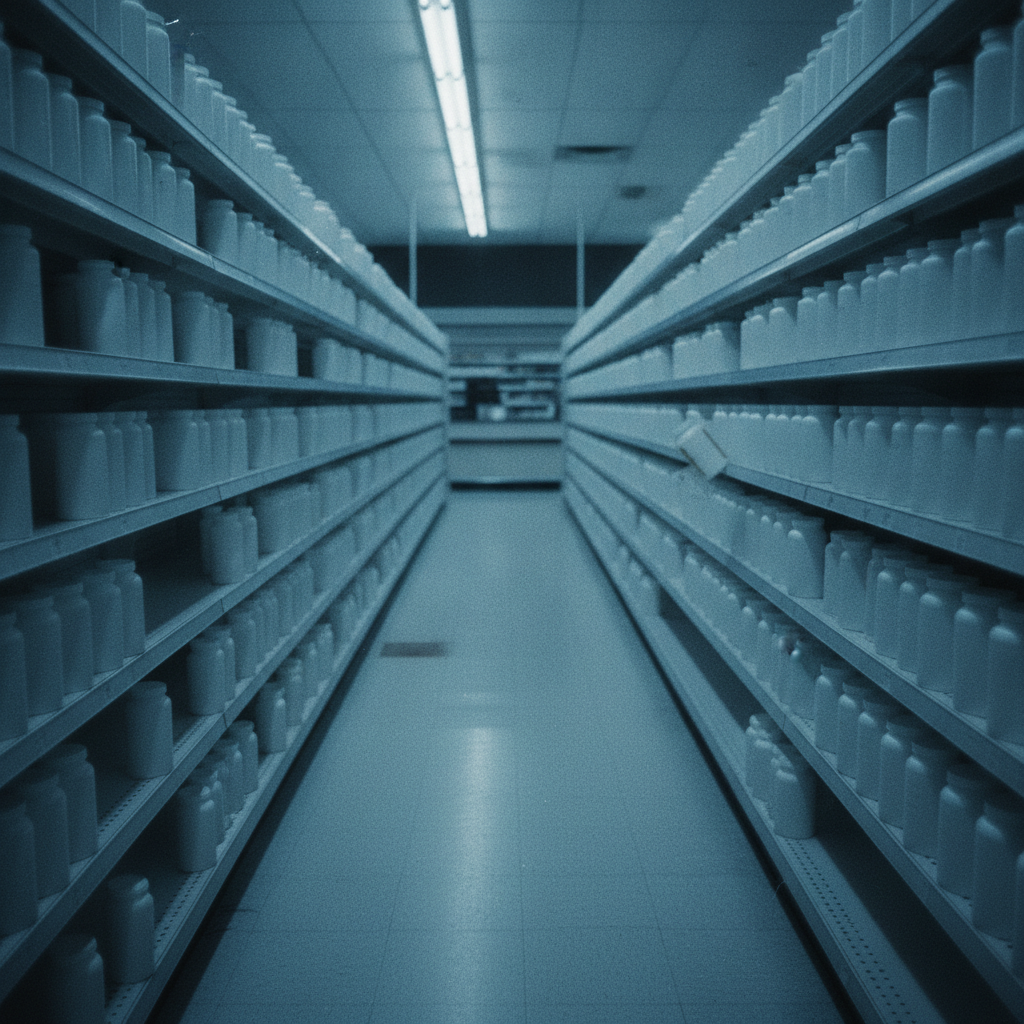
Within 3 days, 6 more people in the suburbs around Chicago would die the same way. All of them had taken Tylenol capsules. Someone had opened the capsules, filled them with cyanide, a fast and deadly poison, and put the bottles back on the shelves of ordinary shops.
This case is known as the Chicago Tylenol murders. It changed how medicine is packaged all over the world. More than 40 years later, nobody has ever been charged with the killings.
A day of deaths
The same Wednesday, a few kilometres away in the suburb of Arlington Heights, a 27-year-old postal worker named Adam Janus took Tylenol.
He collapsed. He was taken to hospital and died there. The doctors first thought it was a heart attack. He was young, but heart attacks happen.
That evening his family gathered at his house in shock. His younger brother Stanley, 25, and Stanley's wife Theresa came from the suburb of Lisle. Most accounts give Theresa's age as 19; some say 20.
On the kitchen counter there was a bottle of Extra-Strength Tylenol. Stanley took a capsule from the bottle and gave one to his wife.
Within minutes both collapsed. Stanley died that night. Theresa was taken to hospital in a coma. She never woke up, and died 2 days later.
3 people from one family were now dead, all within hours of each other.
The same day, in the suburb of Winfield, west of Chicago, a 27-year-old woman named Mary Reiner took Tylenol. She had given birth to her 4th child about a week earlier, and she had bought a bottle of capsules at a local supermarket. She collapsed at home and died in hospital.
In the suburb of Lombard, a 31-year-old woman named Mary McFarland was at work in a telephone company store. She told colleagues she had a bad headache. She took 2 capsules in the break room and collapsed within minutes. She died hours later.
In Chicago itself, a 35-year-old flight attendant named Paula Prince had landed at the city airport after a flight from Las Vegas. On the way home she stopped at a pharmacy and bought a bottle of Tylenol. A security camera at the counter photographed her.
She did not turn up for her next flight. 2 days later she was found dead in her apartment. Her bottle was open.
The link
At first, nothing connected these deaths. They happened in different towns, in different hospitals, under different police forces.
The first link was made by firefighters.
Firefighters from Arlington Heights had answered the calls to the Janus house. That evening one of them telephoned a senior colleague. He said he had seen the same thing that day, less than 16 km away, and it had ended the same way: Mary Kellerman's death in Elk Grove Village.
The two men compared what they knew. Both families had used Tylenol.
At the same time, the only public health official of Arlington Heights, a nurse, went to the Janus house. She found the Tylenol bottle in the kitchen. Next to it was a receipt from that same day. She counted the capsules. 6 were missing. 3 people had died in that house.
She handed the bottle to an investigator from the county medical examiner's office. He opened it and smelled bitter almonds. That smell is a classic sign of cyanide, although many people cannot detect it.
The county's chief toxicologist tested the capsules that night. Of the 44 still left in the Janus bottle, 4 contained cyanide. Each of those held about 3 times the amount needed to kill a person.
The paramedics who had treated Mary Kellerman had made a list of what was in her home. Her bottle came from the same production lot as the Janus bottle. The lot number printed on both was MC2880.
The warning
Officials held a press conference and warned the public: do not take Tylenol capsules.
The fear spread across the whole country.
On 5 October, the manufacturer, Johnson & Johnson, ordered a recall across the whole United States. About 31 million bottles were taken off the shelves. Their retail value was over 100 million dollars. The company stopped producing and advertising the capsules, and offered a reward of 100,000 dollars for information leading to an arrest.
The fear also brought copycats. In the month after the murders, the US drug regulator, the FDA, counted 270 reports of tampered products around the country. Most turned out to be hoaxes or false alarms. That Halloween, some American towns told children not to go trick-or-treating, for fear of poisoned sweets.
Where the poison came from
The first question for the investigators was simple: was the poison put in at the factory, or later?
If it happened at the factory, the killer could be an employee, and many more poisoned bottles could be anywhere in the country.
The answer came quickly. The poisoned bottles came from 2 different factories, one in the state of Pennsylvania and one in Texas. They had been made in different places and had travelled by different routes. One person could not have reached both production lines.
The capsules also showed no breakdown of the cyanide. That suggested they had been filled shortly before they were sold, not months earlier at a factory.
The conclusion of the police: someone had bought or taken bottles from local shops, opened the capsules, filled some of them with cyanide, closed the bottles again, and put them back on the shelves. Then he waited for strangers to buy them.
Investigators traced the poisoned bottles to at least 6 shops: 2 branches of a supermarket chain in Arlington Heights and Elk Grove Village, a pharmacy in the suburb of Schaumburg, a pharmacy and a supermarket in Chicago, and the supermarket in Winfield where Mary Reiner had shopped. More poisoned bottles were found still on the shelves and were removed.
This was a new kind of crime. The victims were chosen by chance. The killer had no connection to any of them. There was no motive to follow, no jealous husband, no business partner, no debt. Anyone in the Chicago area could have been the next victim.
A large task force was formed. According to a later account, it drew on about 15 agencies, including 26 agents of the FBI, the US federal police. They checked shop workers, delivery drivers, people with known grudges against the company, and people who had access to cyanide.
The photograph of Paula Prince at the pharmacy counter was studied closely. Just behind her in line stood a man with a beard. Police said he could be the killer, or a witness. He was never identified.
The letter
In early October 1982, Johnson & Johnson received a letter. It demanded 1 million dollars "to stop the killing". It was postmarked in Chicago on 1 October, and signed with a false name: "Robert Richardson".
The FBI traced the letter. The bank account named in it was linked to a travel agency in Chicago where the wife of a man named James Lewis had worked. Handwriting and fingerprints pointed to him.
James Lewis was not a stranger to the police. In 1978 he had been charged in Kansas City, a city about 800 km southwest of Chicago, with the murder of a 72-year-old man whose tax returns he prepared. That case was dropped before trial for lack of evidence and legal problems over material found in his home. In 1981 he had pleaded guilty to fraud with credit cards in a dead man's name.
By the autumn of 1982, Lewis and his wife were living in New York under false names. A national manhunt began. On 13 December 1982, a librarian at the New York Public Library recognised him from his photograph in the newspapers. FBI agents arrested him there.
Lewis admitted that he had written the letter. He said he never intended to collect the money, and that he wanted to embarrass his wife's former employer. He denied having anything to do with the poisonings.
That was the problem for the investigators. They could prove the letter. They could not prove the murders. Lewis said he and his wife had been in New York at the time of the poisonings, and the police could not place him in Chicago in the last week of September.
He was convicted of attempted extortion and sentenced to 10 years in prison. He served nearly 12 years, counting the time held before trial, and was released in October 1995. He was never charged with the poisonings.
The man at the bar
While Lewis was the best-known suspect, investigators were also following a second man.
His name was Roger Arnold. He worked at the loading dock of a warehouse of one of the supermarket chains, in the suburb of Melrose Park. A bar owner went to the police and said Arnold had talked about killing people, and had said he had cyanide. According to one account, Arnold had also worked with Mary Reiner's father.
The police searched his home. They found a book that included instructions for making poison with cyanide. Arnold was questioned and held several times. He was never charged with the poisonings.
In the summer of 1983, Arnold went looking for the bar owner he believed had reported him. He shot and killed a man in a bar, a computer consultant and father of 3. The victim was not the bar owner. Arnold had mistaken him for someone else.
He was convicted of that murder in January 1984 and sentenced to 30 years. He served 15. He died in 2008, never charged with the Tylenol killings.
Trying to draw the killer out
In 1983 the FBI tried another approach.
A leading FBI profiler believed the killer might want to see the results of his crime. At the FBI's request, a Chicago newspaper columnist published an article that included Mary Kellerman's home address and the place of her grave.
Both places were watched by police 24 hours a day for months.
The killer never came.
The years of retesting
Over the years the case was opened again and again, each time a new forensic technique appeared.
In 2007, around the 25th anniversary, new tips came in, and the FBI reviewed the evidence. One finding damaged Lewis's account: the postmark of 1 October on his letter did not fit his claim that he had spent 3 days writing it. He then changed his timeline.
In the mid-2000s, an FBI agent posed as a journalist and interviewed Lewis at length.
In February 2009, federal agents searched Lewis's home in Cambridge, near Boston, and took away computers and papers. According to reports, Justice Department investigators concluded that year that he was responsible, but that they did not have enough evidence to charge him.
In January 2010, Lewis and his wife gave DNA samples and fingerprints. The DNA did not match the genetic material found on the bottles.
The same year, Roger Arnold's body was exhumed and his DNA was tested. It did not match either.
In May 2011, the FBI asked for the DNA of the bomber Ted Kaczynski, known as the Unabomber. His parents had lived in Lombard, and he had stayed there at times in 1982. He said he had never owned potassium cyanide, the poison used in Chicago. Nothing tied him to the case. He died in 2023.
In 2023, a television network reported that investigators had ordered new DNA tests on key evidence.
Lewis died in his home in Cambridge in July 2023, aged 76. The medical examiner found that he had died of heart and liver disease. To the end he denied the poisonings. In a Netflix series released in 2025, "Cold Case: The Tylenol Murders", he says on camera that he would not hurt anybody.
A new name from Idaho
On 23 September 2026, almost exactly 44 years after the murders, the case took a new turn, more than 2,000 km away.
In December 1982, a man had died in a Catholic church in Boise, in the state of Idaho, after swallowing a cyanide capsule. He had no papers. For decades nobody knew who he was. He was buried without a name.
Detectives in Ada County, where Boise lies, reopened the case in 2019. Using DNA, they finally identified him. He was an organic chemist. Colleagues told the detectives that he had talked about cyanide, poison and the "perfect crime". Photographs showed he had visited the Chicago area a year before the murders.
The detectives came to believe he was a possible suspect in the Tylenol murders, and shared their findings with the Chicago police.
But they also listed what did not fit. They could not place him in Chicago in the last week of September 1982. He had lived in 5 states, none of them Illinois. And the cyanide found with him was sodium cyanide, which appeared to be homemade. The Chicago capsules contained potassium cyanide, a different compound.
The Chicago police said they were in contact with Idaho, and that the case remains an open cold case. They did not say whether they consider the man a suspect.
Where it stands
The Chicago Tylenol murders were never solved.
**Nobody has ever been charged with putting poison in the capsules. Everything beyond this point is suspicion, not proof.**
The reasons are plain. No witness ever saw anyone put a bottle back on a shelf. The shops were busy, and dozens of people may have handled each bottle. The only photograph of a possible suspect, the bearded man behind Paula Prince, shows someone who was never found. The DNA recovered from the bottles has not matched any suspect who was tested.
What the killings did change is still on every shelf. Within weeks, Tylenol returned in a package with 3 seals. Its share of the market fell from 35% to 8%, then recovered within about a year. Sealed caps, foil under the lid and solid caplets instead of capsules became the standard for medicines across the world. Tampering with consumer products became a federal crime in the United States.
The case also inspired killers. In 1986, a 23-year-old woman died in Yonkers, near New York, after taking poisoned Tylenol capsules. The same year, a woman in Washington state poisoned Excedrin capsules and killed 2 people, including her husband. She was convicted and sentenced to 90 years.
In 1991, Johnson & Johnson settled the lawsuits brought by the families of the 1982 victims, for an undisclosed sum.
The suspects and theories
Every name below is on the public record. None of these men was ever charged with the poisonings, and each must be regarded as innocent of them. All of them are dead.
James Lewis wrote the letter, and did the killings. The evidence: he admitted the extortion letter; he had once been charged with a murder that was dropped; according to reports, federal investigators concluded in 2009 that he was responsible. The problem: he was never placed in Chicago at the time, his DNA did not match, and he denied it until his death.
Roger Arnold, the dock worker. The evidence: a bar owner said he talked about killing people with cyanide, he had a book with poison instructions, and he later killed a man. The problem: he was never charged, and his DNA did not match.
The chemist from Idaho. The evidence: an interest in cyanide and the "perfect crime", a visit to the Chicago area, and a death by cyanide capsule in December 1982. A forensic psychiatrist who worked on the original investigation said experts shown the file anonymously considered him a viable suspect. The problem: he could not be placed in Chicago that week, and his cyanide was a different compound.
Someone inside the supply chain. The evidence: some theories point to a person with access to the bottles before they reached the shelves. The problem: the poisoned bottles came from 2 different factories, and the police concluded the tampering happened in the shops.
7 people took a pill for a headache and died. 44 years later, the person who put the poison on the shelf has never been named.