The Girl in the Red Coat: Paula Welden and the Mountain That Gave Nothing Back
On a Sunday afternoon in December 1946, an 18-year-old college student finished her shift in the dining hall, changed into walking clothes, and told her roommate she was going for a hike.
She took no bag. No spare clothes. Almost no money.
It was about 2:30 in the afternoon. The sun would set in less than 2 hours.
Her name was Paula Welden. She was never seen again.
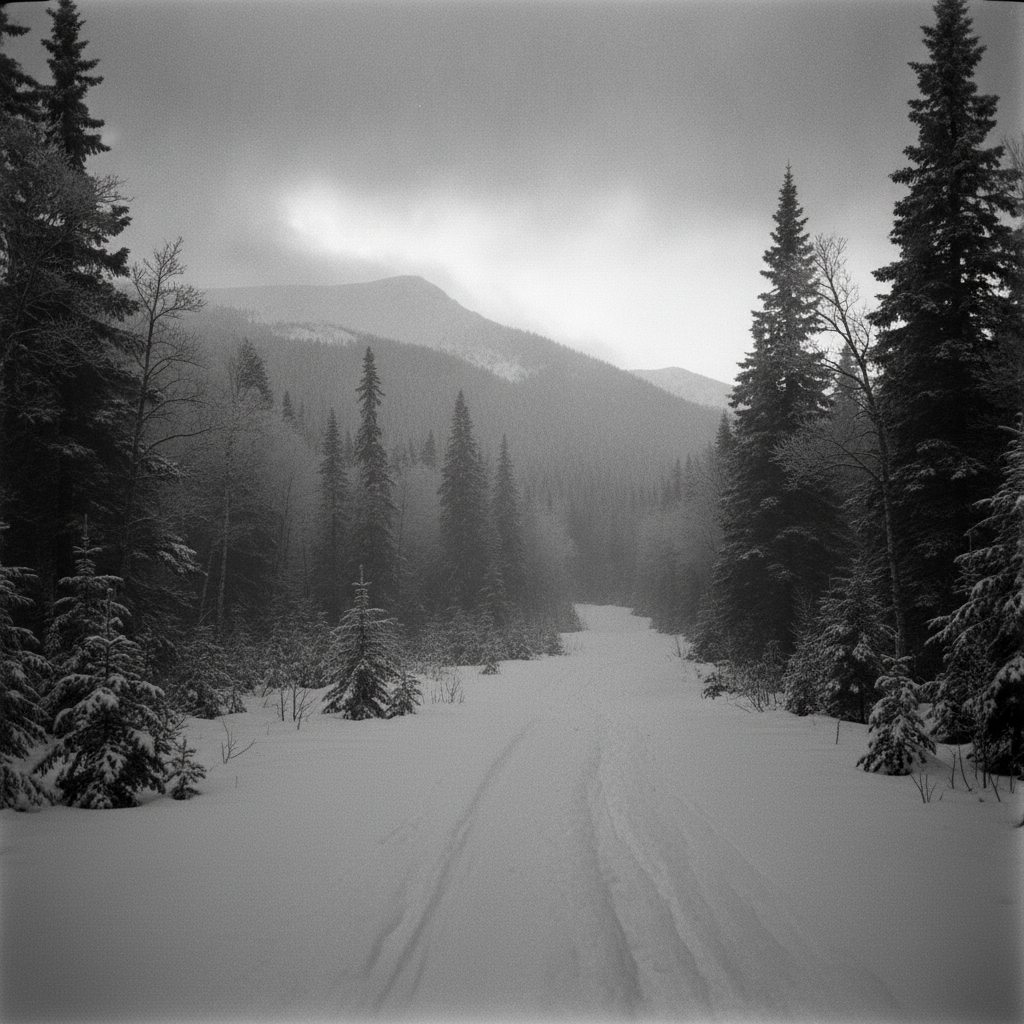
This is the story of a young woman who walked into a mountain forest in the state of Vermont, in the northeast of the United States, and vanished. Hundreds of people searched for her. They found no body, no piece of clothing, nothing at all. To this day nobody knows whether she got lost, left of her own free will, or was killed.
Who she was
Paula was born in 1928 in the neighbouring state of Connecticut, a few hours' drive to the south. Her father was an industrial engineer who designed household products for a metal company.
In 1946 she was in her second year at Bennington College, a small college in the town of Bennington, in the southwest corner of Vermont.
She lived in a dormitory on campus and worked shifts in the college dining hall.
On Sunday, 1 December, she worked the breakfast shift and the lunch shift. Then she went back to her room.
The last afternoon
At about 2:30 she left the campus.
She wore a red coat. Investigators later said her clothes were fine for an afternoon walk, but not for the cold of a mountain night.
She stood at the side of the road and hitchhiked. At about 2:45 a local man stopped his car for her. She told him she was going to walk on the Long Trail.
The Long Trail is a walking path of more than 400 km that runs the whole length of Vermont, through thick forest and over the mountains. It crosses the main road east of the town.
The driver took her about 4 km toward that crossing. From there she either got another ride or walked the rest of the way.
Close to 4 o'clock, a local man and his friends, coming down from a camp in the woods, met her on the trail. She asked them questions about where the trail went.
They warned her not to go far. She was not dressed for it, they told her, and the sun would soon be gone.
She kept walking north, up a dirt road that at that point was part of the trail.
A lumberjack lived along that road. That afternoon he was outside, arguing with his girlfriend. He saw the young woman in the red coat walk past.
The last reported sightings placed her further on, past an old hikers' shelter beside the trail.
After that, nothing.
Nobody noticed that night
Paula did not come back to her room that evening.
Her roommate was not worried. It was exam season, and she assumed Paula was studying late in the library.
In the morning the bed was still empty. The roommate reported her missing. The college searched the campus, and then called the county prosecutor and the county sheriff.
By then more than 15 hours had passed since the men on the trail had spoken to her.
A few days later, one of those men saw her photograph in the local newspaper and recognised her. Only then was it certain that she had really gone up the mountain.
The search
The college closed for several days, and students joined the search.
Hundreds of volunteers came. So did soldiers from the National Guard, and firefighters. Aircraft flew over the ridges. Teams walked the side branches of the trail, and the main road east of the town.
The search area was pushed 16 km to the north, as far as a mountain called Glastenbury.
A reward of 5,000 dollars was raised for any information.
Weeks passed. Nothing was found. Not a glove, not a shoe, not the red coat.
A state with no police
Here the story runs into a problem that shaped everything that came after.
In 1946 Vermont had no state police force. Each county had a sheriff, usually with little training and few men. A search across mountains, forest roads and several towns was far beyond them.
The investigation was run by the county prosecutor, the county sheriff and a single investigator from the state.
Paula's father thought this was hopeless, and he said so. He appealed to the governor of Vermont. The governor called the governor of Connecticut, and Connecticut sent 2 experienced state police detectives, a man and a woman. Investigators from the states of New York and Massachusetts also took part.
They interviewed every person who had seen Paula, or thought they had.
Leads that went nowhere
With no trace on the mountain, investigators began to ask whether she had ever been lost there at all.
A waitress in a city in Massachusetts said she had served Paula a meal the day after she disappeared. The lead was checked. It was false.
A train conductor said he had seen her far to the south, in the state of South Carolina. That lead was checked too. It was also false.
The investigators wrote down every possibility. That she ran away to start a new life. That she eloped in secret. That she fell, hit her head and lost her memory. That she took her own life. That she was kidnapped. That she was murdered.
None of them could be proven. None of them could be ruled out.
The lumberjack
One man drew more attention than anyone else: the lumberjack who had seen her walk past his house.
His account of that evening changed. In one version, after the argument with his girlfriend, he stormed off alone to his shack. In another version, he drove up the road, in the same direction Paula had walked.
According to the case record, he lied to the police more than once.
He was treated as a person of interest in 1946, and again when the case was reopened in 1952.
Two people later said he had told them he knew, to within about 30 metres, where the girl was buried. When he was asked about it, he said it had only been idle talk.
No body was found. No physical evidence ever connected him to her. He was never charged with any crime, and he must be regarded as innocent.
Here is where what we know ends
**The last documented fact is a young woman in a red coat, walking north on a mountain road late on a December afternoon, with night coming on. Everything after that is guesswork.**
7 months later, in July 1947, the Vermont legislature created the Vermont State Police. The public criticism of how the search had been run, much of it from Paula's father, is recorded as a direct reason.
In 1956, 10 years after she vanished, Paula was declared legally dead.
The Vermont State Police still lists the case as unsolved, and it still accepts tips about it.
She was not the only one
Paula was not the only person to disappear in that part of New England. A local writer later gave the forests northeast of Bennington a nickname, the "Bennington Triangle", after the Bermuda Triangle.
2 other cases are often told alongside hers.
In 1936, a 22-year-old woman went out for a walk from a village in New York state, about 64 km south of Bennington, and did not come back. In 1943, more than 7 years later, hunters found remains near the Massachusetts border. They were tentatively identified as hers.
In 1952, a 10-year-old girl ran away from a summer camp in Connecticut, about 74 km south of Bennington. She was last seen hitchhiking on a highway. She was never found.
Paula's story left one more mark. A well-known American novelist lived in the town in 1946, and her papers suggest she drew on the case for a novel published in 1951. Other novels followed over the years.
So this is what is known. Paula went up the mountain. At least 2 groups of people saw her there. She was dressed for a short walk. And this is what is not known: whether she ever came down.
Conclusions and Open Questions
The investigators, and the writers who came after them, have offered several explanations. Each one has something in its favour, and each one has a hole.
**She got lost and died of the cold on the mountain.** The evidence: she was not dressed for the night, darkness was coming, she had been warned, and the forest is thick. The problem: hundreds of searchers, soldiers and aircraft covered the area for weeks. Not one piece of clothing was found. And in almost 80 years of hunters and hikers walking the same forest, no remains have turned up.
**She left of her own free will to start a new life.** The evidence: investigators took this seriously, and 2 witnesses said they had seen her far away. The problem: both sightings were checked and found to be false. She took no bag, no clothes and almost no money. Nothing in the record points to a plan.
**Someone picked her up on the road.** The evidence: she hitchhiked, the roads were quiet, and it was getting dark. One theory, put forward by a writer on the case, holds that the woman who vanished in 1936, Paula, and the girl who vanished in 1952 were all victims of the same unknown man. The problem: there is no evidence of a crime in Paula's case, and nothing concrete ties the 3 cases together. They are spread over 16 years and tens of km.
**The lumberjack knew more than he said.** The evidence: his story changed, he lied to the police, and 2 people said he claimed to know where she was buried. The problem: no body, no evidence, no charge. A changing story and bar talk are not proof, and he must be regarded as innocent.
One conclusion is not a theory at all, because Vermont drew it officially. The first hours were lost, the search was run by people who had never run one, and by the time professionals arrived, the trail was cold. Whether a faster search would have found her is something nobody can know.
What remains unexplained is simple and stubborn. A young woman walked up a well-known trail, in daylight, and was seen by several people. Then the forest, the roads and the towns gave back nothing at all.