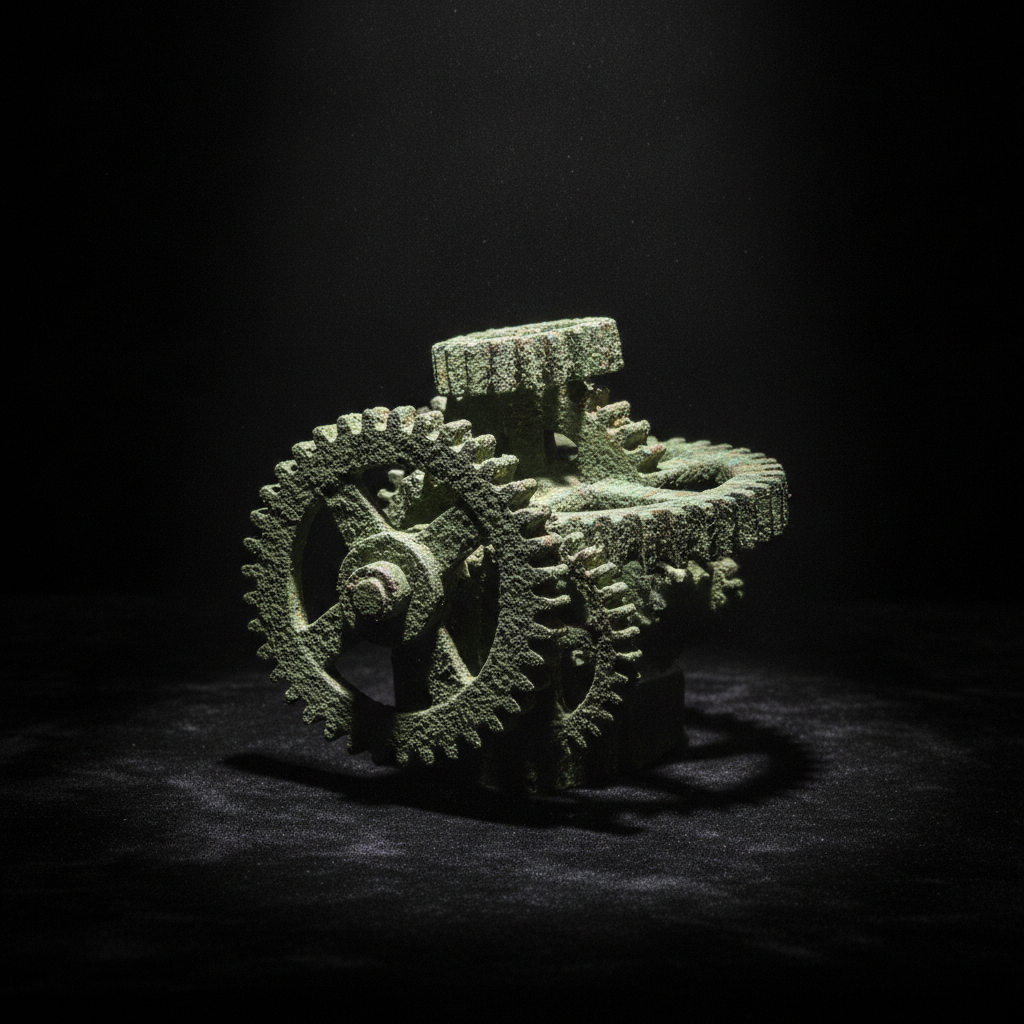
The Machine That Shouldn't Exist: Secrets of the Antikythera Mechanism
The first man to see the wreck came up screaming. In the spring of 1900, a Greek sponge diver named Elias Stadiatis, working with a crew out of the island of Symi, descended some 45 meters off the tiny island of Antikythera and surfaced babbling about a heap of dead men and horses rotting on the seabed. His captain, Dimitrios Kontos, thought the depth had addled his mind, dove himself, and came back holding the bronze arm of a statue. The corpses were sculpture, the cargo of a Roman-era ship that had gone down around 60 BC laden with the plundered art of the Greek world, most likely bound from the eastern Aegean toward Italy when it foundered against Antikythera's cliffs. Over the following year, in a salvage carried out in heavy diving suits at the ragged edge of what the human body can survive, the crew brought up marble gods and bronze masterpieces: the Youth of Antikythera, a bronze ephebe of around 340 BC, the brooding head known as the Philosopher, and some three dozen marble figures of Hercules, Odysseus and Apollo, one of which slipped from the divers' grasp and was lost again to the deep. The work maimed the men who did it: one diver died of the bends and two were left paralyzed, among the first recorded casualties of a science of decompression that barely existed in 1900. Coins later recovered from the wreck, struck in Pergamon and Ephesus in the decades before the ship went down, would help fix the disaster to the middle of the first century BC.
Among the marble, almost unnoticed, came up one corroded lump of bronze the size of a shoebox, which was shipped to the National Archaeological Museum in Athens and set aside. On May 17, 1902, the archaeologist Valerios Stais noticed something in the split-open lump that had no business being there: a precisely cut gearwheel, engraved with Greek letters. Nothing of comparable mechanical complexity appears again in the surviving record for well over a thousand years, until the astronomical clocks of medieval Europe. The device - 82 surviving fragments holding about 30 gears, perhaps a third of the original machine - is now dated to roughly the second or first century BC and known as the Antikythera Mechanism, the oldest geared computer ever found. For half a century after Stais it was mostly a curiosity that embarrassed the experts, too advanced to fit the story archaeology told about Greek technology, and easier to ignore than to explain.
You have used your free reads for this month.
Unlock all 208 documented mysteries - in 8 languages, ad-free.
Get full access