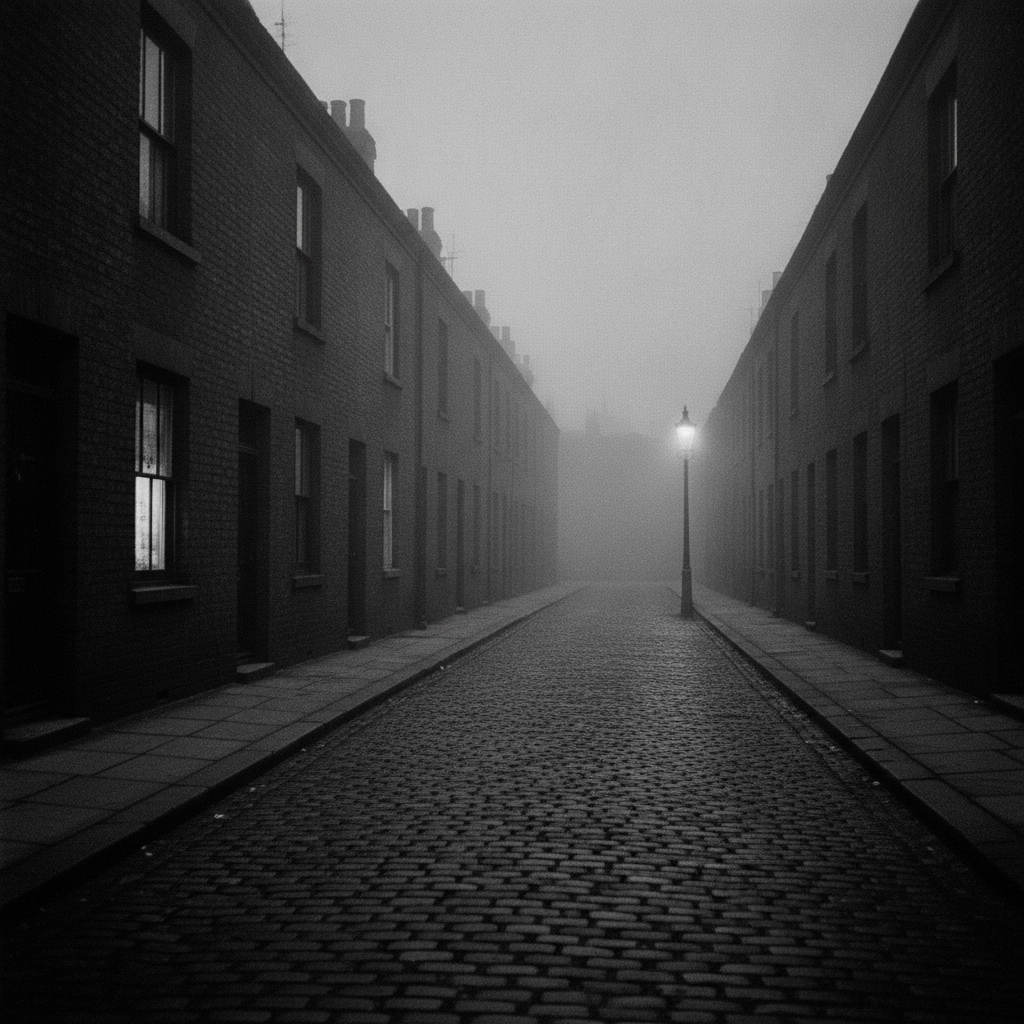
The house at 10 Rillington Place: the quiet neighbour who sent an innocent man to the gallows
London in the 1940s was a city of soot, ration books and bomb damage.
In Notting Hill, about 5 km west of the centre, there was a short dead-end street called Rillington Place. The houses were small, old and crowded, and the rooms were cheap.
Number 10 had 3 floors and no bathroom. The tenants shared 1 toilet in the back yard. Next to it was a small washhouse, a shed with a sink where clothes were boiled and scrubbed. Behind the house was a narrow strip of garden.
On the ground floor lived a married couple in their 50s. The husband was a thin man with glasses and a soft, careful voice. During the war he had served as a reserve policeman. He told neighbours he knew a little about medicine. Many people found him dull, polite and harmless.
His name was John Christie.
This is the case of 10 Rillington Place. Between 1943 and 1953, at least 8 people died violently inside that house or its garden. For years the police had the killer in front of them. They used him as their main witness. Instead of him, they hanged his upstairs neighbour, a 25-year-old man who could barely read. That man was almost certainly innocent.
The story has 2 halves. In the first half the police got almost everything wrong. In the second half a tenant with a screwdriver found what they had missed.
The man on the ground floor
Christie was born in 1899 in Yorkshire, in the north of England. He was gassed as a soldier in 1918, in the last months of the First World War.
After the war his record was poor. Between 1921 and 1933 he was convicted several times. He stole postal orders while working as a postman. He stole a car. In 1929 he got 6 months of hard labour for attacking a woman with a cricket bat.
In 1934 he and his wife Ethel moved to Rillington Place. In December 1938 they took the ground-floor flat.
When the Second World War began in 1939, London needed thousands of extra policemen. Christie joined as a reserve constable. According to the later inquiries, nobody checked his criminal record. For 4 years he wore the uniform and patrolled the streets of west London. He left the police at the end of 1943.
The first 2 women
In August 1943 a young woman of 21 named Ruth Fuerst came to the house. Christie killed her and buried her in the back garden.
In October 1944 a woman of 31 named Muriel Eady came to the house. He killed her too, and buried her next to the first.
His method, as he later described it, was always the same. In the 1940s London homes ran on coal gas, which contained carbon monoxide. Christie ran a rubber tube from a gas pipe in his kitchen. He told the women it was a remedy for a cold or a cough. When they became drowsy from the gas, he strangled them with a rope.
**Nobody connected these 2 women to the house at the time. Everything we know about them comes from Christie's own confession in 1953 and from the bones dug up in the garden that year.**
The young family upstairs
At Easter 1948 a young couple moved into the small flat on the top floor. They were Timothy Evans, aged 23, and his young wife Beryl. He came from Wales. He could hardly read or write, and he often needed others to read long documents to him.
In October 1948 their daughter Geraldine was born.
The marriage was difficult. There was little money. The couple quarrelled, and the neighbours heard it through the thin walls. In 1949 Beryl became pregnant again.
In the autumn of 1949, workmen were carrying out repairs at number 10. They worked in and around the house for several weeks, including in the back yard.
Beryl and Geraldine were killed in November 1949. The exact day is not known. The date usually given is 8 November.
On 11 November, according to the 2 workmen, they cleaned the washhouse in the yard. They said it was empty. This detail would matter very much later. It would be ignored at the time.
On 14 November Evans left London and went to stay with relatives in Wales.
A confession in Wales
On 30 November 1949 Evans walked into the police station in Merthyr Tydfil, a town in south Wales about 230 km west of London.
He told the officer that his wife was dead. He said he had put her body down a drain outside the house in London.
The Merthyr Tydfil police called London. Officers went to Rillington Place and opened the manhole in front of number 10. The heavy cover needed 3 men to lift it. The drain was empty.
Evans was told. He then gave a second story. Now he said that Christie had offered to end Beryl's pregnancy with an illegal operation. He said Beryl had died during it. He said Christie had told him he would take care of the body, and that he would find a couple in east London to look after the baby.
This was the first time anyone named Christie to the police. It was not believed.
The washhouse
The London police searched the house and the garden. The first search found nothing.
On 2 December 1949 they searched again, this time more carefully. In the washhouse they found Beryl's body, wrapped in a blanket and a tablecloth. Geraldine's body was beside it. Both had been strangled.
The searches were later described in the official inquiries as superficial. On one search the officers did not even enter the washhouse. Later it emerged that a human thigh bone had been used to prop up the garden fence. It was one of the bones of the women buried in 1943 and 1944. Nobody noticed it.
So the police had 2 bodies in the yard of a house where 2 more bodies lay in the garden, and a ground-floor tenant who had already been named to them. They looked at only one man.
The night at Notting Hill
Evans was brought from Wales to Notting Hill police station in London.
There, the detectives showed him the clothes of his wife and daughter. They showed him the cord that had been used to strangle the baby. They told him that both had been strangled. According to the police record, he was asked whether he was responsible, and he answered "Yes".
He then signed long confessions. In them he admitted killing his wife and his daughter.
Much later, the inquiries and the courts would question these statements. They were long and detailed, and Evans could barely read them. He withdrew them before his trial. From then on, and until his death, he said the same thing: Christie had killed them both.
The trial, January 1950
The trial began on 11 January 1950 at the central criminal court in London. Evans was tried for 1 murder only, that of his daughter Geraldine. The charge for Beryl was set aside.
The main witness for the prosecution was John Christie.
Christie came to court as a respectable former policeman. He spoke quietly. He denied that he had ever offered to end Beryl's pregnancy. He gave detailed evidence about the couple's quarrels.
The defence tried to show the jury who he really was. His old convictions were read out in court: the thefts, and the attack on a woman. It made no difference. The jury believed the policeman, not the young man who could hardly read.
The 2 workmen who said the washhouse was empty on 11 November were never called as witnesses. Later accounts say the police pressed them to change their evidence.
The trial lasted 3 days. The jury took 40 minutes to find Evans guilty. He was sentenced to death.
His appeal was dismissed on 20 February 1950. On 9 March 1950 Timothy Evans was hanged at Pentonville prison in London. He was 25 years old.
**At this point the case was officially closed. As far as the state was concerned, the killer of Rillington Place had been caught, tried and executed.**
3 more years in the house
Christie went on living on the ground floor.
He had worked at a Post Office savings bank since 1946. When his criminal record came out at the Evans trial, he lost that job, in April 1950. In June 1950 he found work at a road transport company.
On 6 December 1952 he resigned from that job too.
On 14 December 1952 he strangled his wife Ethel in their bed. She was 54. He lifted the floorboards of the front room and put her body under them.
To relatives and neighbours he told different stories. She was visiting family in the north. She was ill with rheumatism and could not write. He sold her wedding ring and her watch. He sold the furniture. He forged her signature and emptied her bank account. He collected unemployment money every week.
Between January and March 1953 he killed 3 more women in his kitchen. They were Rita Nelson, aged 25, Kathleen Maloney, aged 26, and Hectorina MacLennan, aged 26. He used the same gas and the same rope.
He put their bodies into a small alcove in the kitchen wall, a space behind the kitchen where a cupboard had been. Then he covered the opening with wallpaper.
On 20 March 1953 he left. Before leaving he sublet his flat to a couple, taking their money, although he had no right to do so. The landlord soon told them to leave.
The wallpaper
On 24 March 1953 the landlord allowed a tenant from the upper floor to use the empty ground-floor kitchen.
The tenant wanted to fix brackets on the wall to hold a radio. While he worked, he peeled back a loose piece of wallpaper. Behind it was a hidden alcove.
He saw the back of a woman's body.
He fetched another tenant, who looked and saw the same thing. Then he called the police.
That night the police took 3 bodies out of the alcove. In the following days they lifted the floorboards in the front room and found Ethel Christie. Then they dug up the garden. They found the bones of 2 more women.
The street that had been forgotten for 3 years filled with reporters and crowds.
A week on the run
Christie was gone.
After leaving the house he had booked a bed at a cheap men's hostel near King's Cross, in north London, under his real name. He paid for 7 nights. He stayed 4 and left on the morning of 24 March, the same day the bodies were found.
His face was now in every newspaper. For a week he wandered around London. He slept outside. He sat in cafes and in cinemas. On 28 March he pawned his watch for a few shillings in Battersea, south of the river.
On the morning of 31 March 1953 a police constable saw a thin man in a worn coat standing on the embankment of the River Thames near Putney Bridge, in south-west London. The constable questioned him and recognised him. It was Christie.
In his pocket Christie had an old newspaper cutting. It was a report from 1949 about Timothy Evans being brought before a court.
The confessions
At first Christie admitted only the 3 women in the alcove and his wife.
When the police showed him that they had found the bones in the garden, he admitted those deaths as well.
On 27 April 1953 he confessed that he had also killed Beryl Evans. He said it had happened while he pretended to help her end her pregnancy.
On 5 June 1953 he gave detailed confessions about the 2 women killed during the war, Ruth Fuerst and Muriel Eady.
He never confessed to killing the baby, Geraldine. That was the only murder for which Evans had been tried and hanged.
Among his possessions the police found a collection of 4 small clumps of human hair. Christie said they came from his wife and from the 3 women in the alcove. Laboratory tests matched only one of them, to Ethel. Where the others came from has never been established.
Trial and execution, 1953
Christie's trial began on 22 June 1953, in the same court where Evans had been tried. He was tried for 1 murder only, that of his wife Ethel.
His lawyers did not deny that he had killed her. They argued that he was insane. A prison doctor called by the prosecution said that Christie had a disturbed personality but was not insane in the legal sense.
The jury took 85 minutes. He was found guilty and sentenced to death. On 29 June he said that he would not appeal.
On 15 July 1953 John Christie was hanged at Pentonville prison, the same prison where Evans had died 3 years earlier. The same executioner carried out both hangings. Christie was 54.
**That is where the documented case of the killer ends. What remained open was the case of the man hanged before him.**
The man hanged in his place
A country now had to face an awkward fact. 2 stranglers living in the same small house at the same time seemed hard to believe.
In 1953, days before Christie's execution, the government ordered a quick private inquiry. It lasted about 11 days. It concluded that Evans had been guilty after all, and that Christie's confession about Beryl was not reliable. It was widely criticised.
In 1961 a journalist published a book, "Ten Rillington Place". It laid out the evidence against the official version. In 1971 it became a film, "10 Rillington Place".
In 1965 and 1966 a High Court judge held a second, much longer inquiry. His conclusion was a compromise. He found it "more probable than not" that Evans had killed his wife, but that he had not killed Geraldine. Christie, he found, had probably killed the baby.
Since Evans had been hanged only for Geraldine, that was enough. On 18 October 1966 Timothy Evans received a posthumous royal pardon. His remains were moved from the prison grounds and buried privately by his family.
In 1965, partly because of this case, Britain suspended the death penalty for murder. It was later abolished.
In January 2003 the British Home Office paid compensation to Evans's sister and half-sister. An independent assessor called his conviction "wrongful and a miscarriage of justice". In November 2004 the High Court in London accepted that Evans had murdered neither his wife nor his daughter.
The open questions are few. Christie confessed to Beryl's death but never to Geraldine's. Nobody knows for certain how many women passed through his kitchen, and the 3 unexplained clumps of hair in his collection have never been matched to anyone.