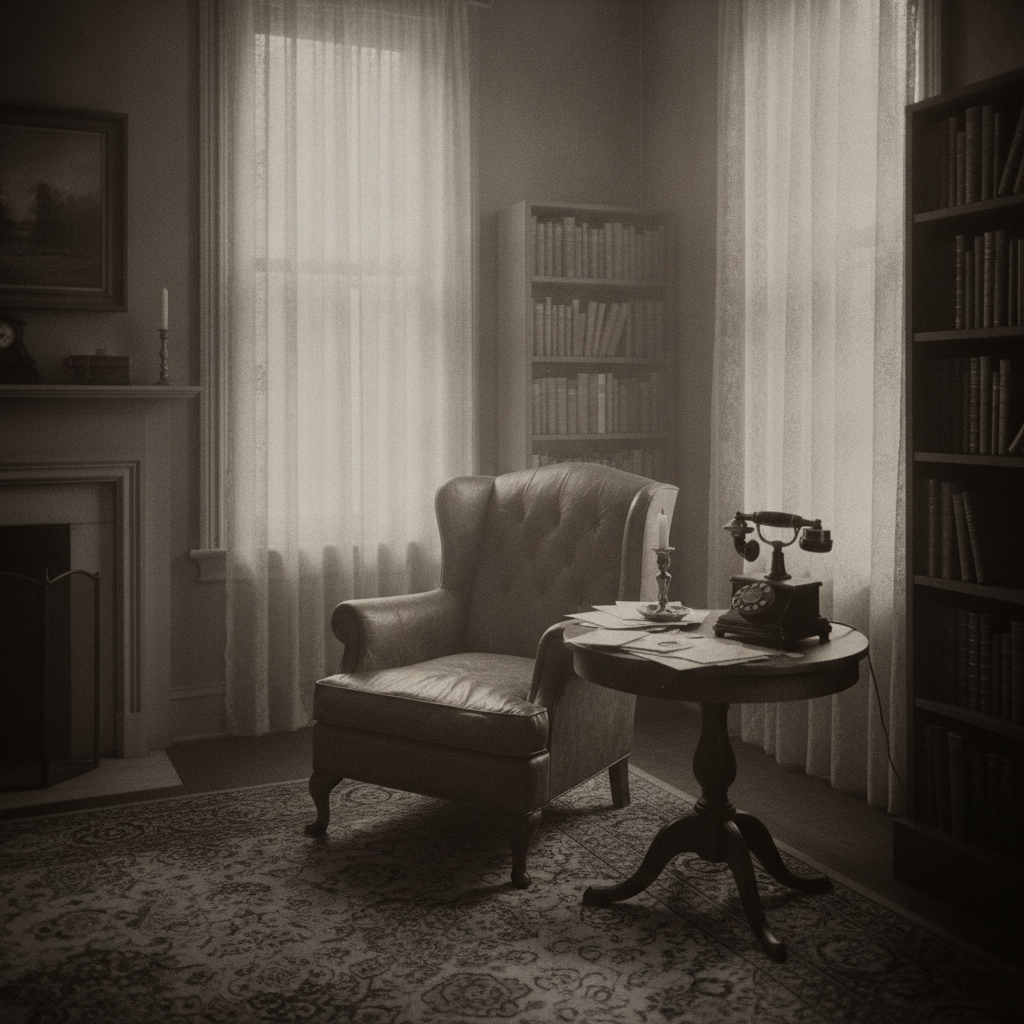
The Joseph Elwell murder: a locked house in New York, one shot at 8 in the morning, and a killer nobody ever found
On the evening of Thursday, 10 June 1920, Joseph Elwell went out to dinner in New York.
He was 47 years old. He lived alone in a narrow 4-storey townhouse on West 70th Street, on the Upper West Side of Manhattan, a few minutes' walk from Central Park.
That night he ate at the Ritz-Carlton hotel with friends: a wealthy businessman who also produced Broadway shows, the businessman's wife, the wife's younger sister, and a journalist from South America.
The younger sister was named Viola Kraus. She and Elwell had known each other for at least 8 years, and they were close. She was about to be divorced. Her decree was due the very next morning.
And her husband was in the same dining room. He sat a few tables away, with another woman.
After dinner the whole group went on to the Midnight Frolic, a late-night show on the roof of a Broadway theatre. The show ended at about 2 in the morning.
The others left together in the businessman's car. Elwell said no thank you to a lift. He walked off alone along 42nd Street.
About 6 hours later, his housekeeper opened his front door and smelled gunpowder.
Joseph Elwell was sitting in a chair in the front room downstairs, in his pyjamas, with a bullet hole in the middle of his forehead. He was still breathing. He never spoke again.
What this case is
This is the story of a murder in a locked house.
All the outside doors were locked. There was no sign of a break-in. Nothing was taken, though money and jewellery lay where anyone could see them. The gun was gone.
The police questioned dozens of people and followed every lead the newspapers gave them. Nobody was ever charged.
**The question is simple: who was in the room with Joseph Elwell at 8 in the morning, and how did they get in and out of a locked house?**
Who he was
To understand why so many people could have wanted to be in that room, you have to know who Elwell was.
He was born in 1873 in New Jersey, the state next to New York. He did not come from money. As a teenager he sold insurance.
What he had was cards. He was a brilliant player of whist, and then of bridge, the card game that took over American high society in the early 1900s. He wrote books on bridge that sold widely. He gave lessons to rich families, and played for high stakes against rich men.
By 1920 he was wealthy. According to the records of his life, he owned property in Palm Beach in Florida, about 20 racehorses, 5 cars and a yacht. He had a regular bridge partner from one of the richest families in the country.
In 1904 he married a woman from a respected Brooklyn family, whose relatives were connected by marriage to the family of former president Theodore Roosevelt. Some accounts say she taught him a great deal of the game, and helped write the books that carried his name.
The marriage did not last. By 1916 his wife had taken their son and moved out. In 1920 the two of them were negotiating a divorce. The papers had not yet been drawn up when he died.
He had a reputation with women. The police would soon find out how much of a reputation.
The night, hour by hour
From the moment Elwell walked away from his friends at 2 in the morning, the record splits.
There are 2 versions of how he got home.
In the first, he took a taxi, stopped on Broadway to buy a racing paper, and was home at about 2:30.
In the second, reported by the New York Times, he went on to another club with 2 men and a woman, and a man in a noisy open car dropped him at his door at about a quarter to 4.
The investigators never settled which version was true.
What is recorded next is a series of telephone calls.
According to the telephone company's records, at 4:39 a call went out from Elwell's house to his partner in a racing stable, who lived at the seaside edge of the city.
At about 6:09, according to the same records, a call went to a 20-year-old woman who worked at a newspaper stand in a seaside town in New Jersey. Elwell had met her in Florida. They arranged to meet that morning at Pennsylvania Station, at 9:09.
There is a problem with those calls, and it has never been solved. The housekeeper later said that the telephones in the house had been out of order for several days.
Then there are the taxi drivers.
One driver came forward and said he had taken a man and a woman to the house at 5 in the morning, and that he drove away without being paid after he heard a woman scream.
Another driver said that at 2:30 he picked up a man and a woman at that same address and drove them across the park to the East Side.
Neither story was ever confirmed.
The morning
The next part of the timeline is much firmer, because it comes from ordinary working people doing their ordinary rounds.
At 6:45 the milkman left bottles in the small entrance hall between the street door and the inner door.
At 7:35 the postman left the morning mail on the floor of the same entrance hall. He pressed the bell twice. Nobody answered. He left.
Between 7:35 and 8, 2 painters working on the house next door heard a loud bang. They thought it was a car tyre bursting in the street.
At about 8:10 the housekeeper arrived. She had worked for Elwell for over a year. She let herself in with her own key.
She smelled gunpowder smoke.
In the front reception room on the ground floor, Elwell sat slumped in a chair. He wore pyjamas. A letter from a horse-racing acquaintance lay open in his lap, stained with blood. The rest of the morning mail was on the table beside him. The telephone on the small table next to him was broken.
He looked very different from the man the city knew. His false teeth and his hairpiece were upstairs in his bedroom.
He was still alive.
She ran out to the corner of the street, where a police officer stood on duty, and told him. An ambulance was called at 8:31 from the house next door.
Elwell was taken to hospital. He died there later that morning, without regaining consciousness.
A suicide that was not a suicide
At first, the police treated it as a man who had shot himself.
That mistake cost them time. Officers were not rushed to the house. Nobody sealed it at once.
The city's chief medical examiner arrived about an hour later. He looked at the room and ruled it murder.
His reasons were plain. There was no gun anywhere in the room. A man who shoots himself through the forehead does not then hide the weapon.
The bullet was a .45, the large calibre used in the army pistols of the time. It had gone through Elwell's skull, struck the wall behind him, and ended up on the table beside his chair. Some reports said it lodged in the wall or the chair instead. 1 empty cartridge case lay on the floor at his feet.
The angle of the wound suggested the shot had been fired from in front of him, from a low position, as if the shooter was crouching or bending down.
There were no strange fingerprints. There was no sign of a struggle.
Then the detectives checked the house.
The front door was locked. The back door was locked. The basement door was locked. The only opening was a window on the third floor, at the back.
Elwell's locksmith told the police that about 6 months earlier he had changed the locks and made 3 keys. Elwell had one. The housekeeper had one. The chauffeur and the valet had none.
Nobody has ever been able to say for certain who had the third key.
The house upstairs
When the detectives went up to the third floor, the case changed.
The walls were covered with photographs of women. Between a back bedroom and a front sitting room there was a small cocktail bar.
Under questioning, the housekeeper admitted something she had not told them at first. That morning, after the ambulance left, she had found a set of pink women's nightwear and slippers in the bedroom upstairs. She had taken them down and hidden them in a washtub in the basement. She had also made the bed.
She said she did it to protect her employer's good name.
It meant that the room where the evidence might have been was cleaned before anybody looked at it.
Then the police found Elwell's notes. They contained the names, and private details, of 53 women. Some of them, the reports said, he had been supporting with money. Some were married.
His chauffeur said he had often driven 3 different women to the house.
A former housekeeper, traced to Ireland, sent word that she had once heard a woman threaten to kill Elwell if he left her again. She gave the woman a false name. The real person was never identified.
From that point on, the newspapers had their story. They called it the hunt for "the woman in the case".
The pink lady
The press gave the unknown owner of the nightwear a nickname: "the pink lady".
Weeks of guessing followed. Who were the women in the notes? Which of them had a key?
On 3 July 1920, the city's district attorney said publicly that the pink lady was Viola Kraus, the woman Elwell had dined with on his last night.
She was questioned for about 3 hours. She played down the relationship. She was never charged.
Her husband, the man who had sat a few tables away at the Ritz-Carlton, owned a gun, according to later research in the newspaper record. He was a former college football star and an industrialist. He too was questioned. He too was never charged.
The detectives also looked hard at the woman in New Jersey who was supposed to meet Elwell at the station at 9:09. She was not charged either.
The newspapers kept a list of women by colour: the pink lady, the woman in black, the woman in white. Every new name sold more copies. None of them led to an arrest.
Could a woman have done it?
Early in the case, some investigators argued that a woman could not have fired the shot. A .45 army pistol kicks hard, and is heavy.
The answer came in the press. An 18-year-old woman from Brooklyn took a similar .45 pistol to a target.
She fired 3 shots. She hit the centre of the target all 3 times.
The argument was dropped.
The months that followed
The case was everywhere. The New York Times wrote about it almost every day until the end of July. The Chicago Tribune ran 18 articles. The Los Angeles Times ran 12.
The investigators followed money as well as love. Elwell owed money to the theatre producer he had dined with, from a show that had failed. His estate turned out to be solvent, with no large debts. Rumours that he had been buying illegal alcohol, in the first year of American Prohibition, were looked into and found to have nothing behind them.
His fortune went to his parents, who provided for his son.
By the end of 1920, detectives were no closer to an arrest than on the day he died.
The man who confessed
In April 1921, a man told the authorities that he had killed Elwell.
He soon took it back.
Investigators concluded that he was mentally ill, and that he had confessed hoping to be executed and so stop being a burden to his wife and family. He was never prosecuted for the murder.
**That was the last real lead. From here on, the documented investigation stops, and everything else is opinion.**
Where it stands
The murder of Joseph Elwell was never solved.
The reasons are plain to see in the record.
The first hour was lost, because the police thought it was a suicide.
The bedroom was cleaned before anyone examined it.
The gun was never found.
The third key was never accounted for.
The 2 accounts of the night, and the 2 sets of phone calls and taxi stories, were never reconciled.
And nobody ever saw anyone go in or out of that house after Elwell himself came home.
In 1927, the medical examiner who had ruled it murder wrote an article about the case. He said the police's suicide mistake had given the killer time to get away, and that clever people had blocked the investigation.
Years after his death, a reporter wrote that he had privately told a colleague he believed the killer had an alibi nobody could break.
The house itself is gone. It was later torn down. The site is now part of a school playground.
The suspects and the theories
Everyone named here has been dead for decades. None of them was ever charged. Each must be regarded as innocent.
**A woman with a key.** This was the view of the detectives in 1920, who were sure there was a woman in the case. The problem: they never found her, and the pink lady was questioned and never charged.
**A jealous husband.** Elwell's notes listed married women, and Viola Kraus's estranged husband was in the same restaurant that night. The problem: no evidence ever tied him or any other husband to the house that morning.
**The theatre producer and his wife.** A researcher who went through the newspaper archives a century later proposed that the producer, to whom Elwell owed money, fired the shot, and that his wife helped arrange a shared alibi. The producer was committed to a sanatorium in 1923 and died in 1938. The problem: this is one researcher's reconstruction. Nothing in the official record shows it.
**A stranger from the racing or gambling world.** Elwell bet heavily on horses and on cards, and lost and won large sums. The problem: the investigators found no debts and no threats from that world.
In 1987 a British writer published a full book on the case, and offered his own answer. One reviewer said his conclusion "can only remain a supposition".
What the case left behind
The locked room, the rich victim and the guessing newspapers caught the eye of an American art critic who wrote detective novels under a pen name.
In 1926 he published The Benson Murder Case, about a wealthy man shot in his own home, and introduced the detective Philo Vance. The writers who later created Ellery Queen said that book inspired them.
So a real death in a real house on West 70th Street became part of the foundation of the classic American detective story.
In the novels, the detective always finds the answer in the last chapter.
In the real house, the last chapter was never written.