The Happy Valley Murder: Who Shot Lord Erroll on a Dark Kenyan Road in 1941?
In the early hours of 24 January 1941, 2 African dairy workers were on their way to work on a dark road at the edge of Nairobi, the capital of Kenya, then a British colony in East Africa.
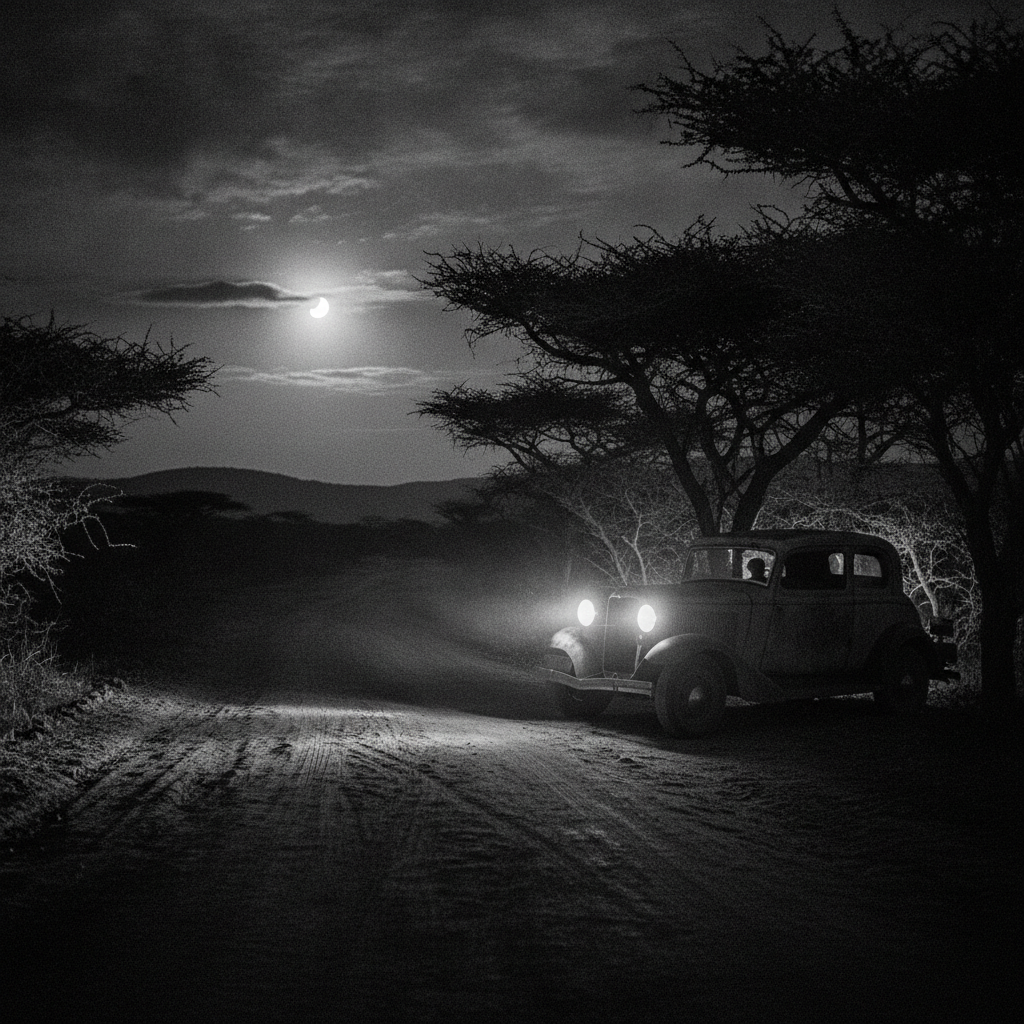
At a crossroads, where the Ngong Road meets a smaller road leading to the suburb of Karen, they saw a big American car. It had left the road and stood at an odd angle. Its headlights were on.
Inside was a man in an army officer's uniform. He was dead.
It was about 3 in the morning. The workers went for the police.
The dead man was Josslyn Hay, the 22nd Earl of Erroll. He was 39 years old. He was one of the best known men in the colony, and one of the most talked about.
He had been shot once in the head, at very close range, with a small pistol. The pistol was never found.
This is the story of what is still called the Happy Valley murder. Lord Erroll had spent the evening with a married woman. Her husband, Sir Jock Delves Broughton, was arrested, put on trial for his life, and acquitted. Nobody else was ever charged. 85 years later, the Erroll murder is still officially unsolved.
The man in the car
Lord Erroll came from one of the oldest noble families in Scotland. In the 1920s he moved to Kenya and bought land in the highlands, north of Nairobi.
Many rich British settlers lived in that area. They had large farms, servants, and plenty of free time. In Britain, newspapers called their circle the "Happy Valley set". The name came from their reputation for drinking, drugs, and swapping partners.
Lord Erroll was at the centre of that circle. He was handsome, charming, and known for his many affairs with married women. He had been married twice. His second wife died in 1939.
He was not only a party man. He was active in the politics of the white settlers and sat in the colony's legislative council. When the Second World War began, he took a senior post in the army in Kenya. That is why he was wearing a uniform on the night he died.
In the 1930s, before the war, he had also been a member of the British fascist movement for a time. That detail would later feed one of the theories about his death.
The new wife
In late 1940, a rich English baronet named Sir Jock Delves Broughton arrived in Kenya with a new wife.
He was 57. She was in her 20s, about 30 years younger. They had married only weeks before.
According to evidence given later at the trial, and repeated in the books written about the case, the couple had made an unusual agreement before the wedding. If she fell in love with a younger man, he would not stand in her way, and he would support her financially.
Within weeks of arriving in Kenya, she met Lord Erroll at the Muthaiga Country Club, the private club of the rich settlers in Nairobi. They began an open affair. Everyone in their circle knew.
A news report written during the trial says the husband tried to persuade his wife to travel abroad and forget Lord Erroll. He even offered to leave himself. She refused.
The last evening
On the evening of 23 January 1941, the husband, his wife, Lord Erroll and a woman friend of the couple dined together. Most accounts place the dinner at the Muthaiga Country Club. One account places it at the Broughton house. The sources do not fully agree on the details of this evening.
The most repeated detail is this. At a dinner in those last days, the husband raised his glass and toasted his wife and her lover, wishing them happiness. Witnesses later described the scene as strange and uncomfortable.
The husband went home first. According to the trial accounts, he asked Lord Erroll to bring his wife home by about 3 in the morning.
Lord Erroll drove her back to the Broughton house in Karen. The sources give the time of arrival as between about 2 and 3 in the morning. He then drove off alone, towards his own home.
He did not get far. His car was found at the crossroads a short drive from the house.
According to the prosecution, the husband was in bed when his wife came home. That was also his own account. The prosecution said that he was not.
What the police found
The scene raised questions from the start, and the published sources still disagree on some of the details.
The car had gone off the road. Some accounts say the engine was still running. Others say it was off, with the lights on.
Some accounts say the body lay down in the footwell of the car. Others say it was in the driver's seat, slumped over the wheel.
The bullet had entered the head near the ear. Sources even disagree on which side, and therefore whether the killer stood at the driver's window or sat beside him in the passenger seat.
What is not in dispute is that the bullet came from a .32 calibre pistol. The killer fired more than once. At least 2 bullets were later examined by experts.
There were also marks on the back seat of the car. According to later accounts, they were white marks, like the chalky white paint people used to clean canvas sports shoes. Those marks suggested that someone had been sitting, or hiding, in the back of the car.
There was no witness. Nobody heard the shots, or nobody came forward to say so.
The husband
The police turned quickly to the husband. He had the most obvious motive: his wife had left him for the dead man, publicly, a few weeks after the wedding.
Several pieces of evidence came out in the weeks that followed. They were all later presented at the trial.
**The pistols.** A few days before the murder, the husband had reported to the police that 2 pistols had been stolen from his house, together with a silver cigarette case and a little money. One of the missing pistols was a .32 Colt revolver. His house servant later testified that shortly before the murder he had seen his employer take 2 pistols from his bedroom to his study. The police suspected that the husband had staged the theft himself, so that he would have no pistol to hand over.
**The fire.** On the morning after the murder, the husband lit a bonfire in his garden. A policeman searched the ashes. He found part of a golf stocking stained with blood, and burnt pieces of sacking.
**The question.** At some point the husband asked a police officer a hypothetical question: if a man found his wife in bed with another man and shot him, would he be hanged for murder?
The investigation took 6 weeks. On 10 March 1941, Sir Jock Delves Broughton was arrested and charged with the murder of Lord Erroll.
The trial
The trial opened in Nairobi on 26 May 1941. It was a sensation far beyond Kenya. Newspapers in Britain, America and Australia followed it day by day, even in the middle of a world war.
Part of the reason was the life of the people in it. The court heard in detail about the affairs, the drinking and the private arrangements of the Happy Valley set.
The prosecution's case was simple to tell, and hard to prove. It said the husband pretended to go to sleep. When Lord Erroll brought his wife home and drove away, the husband left the house without being seen, possibly by climbing down from a balcony. He then intercepted Lord Erroll near the crossroads, shot him, and returned home.
The prosecution had no witness who saw any of this. It did not have the murder weapon.
The defence had a strong answer on the most important technical point.
**The bullets did not match his gun.** The husband's Colt revolver had 6 grooves cut inside the barrel. Every bullet fired from it would carry 6 matching marks, twisting in one direction. The bullets taken from the scene had 5 grooves, twisting in the other direction. The defence argued that the fatal shot could not have come from the kind of pistol the husband was known to own.
Neither side produced any pistol in court.
**His body.** A prison doctor testified that the husband's right side was partly paralysed, and that 2 bones were missing from his right wrist. The doctor doubted that such a man could climb out of a house at night and back again.
The prosecution answered with a well known professional hunter. He testified that 3 weeks after the murder he had taken the husband and his wife on an 8 day hunting trip. During that trip, he said, the husband walked about 11 km a day without tiring, shot several antelope and a lion, and helped lift dead animals onto a truck.
The husband himself spent about 22 hours in the witness box. He described Lord Erroll as a very great friend. He told the court about a conversation in which he had said to Lord Erroll that his wife was in love with him, and Lord Erroll had replied that he was very much in love with her.
He said he had been asleep in bed when the murder happened.
The verdict
On 1 July 1941, the jury retired to consider the evidence. According to the accounts of the trial, they took about 3 hours.
The verdict was not guilty.
The jury was made up of white settlers from the colony. Later writers raised questions about this. One detail repeated in several accounts is that the foreman of the jury was the husband's own barber. That detail is often cited, but it has never been fully confirmed.
Under the law, the husband was innocent. The prosecutor himself said so later: he had been found not guilty by a jury after a fair trial.
But the people of his circle did not accept him back. His wife soon began a relationship with another man. He returned to England alone.
On 5 December 1942, a few days after arriving in England, he was found dying of an overdose of morphine in a hotel in Liverpool. He was 59. The inquest recorded suicide.
Where the case stands
**This is where the documented record ends. No court has ever decided who killed Lord Erroll, and since 1942 nobody has ever been charged.**
The murder weapon was never found. No witness ever came forward who saw the shooting. The husband, the only person ever tried, was acquitted, and he died less than 2 years after the murder.
Every main figure in the story has been dead for decades. The wife died in England in 1987.
Everything that has been said about the case since then comes from memoirs, interviews given decades later, and books by journalists and historians. None of it has been tested in a court. That is why it is presented below as theories, not facts.
The theories
**Theory 1: the husband did it after all.** The main source is a girl who was about 15 at the time and lived near the Broughtons. Decades later, she said 2 things. First, that on the day after the murder she saw the husband burning a pair of white canvas sports shoes in the bonfire. That would fit the white marks on the back seat. Second, that some time after the murder, the husband took her to see his stables and told her that he had shot Lord Erroll, and had thrown the gun into a waterfall. She first told this in 1980 to the British journalist who wrote the best known book on the case, "White Mischief", published in 1982. That book concluded that the husband was most likely the killer. She later published her own memoir, "Child of Happy Valley". In 2007 a British newspaper reported further claims, based on recordings made decades earlier, that the husband had admitted the killing. The problem: she gave no statement to the police in 1941, and her account was first made public 39 years later. The recordings were never tested in court. And the ballistics, the strongest physical evidence, pointed away from his known gun.
**Theory 2: a former lover did it.** An American heiress had been one of Lord Erroll's lovers years before. In 1927, in Paris, she had shot another lover and then herself; both survived. According to a story repeated in several accounts, she went to the mortuary after the murder and spoke to the body. In September 1941, 8 months after the murder, she shot herself dead in Kenya. She left letters, and according to the accounts one of them was addressed to the police. That letter has never been found. In 2010 a British author argued in his book "The Temptress" that she was the killer, and that the lost letter was a confession. The problem: nobody has seen the letter since 1941. Reviewers of the book noted that the case rests on that missing letter and on a pistol found in a river that was never linked to the crime.
**Theory 3: it was political.** In her book "The Life and Death of Lord Erroll", published in 2000, a biographer who lived in Kenya argued that his murder may have been connected to the war, and to his earlier link with the British fascists. The theory holds that he was killed because of what he knew or what he might do, not because of a love affair. The problem: no official document has ever been published that supports this. It remains a theory built on circumstances.
**Theory 4: someone else in the circle.** Over the years, writers have pointed at other people in the Happy Valley set who had reasons to hate him: jealous husbands, abandoned lovers, rivals. All of them are long dead. The problem: not one of them has ever been placed at the crossroads by any evidence.
85 years after 2 dairy workers stopped beside a car on a dark road, the Erroll murder has a suspect who was acquitted, a confession reported 39 years late, a letter that disappeared, and a pistol that was never found.
It has no answer.