Marcel Petiot: The Doctor Who Sold an Escape From Occupied Paris, and the Cellar Where It Ended
Paris, March 1944.
The city had been under German occupation for almost 4 years. There was a curfew at night. Food was rationed. Coal was scarce, and in the wealthy streets near the Arc de Triomphe most chimneys gave off very little smoke.
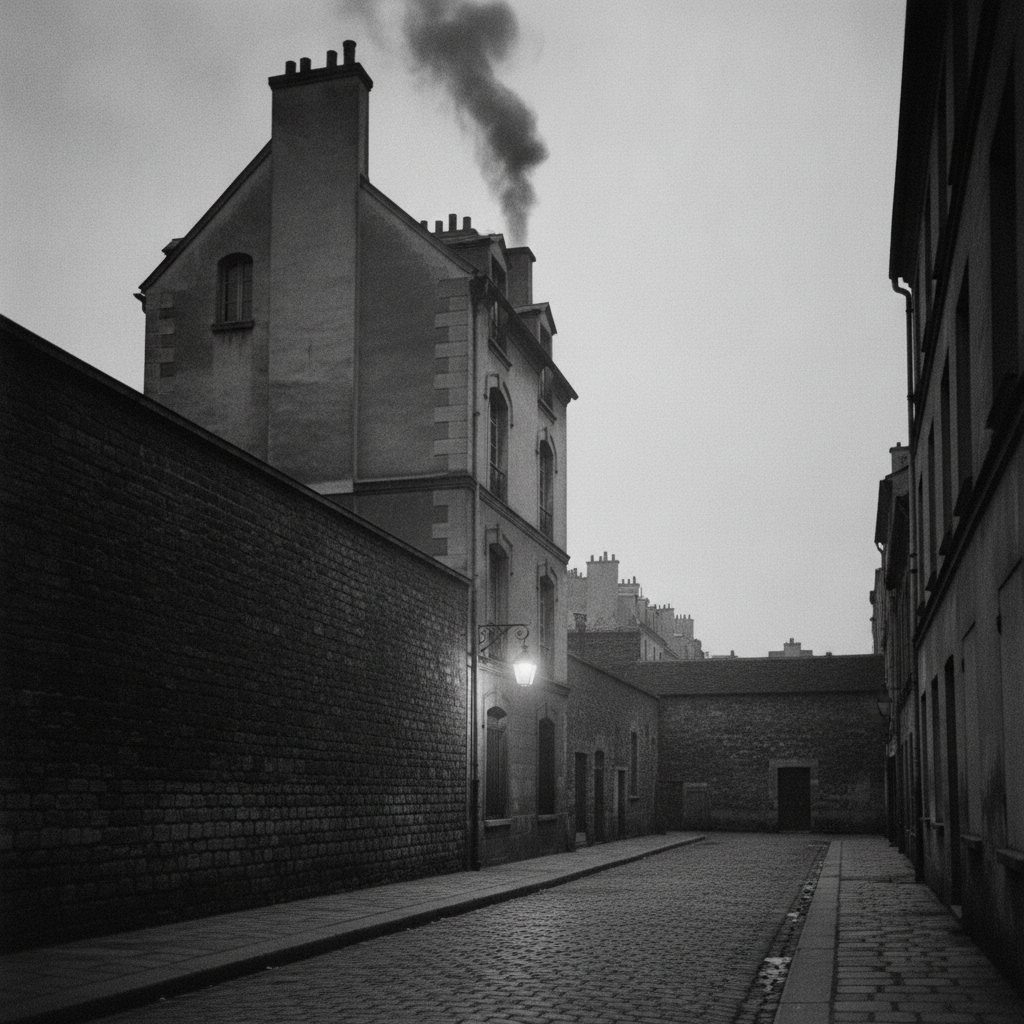
One chimney was different. On a short, quiet street called rue Le Sueur, the chimney of number 21 had been sending out thick, greasy smoke for days. The house was supposed to be empty. The smell that came with the smoke was heavy and sweet, and it settled over the whole street.
On 11 March 1944, the neighbours had had enough. They called the police, and the police called the fire brigade.
What the firemen found in the cellar that afternoon became one of the worst criminal cases in the history of France.
The house belonged to Marcel Petiot, a 47-year-old doctor with a busy practice in central Paris. For about 2 years he had been selling desperate people a secret escape route out of occupied France, to Argentina. There was no escape route. The people who paid him came to rue Le Sueur at night with their savings packed in suitcases, and they never left.
This is the story of those crimes, of an investigation that began under the German occupation and ended after it, and of the trial in 1946.
A city where people needed to disappear
To understand how the crimes worked, you first need to understand Paris in 1942.
The German army had occupied the city since June 1940. In 1942 the arrests of Jews in France became mass arrests, and whole families were deported to camps in the east. Others also needed a way out: people wanted by the Gestapo, the German secret police, men escaping forced labour in Germany, and some criminals who had made dangerous enemies.
Getting out of France was very hard. The borders were watched. Papers were checked everywhere. So a black market in escape grew up. Some of the people who offered a way out were brave and honest. Some were cheats who took the money and did nothing. And one of them was a murderer.
This was the ground Marcel Petiot worked on. His victims could not go to the police, because many of them were already being hunted by the police. And when they vanished, their families often believed, or hoped, that they had reached safety abroad.
The doctor
Marcel Petiot was born on 17 January 1897 in Auxerre, a town in Burgundy, south-east of Paris.
His record was troubled from an early age. As a teenager he was charged with robbing a postbox. During the First World War he was wounded and gassed, was arrested for stealing army supplies, and was diagnosed by army doctors with mental illness. He was discharged with a disability pension.
After the war he took a shortened medical course and qualified as a doctor in December 1921. He settled in a small town in the same region, and in 1926 he was elected its mayor.
That same year, in May 1926, a young woman he was having an affair with disappeared. Neighbours said they had seen him loading a large trunk into his car. The police treated it as a young woman who had run away from home. No one was ever charged. Many writers on the case now see her as his possible first victim. This was never proven.
As mayor he was accused of stealing from the town's funds. In 1931 he was suspended and resigned. In 1933 he moved to Paris and opened a practice on rue de Caumartin, a busy street in the centre of the city, near the Opera.
In Paris there were rumours about him: illegal abortions, and too many prescriptions of narcotics to addicts. In 1936 he was caught shoplifting in a bookshop and spent 7 months in a psychiatric hospital. In July 1942 he was convicted of overprescribing narcotics and fined 2,400 francs. Two addicts who might have testified against him had disappeared before the trial.
His patients saw none of this. To them he was a doctor with a good address, a wife and a teenage son.
The way out that did not exist
In August 1941, Petiot acquired the house at 21 rue Le Sueur. He had the walls around its courtyard built higher, so that no neighbour could see in.
From 1942, a story began to spread quietly through Paris. There was a man, people whispered, a certain "Doctor Eugene", who could get you out. For 25,000 francs per person he would arrange the journey through Portugal to Argentina, with false papers and contacts along the way.
The story was spread by recruiters. A hairdresser and a music-hall performer sent clients to "Doctor Eugene". Later, a cabaret singer arranged the departure of whole families. According to the investigation, they believed, or said they believed, that they were helping people escape.
The client was told to come at night to the house on rue Le Sueur. They were to bring their money, their jewels and their best clothes, packed in suitcases, because they would need them to start a new life in South America. They were told to tell nobody.
Then came the last step. Argentina, the doctor said, required vaccinations before entry. He gave them an injection.
The exact method of killing is described differently in different sources. The prosecution said the injection contained poison. Other accounts describe a poison gas released into a small sealed room in the cellar, or both together. All the accounts agree on one detail: the door of that room had a peephole, through which someone outside could watch.
The first known victim was Joachim Guschinow, a Jewish furrier who lived near Petiot's practice. On 2 January 1942 he left home to begin his escape. According to the case files, he was carrying more than 1 million francs, and jewels. He was never heard from again. His wife believed for a long time that he had reached Argentina.
Others followed. From late October 1942, according to the investigation, the cabaret singer arranged the departure of 12 people, among them several Jewish families who had fled from Germany and other countries to Paris. One of them was a family named Kneller: a father, a mother, and their young son, René.
In the spring of 1943 the clients changed. Between 1 April and 21 May 1943, 4 women disappeared together with the men who controlled them, criminals from the Paris underworld who had links to a French gang that worked for the Gestapo. They too had wanted to get out of France.
Nobody came back to complain. That was the whole point of the scheme. Anyone who walked through that door was believed to be far away, starting a new life.
The Gestapo gets there first
The first people to suspect "Doctor Eugene" were not the French police. They were the Gestapo.
The Germans had heard that someone in Paris was smuggling Jews and wanted men out of the country. They decided to get inside the network. They sent a prisoner, Yvan Dreyfus, to approach it as a client. Dreyfus went to the doctor, and disappeared like all the others.
A second informer, a Frenchman, got closer. On 23 May 1943 the Gestapo arrested Petiot, together with the recruiters who had been sending him clients. Petiot was held for about 8 months in Fresnes prison, just south of Paris, and was tortured.
He gave the Germans no names of Resistance fighters. The later investigation concluded that this was because he had none to give: there was no evidence that he had ever belonged to the Resistance. On 13 January 1944 he was released for lack of evidence.
According to the French case history, after his release he began to destroy the evidence at rue Le Sueur. 2 months later, the chimney started to smoke.
11 March 1944: the smoke
The firemen could not get in through the door. They broke a window and went down to the cellar.
In the cellar, a coal stove was burning. In it and around it were human remains. On the floor lay more: bodies, cut into pieces. Some heads had been dissected so the faces could not be recognised. Hands had their fingertips removed.
The police came in. In the courtyard they found a pit, the old septic pit of the house, partly filled with quicklime, a chemical that destroys flesh. It held more remains. More were found in a canvas bag.
What happened in the next hour is one of the disputed points of the case. **There are 3 different versions of it, and the documents do not settle which one is true.**
In the version told most often, Petiot himself arrived at the house by bicycle while the police were inside. He told the officers that the dead were Germans and traitors, killed by the Resistance, and that he was a member of it. The French officers at the scene, working under a German occupation, let him walk away.
In the second version, he never came to the house at all. The detectives went to look for him at his practice on rue de Caumartin, and found it empty.
In the third version, which has never been proven, he went to the headquarters of the French gang that worked for the Gestapo, and was told to disappear.
What is certain is the result. When the police reached his home and his practice, Marcel Petiot was gone.
What was in the house
Over the following days, the police searched 21 rue Le Sueur room by room.
In the cellar they found the small triangular room. Its walls were thick. It had double doors and had been soundproofed. Its door had the peephole. Some accounts say there was no handle on the inside.
They counted the dead, or what was left of them. In the first search they found the remains of at least 10 people. The chief coroner of Paris told reporters that the real number was much higher.
Then came the suitcases. In the end the investigators gathered 72 suitcases and 655 kg of belongings, including 1,760 pieces of clothing. Some were in the house. Others turned up later at the home of a man in the countryside who had been hiding suitcases for the doctor.
The belongings became the most important evidence in the case. Bodies destroyed in quicklime cannot be recognised. A suitcase can. A coat can. A child's clothes can.
An investigation under occupation
The case went to a senior detective of the Paris police, Commissaire Georges-Victor Massu.
His position was almost impossible. Paris was still occupied. The suspect claimed to be a Resistance fighter. Many French officers had no wish to hunt down a man who might be a patriot, on behalf of the Germans. During the investigation, according to several accounts, a message arrived from the German side calling Petiot a dangerous madman. To some officers, that only made him look more like a hero.
The detectives started with what they had.
They questioned Petiot's brother, Maurice, a shopkeeper in Auxerre, about the quicklime that had been delivered to rue Le Sueur. According to several accounts, he admitted that he had arranged a delivery on his brother's instructions. He was later charged with manslaughter. The charge was dropped, and he was never convicted of anything.
They questioned the workmen who had rebuilt the house, and learned who had built the triangular room and the high courtyard walls. They traced the recruiters. Suddenly, the Gestapo arrests of the year before made sense.
Above all, they worked through the suitcases. Families of missing people were invited to come and look. Joachim Guschinow's wife recognised her husband's belongings. Among the clothes was a pair of child's pyjama trousers. They belonged to René Kneller, the little boy who had disappeared with his parents.
By May 1944, the police files held a long list of names. Some were people the recruiters had sent. Others were criminals who had vanished from the underworld. Some came from Petiot's past, among them the young woman who had disappeared in 1926.
But the man himself could not be found.
The doctor becomes a captain
From March to October 1944, Marcel Petiot hid in Paris. For part of that time, according to the investigation, he lived with one of his patients. He grew a beard and used false names.
In August 1944, Paris was liberated. The Germans left. The French Forces of the Interior, the armed Resistance, took over many of the city's barracks and much of its security work.
Petiot joined them. Under the name "Captain Valery", he was given a post as a security officer at the Reuilly barracks in the east of Paris. Part of his job was to track down collaborators.
The man wanted for the murder of dozens of people was now a Resistance officer, investigating other people's crimes.
Meanwhile, the police investigation changed hands. After the Liberation, Commissaire Massu himself was arrested on suspicion of collaboration with the Germans. The case passed to another police inspector.
The letter
In September 1944, a Resistance newspaper called "Resistance" published an article about the case under the headline "Petiot, soldier of the Reich". It claimed that Petiot had been working for the Germans all along.
Petiot could not let it pass. He wrote a reply by hand, denying everything and insisting that he was a patriot, and sent it to be published.
It was the mistake the police had been waiting for. The letter proved that he was alive and still in Paris. And it was in his own handwriting.
The detectives reasoned that a man who had joined the Resistance forces would have filled in forms. They compared the handwriting of the letter with the handwriting of officers serving with those forces in Paris. The search narrowed.
The arrest
On 31 October 1944, a man was recognised on the stairs of the Saint-Mande-Tourelle metro station, on the eastern edge of Paris. It was Marcel Petiot.
He was arrested on the spot. He was carrying a pistol, more than 31,000 francs in cash and about 50 sets of identity documents. In his pockets were membership cards of political organisations that, in the weeks after the Liberation, made a man look like a hero of the Resistance.
After almost 8 months, the hunt was over.
The trial
While the investigating judge prepared the case, Petiot waited in prison. His wife, his brother and the man who had hidden the suitcases were all investigated. In the end, the charges against all 3 were dropped. Petiot stood trial alone.
The trial opened at the criminal court of Paris on 18 March 1946. Some sources give 19 March. Petiot faced 135 charges, including 27 murders committed between 1942 and 1944. Among the 27 were 12 Jewish men, women and children, and 4 criminals with the women who worked for them.
His defence was the same story he had told since March 1944. He said he had been in the Resistance. He said the people he had killed were Germans, collaborators and traitors. On the second day of the trial he claimed to have killed 63 such "enemies of France". He admitted to 19 of the 27 victims in the indictment.
The prosecution asked simple questions. If the dead were German agents, why was a child's pyjama among their clothes? Why had whole Jewish families paid him to escape? Where was their money? And why could he not name a single real member of his supposed Resistance network?
The psychiatrists who examined him found no mental illness. They said he was fully responsible for his actions.
His lawyer, one of the best-known defence lawyers in France, spoke for 6 hours. It did not help.
On 4 April 1946, Petiot was found guilty and sentenced to death. The sources differ on the number of murders in the verdict: some give 24 of the 27, others 26.
The end
His appeal was rejected on 16 May 1946. The head of France's provisional government refused to pardon him.
On 25 May 1946, at 5:07 in the morning, Marcel Petiot was executed by guillotine in the courtyard of La Sante prison in Paris. He was 49 years old.
The money and jewels of the people he killed were never found. Estimates of the sum vary widely: some put it at about 100 million francs of the time, and figures at the trial went up to 200 million. No one knows where it went.
What is still open
The true number of victims is unknown. 27 were in the indictment. He was convicted of 24 or 26, depending on the source. He himself claimed 63. The police files of 1944 contain other names that were never brought to court.
The day of the discovery is also still disputed. Whether Petiot really rode up on a bicycle and talked his way past the police, or never came at all, has never been settled from the documents.