The Servant Girl Annihilator: 8 Dead in Austin in One Year, and a Killer Nobody Ever Named
In 1885 Austin was a small city that wanted to be a big one.
It is the capital of Texas, in the south of the United States. About 14,500 people lived there. A grand new state capitol was going up in the middle of town. There were hotels, restaurants, saloons that stayed open all night, and streets of dirt that turned to mud when it rained.
There were no street lamps worth the name on most of those streets. There was no fingerprinting anywhere in the world yet. Blood could not be typed. The words "serial killer" did not exist.
That year, somebody began walking into the backyards of Austin at night.
He came on dark nights and moonlit nights, usually after midnight. He went into the small cabins and back rooms where the servants of the city's families slept. He came with an axe, and sometimes with a knife, a sandbag or a long thin spike.
Between the last night of 1884 and Christmas Eve 1885 he killed 8 people and badly wounded at least 8 more, according to the count later published by the magazine Texas Monthly.
Most of the dead were Black women who worked as cooks and maids in white households. The last 2 were white women from respectable families.
The city called the killer many things. The name that stuck came from a young bank clerk who would later become famous as the writer O. Henry. In a letter to a friend in May 1885 he joked that the town was dull, apart from the "Servant Girl Annihilators".
The killer was never caught. Nobody was ever convicted of any of the murders. This is the story of what happened, what the police did, and why it failed.
The first night
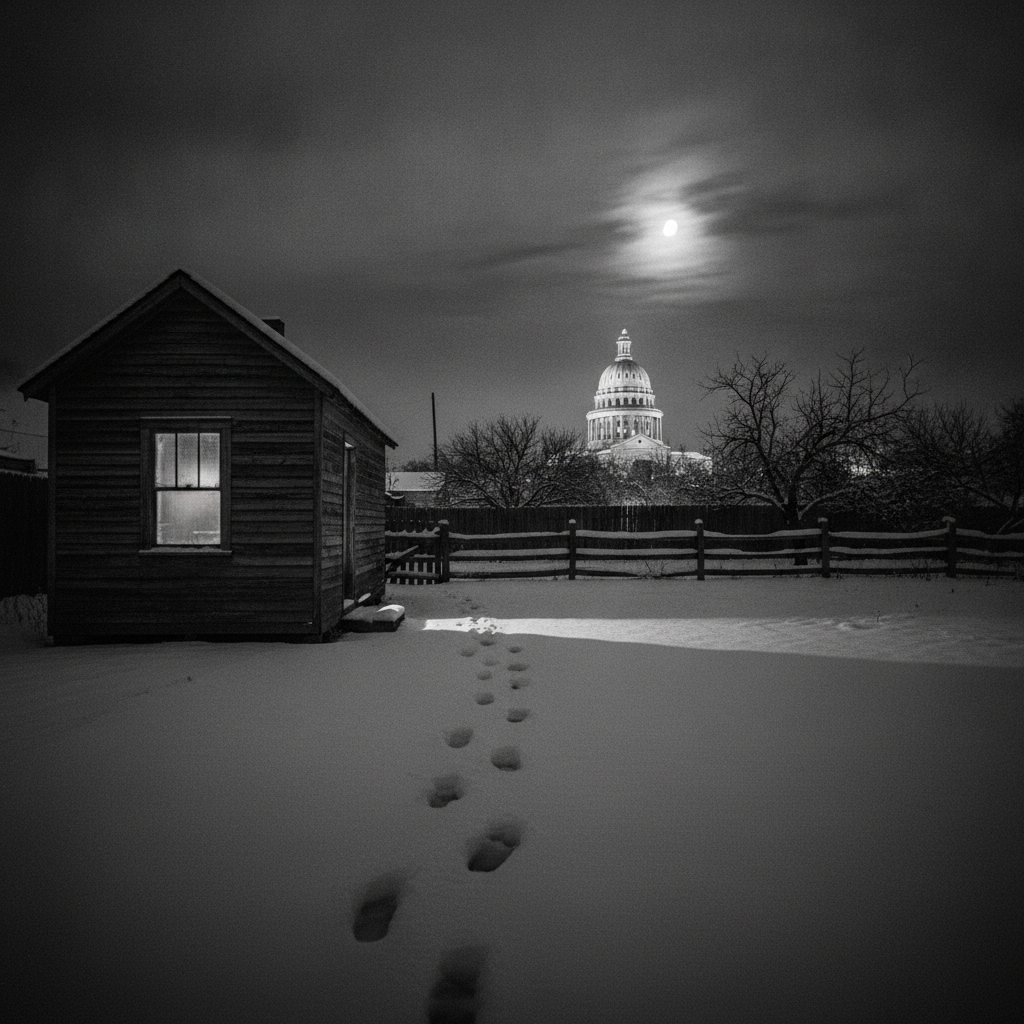
The first attack came in the night between 30 and 31 December 1884, in a cold spell when snow lay on the ground.
Mollie Smith was a cook of about 25. She worked for a family on Pecan Street, the street that is now called Sixth Street. She lived in a small room behind the kitchen with her partner, Walter Spencer.
At about 3 in the morning, Walter Spencer staggered into the bedroom of a relative of the family. He was bleeding from 5 deep wounds to the head. He begged for help. He could not say who had attacked him. Mollie was gone.
When the police came they found the little room soaked in blood. The furniture was overturned. A mirror was shattered. There were bloody handprints on the walls and on the door. The axe lay at the foot of the bed.
At about 9 in the morning a neighbour followed a trail of blood across the yard. About 30 metres from the room, near the outhouse, lay Mollie Smith. She had been dragged out of her bed alive. She had been struck with the axe in the head and stabbed in the chest, the belly, the arms and the legs. She appeared to have been raped.
The wrong men
The police went first to the people closest to her. That was the normal thing to do, and here it was wrong.
They arrested a Black bartender who had once courted Mollie. Three people swore they had walked him home from a party after 4 in the morning. An inquest jury still called him the most likely suspect. In March 1885 a grand jury found the evidence too weak, and he was quietly let go.
Walter Spencer himself, the man who had nearly been killed beside her, was also put on trial. He was acquitted.
For 4 months nothing else happened. Austin decided it had been one terrible night.
May: the cook behind the doctor's house
Early on the morning of 7 May 1885 the killer struck again, in another part of town.
Eliza Shelly was a cook of about 30. She lived with her children in a small cabin behind the house of the doctor she worked for. She was found dead on the floor. She had an axe wound over her right eye, and holes had been driven near her ear and between her eyes. She had probably been raped.
This time there was a witness. Her eldest son was 8 years old. He said a man had come in with a rag over his face. The man asked where the money was, and said he was leaving for St. Louis in the morning.
Outside the cabin there were footprints. They were bare. The killer had taken off his boots to walk quietly.
The police seized on that. They arrested a Black teenager simply because he was barefoot. When his feet were measured against the prints, they did not match, and he was released.
Two weeks later
Shortly after midnight on 23 May 1885 Irene Cross, a servant, was attacked in her room on another street.
Her young nephew saw the man. He described him as large, barefoot, in a brown hat and a ragged coat. Irene ran out into the yard. The attacker caught her there. Her right arm was nearly cut through, and her head was so badly cut that a reporter said she looked as if she had been scalped.
She died 2 days later, on 25 May.
Three women were now dead, all of them Black servants, all attacked in the small hours, in their beds, behind the houses where they worked. It was after this that the clerk wrote his letter about the "Servant Girl Annihilators".
Then, again, the killings stopped. In June a reporter wrote that Austin was "once more serene".
August: a mother and her daughter
At about 5 in the morning of 30 August 1885, a man found Rebecca Ramey lying unconscious, with her skull fractured.
Her daughter Mary was 11. The killer had knocked her out with a sandbag, carried her to a washhouse, raped her and attacked her with an axe. A long, thin object had been driven into her ear. Mary died a little over an hour after 2 doctors arrived.
Rebecca survived. She could not say who had attacked them.
The city marshal, the head of the Austin police, arrived at the scene about 7 hours after the crime. For the first time in Texas, according to one account, the police brought bloodhounds onto a murder case. The dogs led them to a barefoot young man whose feet fitted the prints. A doctor said he had nothing to do with it, and he too was released.
Austin's Black residents knew who was dying. They formed a committee at the courthouse and asked the mayor, the city council and the governor of Texas to offer a reward. They were refused. Only after a newspaper criticised the refusal did citizens raise reward money themselves.
September: four people in one cabin
Before 1 in the morning of 28 September 1885, the killer entered a cabin on San Marcos Street.
Four people were sleeping there. He struck 2 women, Patsy Gibson and Lucinda Boddy, with a sandbag. Both survived with fractured skulls.
He killed Orange Washington, a young man who was there with his sweetheart. Orange died a few hours later.
His sweetheart, Gracie Vance, was dragged out through a window and across to a nearby stable. There she was beaten with a brick and raped. A local paper wrote that her head had been "almost beaten into a jelly".
This time a survivor named a name within minutes. One of the wounded women said the attacker was a Black man she knew. He was arrested, and his clothes, stained with blood, were taken. He had an alibi. He was kept in jail for weeks while the blood was examined, and it turned out to be his own. Months later he was released.
**This is the pattern that runs through the whole case: every time the police had a suspect, the evidence fell apart, and the attacks went on.**
The hunt that found nothing
By the autumn of 1885 the hunt for the killer had become enormous, and almost useless.
The bloodhounds ran the dirt streets of Austin night after night. They picked up trails and lost them. Private detectives were brought in from outside the city. Their presence only made the panic worse.
The police arrested men in large numbers. On 26 December 1885 The New York Times reported that about 400 men had been arrested in Austin during the year. Not one of them was ever successfully tried for the murders.
The descriptions of the attacker did not agree. Witnesses described a white man; a dark man; a light-skinned Black man with his face blackened; a man in a woman's loose dress; a man in a slouch hat; a man with a rag over his face. Some people believed there were 2 attackers, or a gang.
Many white officials refused to believe that a single man was doing all this. In their eyes each murder was a separate crime among the city's Black servants, with its own separate culprit. That belief shaped the whole investigation.
Then came Christmas Eve, and everything changed.
Christmas Eve
Around midnight on 24 December 1885, the killer went into the home of a carpenter named Moses Hancock on East Water Street.
His wife Susan Hancock was a white woman, described in the press as one of the most refined ladies in Austin. Her husband found her in the backyard. She had been struck with an axe. A long, sharp instrument had been driven through her right ear about 5 centimetres into her brain. According to one account she lived for a few more days and died on 28 December.
About an hour later, across town on West Hickory Street, it happened again.
James Phillips, a young man who worked as an architect, was found unconscious in his parents' home with axe wounds to the head. He and his wife Eula were living there with their baby.
Eula Phillips was 17. She was found outside in the yard, naked and dead. Accounts differ on whether it was her in-laws' yard or a neighbour's. She had been killed by a blow to the head and had apparently been raped. Heavy pieces of timber had been laid across her arms to pin them down. A bloody handprint was left on a fence.
The bloodhounds were brought again. They followed a trail for about 3 kilometres out of the city, and then lost it.
On Christmas morning the city newspaper ran the headline "BLOOD! BLOOD! BLOOD!"
The city takes over
Until Christmas the victims had been almost all Black, and the city had been slow. Now 2 white women were dead in one night, and Austin moved fast.
The mayor called an emergency meeting at the capitol. More than 1,000 people came. A safety committee was formed, partly to stop crowds from lynching anyone. Citizens and businesses raised several thousand dollars. The committee offered a reward of 1,000 dollars. The governor offered 300 dollars more. Outside detectives were hired. A strict curfew was imposed, the all-night saloons were ordered to close at midnight, and about 30 more police officers were put on the streets. Men patrolled their neighbourhoods at night.
And the police now turned to the husbands.
The two husbands
James Phillips was arrested on 1 January 1886. Rumours had spread that he had learned his wife was seeing other men, and had killed her himself. Witnesses said he had once threatened to kill her if she was unfaithful. The prosecution argued that he had copied the killer's methods to hide his own crime.
He was convicted, and according to one account sentenced to 7 years. Within months the conviction was overturned on appeal, for lack of evidence. One modern account says simply that he was found not guilty. Either way, he was never lawfully held guilty of his wife's death, and under the law he remained innocent.
Moses Hancock was also accused of killing his wife. The prosecution said she had planned to leave him because of his drinking. His trial ended without a conviction: most accounts say the jury could not agree, one says he was acquitted. He was freed, and in law he too remained innocent.
Many people at the time believed that blaming the husbands was a way for powerful men in Austin to say that there was no single killer at all, at the very moment the state was trying to show off its new capitol.
Here the trail ends
After Christmas Eve 1885 the killings stopped.
There were no more murders that anyone attributed to the same man. The newspapers wrote that the killer, or killers, seemed to have left Austin.
**From here on there is no evidence that leads anywhere. No weapon was ever traced to a person. No witness ever identified the attacker in a way that held up. No confession was ever made. Every person charged was set free.**
The case was never solved. The reasons are plain. The police of 1885 had no fingerprints, no blood typing, and no idea that one man could kill again and again for a year. The bare footprints were measured but never matched to a guilty man. The bloodhound trails ran out. Officials spent months treating each murder as a separate case. And by the time the city took the killings seriously, the killer was gone.
The suspects on the record
Three names have been put forward over the years. All of these men died long ago. None was ever tried for these murders, and each must be treated as innocent.
**A young cook shot by the police.** In February 1886, shortly after the last murder, police shot a 19-year-old cook named Nathan Elgin while he was attacking a girl with a knife. He died. In 2014 the American public television programme History Detectives named him as a suspect: he worked near the crime scenes, and he was missing a toe, which matched an odd footprint believed to be the killer's. The problem: he was never tried, the footprint evidence has never been tested by modern methods, and the whole case against him rests on a single comparison.
**The cook who sailed to London.** A cook known only as Maurice, said to be from Malaysia, worked at a hotel in Austin near where many of the victims lived. He left the city by ship in January 1886, bound eventually for London. An 1888 Austin newspaper article raised his name. The problem: there is no evidence placing him at any crime scene. The theory rests on where he worked and when he left.
**Jack the Ripper.** In 1888, when the Whitechapel murders began in London, an American newspaper editor suggested the same man might have done both. Some modern writers have repeated the idea, including a theory that the Liverpool merchant James Maybrick was in Austin at the time. The problem: no link has ever been proven, and the Austin attacks, with axes and attacks on couples in their beds, were different from the London killings in method.
The fullest modern account of the case is the book The Midnight Assassin by Skip Hollandsworth, published in 2016.
For Mollie Smith, Eliza Shelly, Irene Cross, Mary Ramey, Gracie Vance, Orange Washington, Susan Hancock and Eula Phillips, no one was ever held to account.