The Murder of William Desmond Taylor: A Hollywood Director, a Shot at 8 PM, and 104 Years Without an Answer
On Wednesday, 1 February 1922, William Desmond Taylor spent the evening at home.
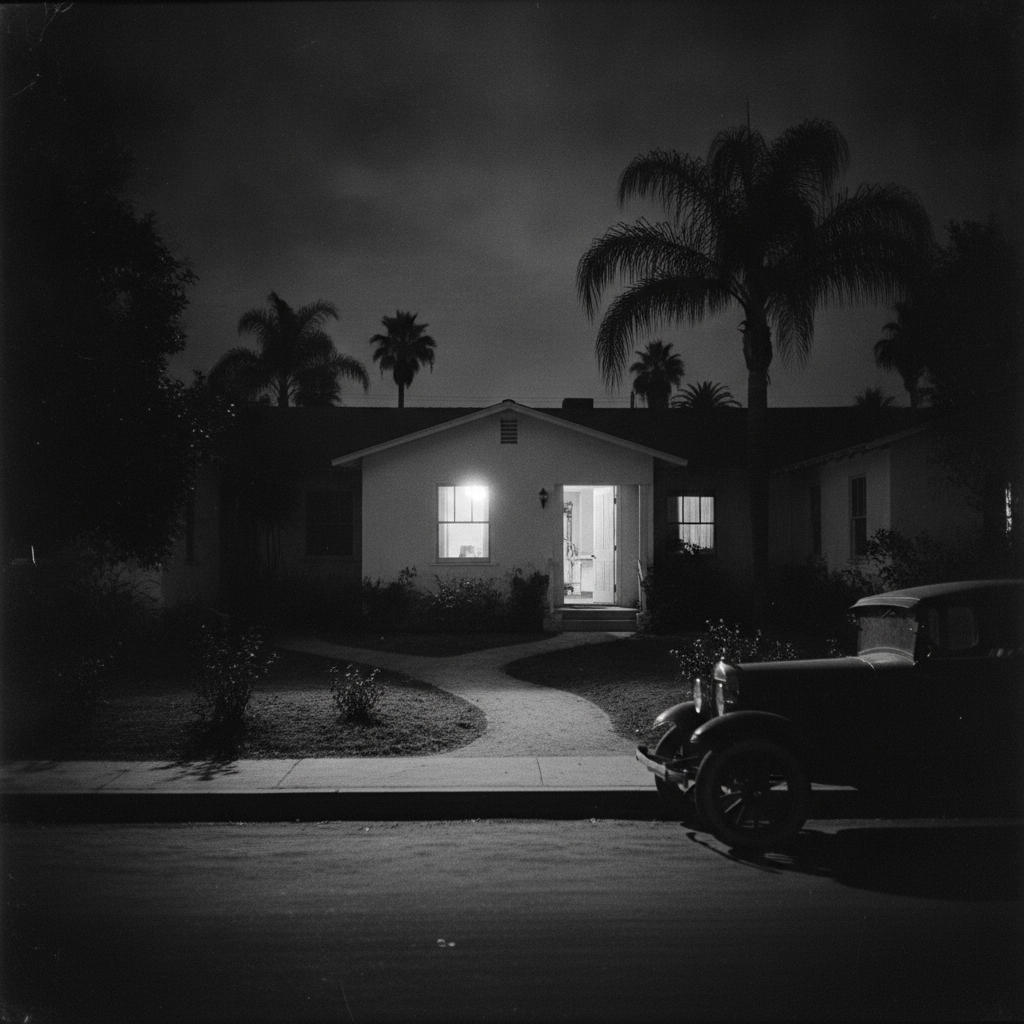
He was 49 years old. He lived in a bungalow in a quiet courtyard of the Alvarado Court apartments, in the Westlake district of Los Angeles, California, USA. Several of the neighbours were film people like him.
He was a successful Hollywood film director. He had made about 60 films.
At about 7 in the evening a visitor came. It was Mabel Normand, one of the biggest comedy stars of the silent screen, and a close friend.
They talked. According to one account they drank a few cocktails. He had promised to lend her a book, and she took it with her.
She left at about 7:45. Some accounts say 7:35. Her chauffeur was waiting outside, and he later confirmed her story.
She was the last person known to have seen William Desmond Taylor alive.
The noise in the courtyard
At about 8 o'clock, a woman in the bungalow next door heard a loud bang.
Her husband, a film actor, was upstairs. She thought it was a car backfiring in the street. She opened her door and looked out.
A figure was coming out of Taylor's door. It wore a long coat, with the collar turned up, and a cap pulled low over the face.
The figure did not run. It walked away calmly.
Later she described it to the police as looking "like my idea of a motion picture burglar". She also said something odd about the way it moved and looked, as if it were wearing film make-up. She was never sure whether it was a man or a woman dressed as a man.
Because the figure walked so calmly, she decided the noise had been nothing. She went back inside.
Nobody went to check on the director that night.
The morning: a body on the floor
On Thursday, 2 February, at about 7:30 in the morning, the director's valet arrived for work. He was the man who cooked, cleaned and ran the house.
He opened the door and saw his employer lying on the floor. He ran out into the courtyard, screaming that Mr. Taylor was dead.
In the next half hour, the bungalow filled with people.
Neighbours came in. The landlord came in. Film people came in. According to several accounts, at least one employee of the Paramount studio, which made Taylor's films, came in before the police did. He left with a wire basket of letters.
Then a man in the crowd said he was a doctor. He looked at the body and declared that Taylor had died of a stomach haemorrhage, a natural death.
He left. Nobody ever learned who he was. He was never seen again.
When the police arrived, shortly after 8, the scene had already been walked through by a crowd. Things had already been moved and removed.
It was not a haemorrhage
The truth appeared only when the body was examined properly.
William Desmond Taylor had been shot. One bullet, in the back. According to one account it went upward through the lung and stopped near the neck. Many accounts give the calibre as .38; others speak only of a small-calibre pistol.
No weapon was found in the house.
His wallet was in his pocket, with 78 dollars inside. On his body were a silver cigarette case, a pocket watch, a pen knife, and a ring with a 2-carat diamond. Around his neck was a locket. Inside it was a photograph of Mabel Normand.
This was not a robbery. Whoever shot him had not touched any of it.
There was one detail about money that never fitted. The day before, Taylor had shown his accountant a large sum in cash. That money was never accounted for. Some later accounts say he withdrew 2,500 dollars and put the same amount back into the bank a day later. The sources do not agree, and the question was never settled.
The police fixed the time of death at about 7:50 to 8 in the evening. That is a few minutes after the comedy star left, and exactly when the neighbour heard the bang.
So the facts were simple: a famous man shot in the back at home, a witness who saw someone leave, and nothing stolen.
What nobody knew, then or now, was who it was.
A man with a second name
The detectives soon found that the victim himself had been living with a secret.
William Desmond Taylor was not his real name.
He was born William Deane-Tanner, on 26 April 1872, in County Carlow, Ireland. His father was a retired army major.
As a young man he went to America. He worked on a ranch in Kansas, then moved to New York and acted on stage. In 1901 he married. In 1902 a daughter was born. He worked in his father-in-law's antiques shop in New York.
On 23 October 1908 he walked out of that life and disappeared. He left his wife and his 6-year-old daughter behind.
In 1912 he came back to the surface in California under a new name. His wife divorced him that same year. In 1914 he became a film director. According to one account, in 1918 his former wife went to the cinema and recognised her missing husband on the screen.
In July 1918, at 46, he enlisted in the army to serve in the First World War, and he returned to Los Angeles in May 1919. The film directors of the city gave him a formal banquet in his honour.
So the police were investigating the murder of a man whose past had been hidden for 14 years. Anyone from that past could have had a reason.
The former valet
The first suspect was the man who had worked in the house before.
Taylor's former valet and cook was a young man with an invented English accent and several false names. He had been in the navy, the coast guard and the army, under different names, and had deserted.
In 1921, while Taylor was in Europe, this valet stole from him. He forged Taylor's signature on cheques, stole his clothes and jewellery, and wrecked his car. Taylor fired him.
Then something stranger happened. A few months later Taylor received a letter from this man. Inside was a pawn ticket for one of the stolen items. It was made out in the name "William Deane-Tanner".
That is the real name that almost nobody in Hollywood knew.
The former valet knew Taylor's secret. And he wanted Taylor to know that he knew.
Later, according to the accounts, he broke into the bungalow again. The burglar left footprints on Taylor's bed.
According to later inquiries, the former valet quit his job in northern California on the very day of the murder, and vanished.
The film studio offered a reward for information on him. The police searched for him for years. A letter arrived signed with his name, claiming he could clear everything up. Nobody could confirm it was really him. As late as 1929 he was still listed as wanted.
**He was never found. No one knows whether he was alive or dead in 1922, or what he did that night.**
The neighbour's description of the figure in the coat did not fully match him.
The current valet
The man who found the body was also questioned.
3 days before the murder, he had been arrested on a morals charge.
The police looked at him and cleared him.
But that did not stop the newspapers. One reporter even staged a fake "ghost" scene, trying to frighten him into a confession. He confessed to nothing.
He moved to San Francisco within months. In 1930 he was admitted to a state mental hospital, and he died there in December 1931.
The comedy star
Mabel Normand was questioned for many hours. She had been the last person to see the victim alive, and her photograph was in the locket on his body.
Her story did not change. Her chauffeur confirmed it. The police cleared her.
But the newspapers did not clear her.
Letters from her to Taylor were found in the bungalow. The press called them "the Blessed Baby letters". A newspaper report at the time claimed they had been taken from the house early in the investigation, read, and then quietly put back for detectives to "find".
Rumours began that she used drugs, and that Taylor had been trying to protect her from the men who sold them. She died of tuberculosis on 23 February 1930.
The young star and her mother
Then the police found more letters.
These were love letters from a very young film star whom Taylor had directed. She had starred in his version of "Anne of Green Gables" in 1919. In the letters she wrote that she loved him.
The newspapers printed copies of them. It badly damaged her image.
The police then turned to her mother. They found her statements evasive.
The mother owned a rare .38 pistol, and unusual bullets for it. According to later accounts, she said she had thrown the pistol into a bayou in Louisiana. The pistol was never recovered, so it could never be compared with anything.
For years after the murder, the mother lived largely abroad. In 1938 her other daughter publicly accused their mother of the murder. Nothing came of it in court.
This became the strongest line of suspicion in the case: a mother who wanted to keep a 49-year-old man away from her young daughter.
It was also never more than suspicion. No witness placed her at the courtyard that night. No weapon was ever matched.
The investigation falls apart
In the weeks after the murder, newspapers across America ran the story every day.
The core problem never went away. The scene had been contaminated in the first hour. Letters had been removed. A false doctor had declared a false cause of death and vanished. What remained was a witness who had seen a figure in a cap, at night, from a doorway, and could not say whether it was a man or a woman.
According to a famous film director who researched the case in 1967, a detective told him that, within a week, the police had been told to "lay off".
The county undersheriff of the time warned a reporter that the case had already done great damage to the film industry.
Over the years, several district attorneys of Los Angeles County looked at the file. At least 2 of them said publicly that they would not bring charges against the young star's mother.
Almost 20 years after the murder, the district attorney of the time reviewed the case once more. He concluded that there was not enough evidence to indict her. He recommended that the files be kept permanently.
They were not kept. Over the years, the physical evidence and the files disappeared.
Where it stands
The murder of William Desmond Taylor was never solved.
No one was ever charged. No one was ever tried.
**Here is exactly where the record stops: a figure in a coat walked out of the bungalow at about 8 in the evening, and no one has ever proved who it was.**
The weapon was never found. The bullet cannot be compared with any gun. Most of the police file is gone. Only in 2007 were copies of a few surviving police documents made public.
Every person who was ever seriously suspected has been dead for decades.
The comedy star died in 1930. The valet who found the body died in 1931. The young star's mother died in 1957. The young star herself died on 4 August 1984. The former valet disappeared in 1922 and was never found.
What remains is a list of theories.
The suspects and theories on the record
**The young star's mother.** The theory proposed by the film director who researched the case in 1967: she came to the bungalow, found her daughter there or looked for her, and shot Taylor. The evidence: her .38 pistol, her evasive statements, and her motive. The problem: no witness saw her there, the gun was never found, and 2 district attorneys refused to charge her. That director never published his conclusions.
**The former valet.** The evidence: he had already robbed Taylor, he knew his real name, and he vanished the same day. The problem: the witness's description did not fully match him, and no one could ever place him in Los Angeles that night.
**Hired killers linked to drug dealers.** The theory proposed by an American book editor who later wrote about the case: Taylor planned to help the authorities against the men who sold drugs to the comedy star, and they had him killed. The problem: there is no document that shows such a plan.
**A former actress who confessed.** An actress who had once worked with Taylor reportedly confessed to the murder shortly before her own death in 1964. Her life had been troubled: she was tried and acquitted in 1917, and jailed on an extortion charge in 1923. According to one account, she made the confession to a priest, with neighbours present. The problem: the sources for this confession are weak, and it has never been confirmed.
**The past he ran away from.** Some writers asked whether someone from his first life in New York found him. One suggestion was his own brother. The problem: there is no evidence for it, and the details do not fit.
104 years later, no theory has been proved, and the case remains open on paper.