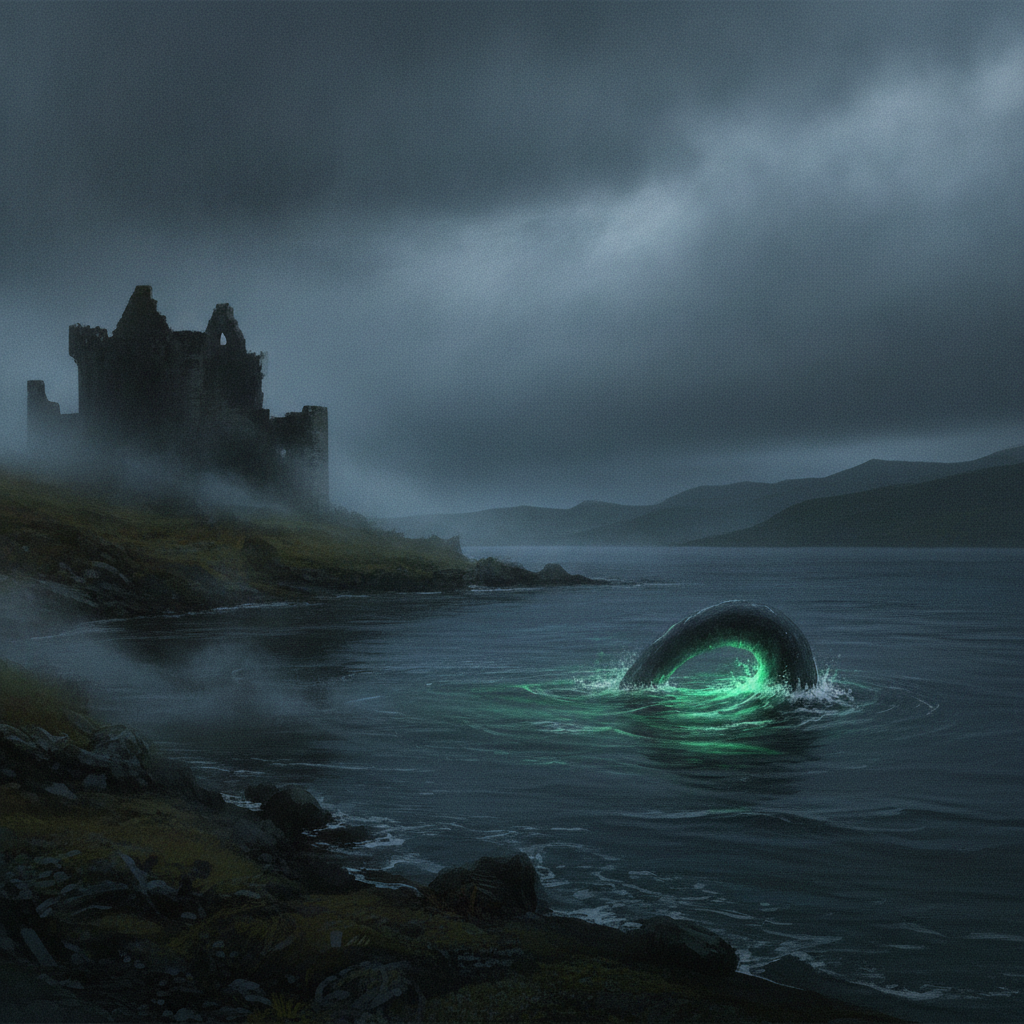
Loch Ness: What the Evidence Actually Says
Loch Ness lies along the Great Glen, the geological fault that cuts Scotland diagonally from coast to coast. The loch is twenty-three miles long, about a mile wide, and in places more than 750 feet deep. It holds more fresh water than every lake in England and Wales combined. The water is stained almost black by peat washed down from the surrounding hills, so that visibility below the surface is measured in inches rather than feet. On its western shore stand the ruins of Urquhart Castle, the most photographed vantage point on the loch and the setting of a large share of the reported sightings.
The loch itself is young. It was scoured out by ice and filled only after the glaciers of the last Ice Age retreated, roughly ten thousand years ago. It is cold year round, its depths are close to constant temperature, and biologists have long described it as poor in food compared with lochs of similar size. Salmon, trout, sticklebacks, pike and large numbers of European eels are the animals known to live in it.
You have used your free reads for this month.
Unlock all 208 documented mysteries - in 8 languages, ad-free.
Get full access