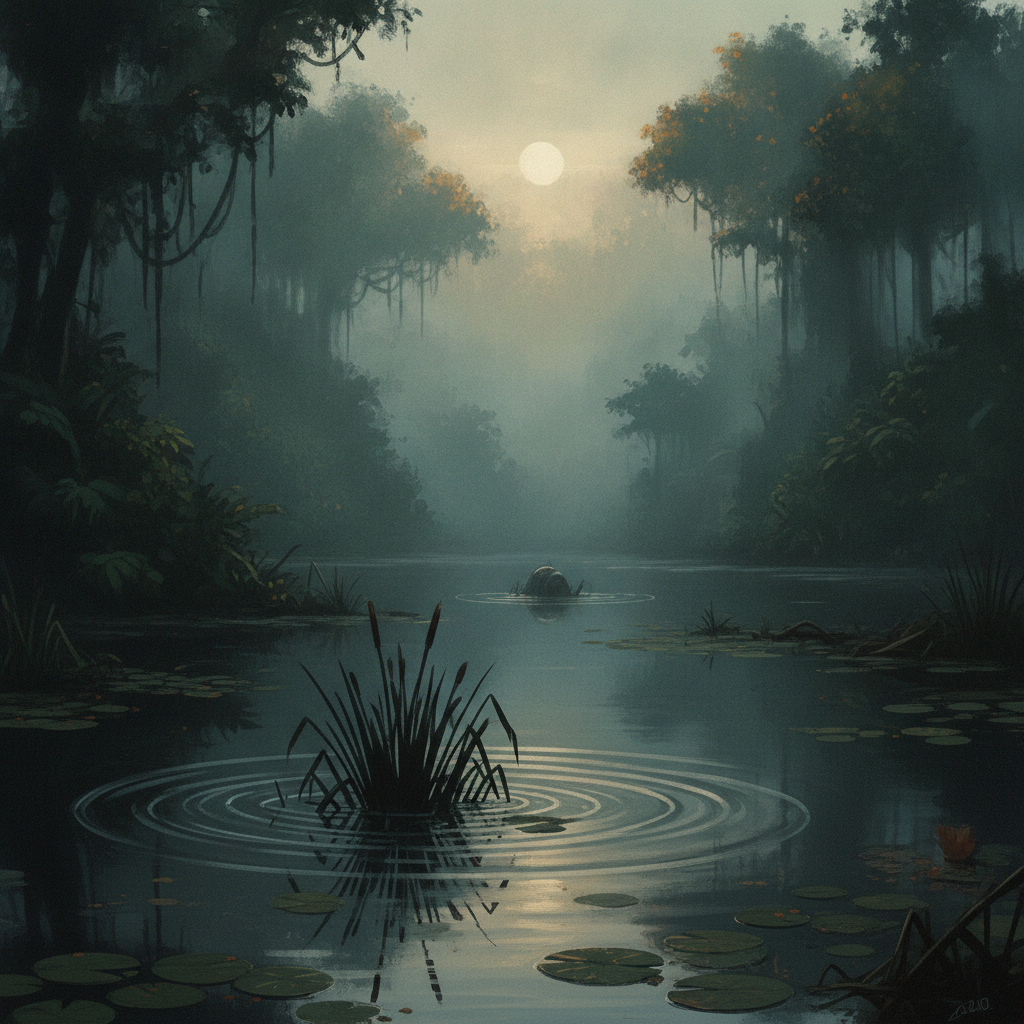
Mokele-mbembe: A Century of Searching the Congo Swamps for an Animal Nobody Can Produce
The Likouala region in the north of the Republic of the Congo is one of the least travelled places on the planet. It is a low basin of flooded forest and black-water swamp roughly the size of a small country, drained by slow rivers and cut by almost no roads. Somewhere near its centre lies Lake Tele, a shallow body of water about five kilometres across, ringed by forest that stands in water for much of the year. Getting there means a river journey followed by days of walking through swamp. The village of Boha, whose people are regarded as the custodians of the lake, controls the approach to it.
For well over a century, people living across this basin have described a large animal in the deep pools and channels. In Lingala the name usually given to it is mokele-mbembe, generally translated as one who stops the flow of rivers. The accounts are not uniform, but several elements recur: an animal much larger than a hippopotamus, living in water, dangerous to canoes, said by many to feed on plants rather than fish or meat. In parts of the region it is spoken of with the caution reserved for things that are genuinely hazardous, and in others it carries prohibitions and meanings that have nothing to do with zoology.
Hai usato le tue letture gratuite di questo mese.
Sblocca tutti i 227 misteri documentati - in 8 lingue, senza pubblicita.
Accesso completo