Two Tickets to the Cinema: Thirty-Four Years After a Prime Minister Was Shot on a Public Street
Olof Palme telephoned his son on the evening of 28 February 1986 and asked whether there were still tickets for the film.
He was fifty-nine years old and the Prime Minister of Sweden. His security detail had been told earlier that day that he would not need them that evening - a decision he made regularly, and one that his officers had stopped arguing with, because he considered it important that a Swedish prime minister should be able to walk through his own capital without an escort. It was a small country, and he thought it should stay that way.
He and his wife Lisbet took the underground into the centre of the city. They met their son and his girlfriend at the Grand cinema on Sveavagen, one of the main streets of Stockholm, and watched a Swedish comedy called The Brothers Mozart. It ended at about a quarter past eleven. They stood outside talking for a few minutes, said goodnight, and started walking south towards the underground station, arm in arm.
At the corner of Sveavagen and Tunnelgatan, a man came up behind them.
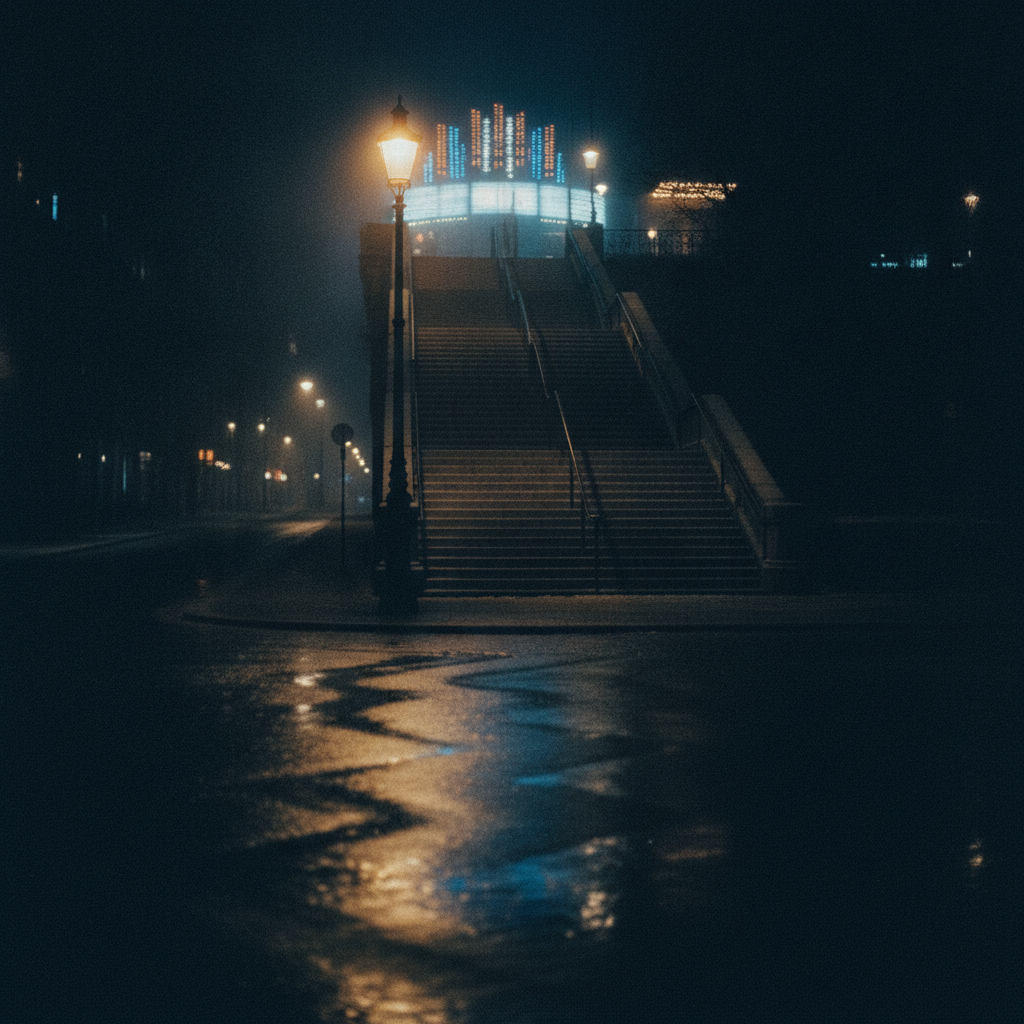
He fired twice. The first bullet went through Palme's back and out of his chest. The second grazed Lisbet. The man then ran east up Tunnelgatan and up a flight of steps that leads to the streets above, and was gone.
It was around a quarter to twelve on a Friday night on a busy central street. There were people on the pavement. A passing taxi driver radioed for help. Two young women who had been nearby went to Palme and tried to help him. An ambulance took him to hospital, where he was declared dead shortly after midnight. Lisbet survived.
The Prime Minister of Sweden had been shot dead in public, at close range, in front of witnesses, and the man who did it walked up a staircase and disappeared into the city.
Why a Swedish prime minister had enemies
To understand the size of the investigation that followed, it helps to understand who had been shot.
Palme was not a consensus figure. He led the Social Democrats and served two separate terms as prime minister, and he had spent his political life saying things out loud that heads of small neutral states generally did not say. He condemned the American bombing of Vietnam in the strongest terms and marched in Stockholm alongside the North Vietnamese ambassador, which caused a diplomatic rupture with Washington. He compared events in the war to historical atrocities, in language that was widely reported and widely resented. He was an outspoken opponent of apartheid in South Africa and a supporter of liberation movements elsewhere. He criticised the Soviet Union too, though this was less remembered afterwards.
Domestically he was equally divisive. He was the architect of an expansion of the Swedish welfare state and of proposals to shift ownership in the economy toward employee funds, which parts of Swedish business regarded as close to expropriation. Within Sweden's security services and its officer corps there were people who considered him naive at best about the Soviet threat, and there were long-running suspicions - never proven - about what elements of those services thought of him.
The practical consequence for the investigation was that the list of people and organisations with a motive was not short. It included foreign intelligence services, arms-industry interests, domestic political extremists of more than one variety, and individuals with private grievances. Every one of those lines was pursued at some point across thirty-four years. None of them produced a prosecution.
The first hours, and what was lost in them
What happened next is the reason this case is taught in police academies.
There was no national coordination in place for something of this kind, because nothing of this kind had happened. A Swedish prime minister had not been assassinated in modern times. The initial response was run locally, and the officer in charge chose a theory early: that this was the work of a Kurdish militant organisation with a presence in Sweden.
That decision shaped everything. Resources went into it. The alternative lines were worked more thinly, or later, or not at all. The theory eventually collapsed, but by then the first days were gone, and the first days are where a case like this is won.
Basic things were not done, or were done late. The murder weapon was never recovered - a revolver of a specific and identifiable type, and the two bullets were found, but not immediately: one was picked up by a member of the public and handed in, and the other was found on the street the following morning. The area was not sealed effectively. Witnesses were not all interviewed promptly, and some were interviewed in ways that later made their evidence contestable.
There is one detail about the escape route that has never stopped bothering investigators. The steps the gunman ran up - a long, steep public staircase connecting the lower street to the district above - are not something a stranger to Stockholm would know to use. They are not visible from where the shooting happened. A person fleeing at random, in the dark, would be far more likely to run along the street. Whoever went up those steps either knew the city well or had walked that route before.
That observation cuts in an uncomfortable direction, and it was made early. It suggests someone local. It does not, by itself, suggest who.
Over the following decades the investigation grew into something without precedent in Sweden: more than twenty-two thousand distinct lines of inquiry, tens of thousands of pages, an archive measured in shelf-metres. Roughly a hundred and thirty people confessed to the murder. None of the confessions held.
The file also accumulated something else, which is harder to measure and did real damage: the case became a national obsession. Private investigators, retired officers, journalists and amateurs built rival theories and defended them in public for decades. Books were written. Some of the theories were serious work. Others were not, and the noise made it progressively harder for anyone inside the investigation to be heard saying anything cautious.
The man who was convicted, and then was not
In 1988, two years after the killing, police arrested a man named Christer Pettersson.
He was a local with a record of violence and addiction. The case against him rested substantially on identification: Lisbet Palme picked him out, and identified him as the man who shot her husband. Her son also gave evidence. In 1989 Pettersson was convicted of the murder.
He did not stay convicted. On appeal, the court found the identification unsafe. The way the line-up had been conducted was criticised - Pettersson was, in the view of the appeal court, distinguishable from the other men in a way that undermined the exercise, and Lisbet Palme had by then seen his face in the press. There was no weapon linking him to the crime and no forensic evidence. The conviction was overturned and he was released. A later application by prosecutors for a retrial was refused by the Supreme Court.
Pettersson died in 2004. He had at various points both denied the killing and made statements that could be read as admissions, which is a pattern common in men who enjoy the attention and is worth very little as evidence either way.
That left the case where it had been in 1986, except that a man had spent time in prison for it and been released, and the Prime Minister's widow had been publicly disbelieved by a court. Neither of those things made the next thirty years easier.
The Skandia man
On 10 June 2020, thirty-four years and three months after the shooting, the chief prosecutor Krister Petersson - no relation to the man convicted in 1989, and the coincidence of names has confused this case for decades - held a press conference and said the investigation was over.
He named Stig Engstrom.
Engstrom had been a graphic designer working at the Skandia insurance company, whose offices stood a short distance from where Palme was shot. He was at work that evening, doing overtime. He came out onto the street immediately after the shooting. He spoke to police, gave interviews to newspapers, and described what he had seen - and over the years he described it many times, in versions that shifted.
For most of the investigation he was a witness. He was, in fact, one of the more visible witnesses, because he kept talking to journalists. He was known in the files as the Skandia man.
The case the prosecutor set out in 2020 was circumstantial and he said so. Engstrom had been in exactly the right place at exactly the right moment. His account of his own movements did not match what other witnesses described, and the discrepancies were of a kind that made him harder to place at the scene as a bystander than as something else. He had done military service with weapons training and had access, through a shooting club connection, to the type of revolver believed to have been used. He moved in circles hostile to Palme politically. His clothing, on descriptions given at the time, resembled what some witnesses said the gunman wore.
And Engstrom had died on 26 June 2000, by his own hand, twenty years before the prosecutor said his name.
That is why the case was closed rather than charged. Under Swedish law a prosecution cannot be brought against a dead man. The prosecutor's position was that he had reached the point where he believed he knew, that no charge was possible, and that continuing to spend public resources on the file could not be justified.
What was said, and what was not
It is important to be precise about what the 2020 announcement was and was not.
It was not a verdict. No court has ever examined the evidence against Engstrom. He was never charged, never tried, and never had the opportunity to answer - and the case against him was assembled largely after his death, from material that had been in the archive for years.
There is no forensic evidence tying him to the killing. The revolver has never been found. No witness identified him as the gunman. The prosecutor presented a reading of the file that he considered the most probable, and he was explicit that it was that.
Members of Engstrom's family have rejected the conclusion. So have a number of investigators and journalists who worked the case for decades, some of whom regard the naming of a dead man who cannot defend himself as the weakest possible way to end the largest investigation in the country's history. A later request to reopen the investigation was refused.
Conclusions and Open Questions
The Palme case is usually discussed as a mystery. It is more accurately a study in how an investigation can be lost in its first week and never recovered.
**The early decision cost the case.** Choosing a single theory in the opening days, and organising the response around it, is the failure that everything else follows from. Physical evidence was not secured. The perimeter was not held. Witnesses were not systematically processed while their memories were fresh. By the time the initial theory was abandoned, the material that a later investigator would have needed no longer existed in usable form. It is a reasonable inference that a differently run first week would have produced a different outcome - though it must be said that assassinations by a lone gunman with no accomplice and no confession are among the hardest crimes there are, and a clean first week does not guarantee an arrest.
**Was Engstrom the man?** Honestly: unproven, and now unprovable. The circumstantial case has real content - the location, the timing, the inconsistent accounts, the weapons background, the politics. It also has a structural weakness that cannot be repaired. It was built backwards, from a conclusion toward the evidence, using an archive in which almost any of the twenty-two thousand lines could be made to look suggestive if examined with a name already in mind. That is not an accusation of bad faith against the prosecutor. It is a description of what happens when a file that large is searched for a specific shape.
**Why did the identification fail?** Lisbet Palme was standing beside her husband when he was shot and she was struck herself. She named a man. An appeal court concluded that the process by which she named him was not reliable enough to convict on. Both of those statements can be true at once, and the case has never recovered from the fact that they are. The treatment of her evidence remains one of the most contested aspects of the whole affair in Sweden.
**And the question that will not close:** a head of government was killed in the open, in a country that had assumed such a thing could not happen there, and the state was unable to establish who did it to a standard that any court would accept. Sweden built its response to that - the security arrangements, the coordination structures - out of what went wrong that night. The file is closed. The question of what happened on Sveavagen at a quarter to twelve is not, and now cannot be.