The Cartoon That Sent 700 Children to Hospital
At half past six in the evening on December 16, 1997, across Japan, roughly four million households did the most ordinary thing imaginable. They turned on the television to watch Pokemon. The show was a phenomenon and so were the games, and this was episode thirty-eight, a story called Dennou Senshi Porygon, which translates roughly as Computer Warrior Porygon. In it, Ash, Misty and Brock shrink down and travel inside a computer network to stop Team Rocket. For about twenty minutes it was exactly the bright, frantic, harmless entertainment that millions of children had settled in front of after school and dinner.
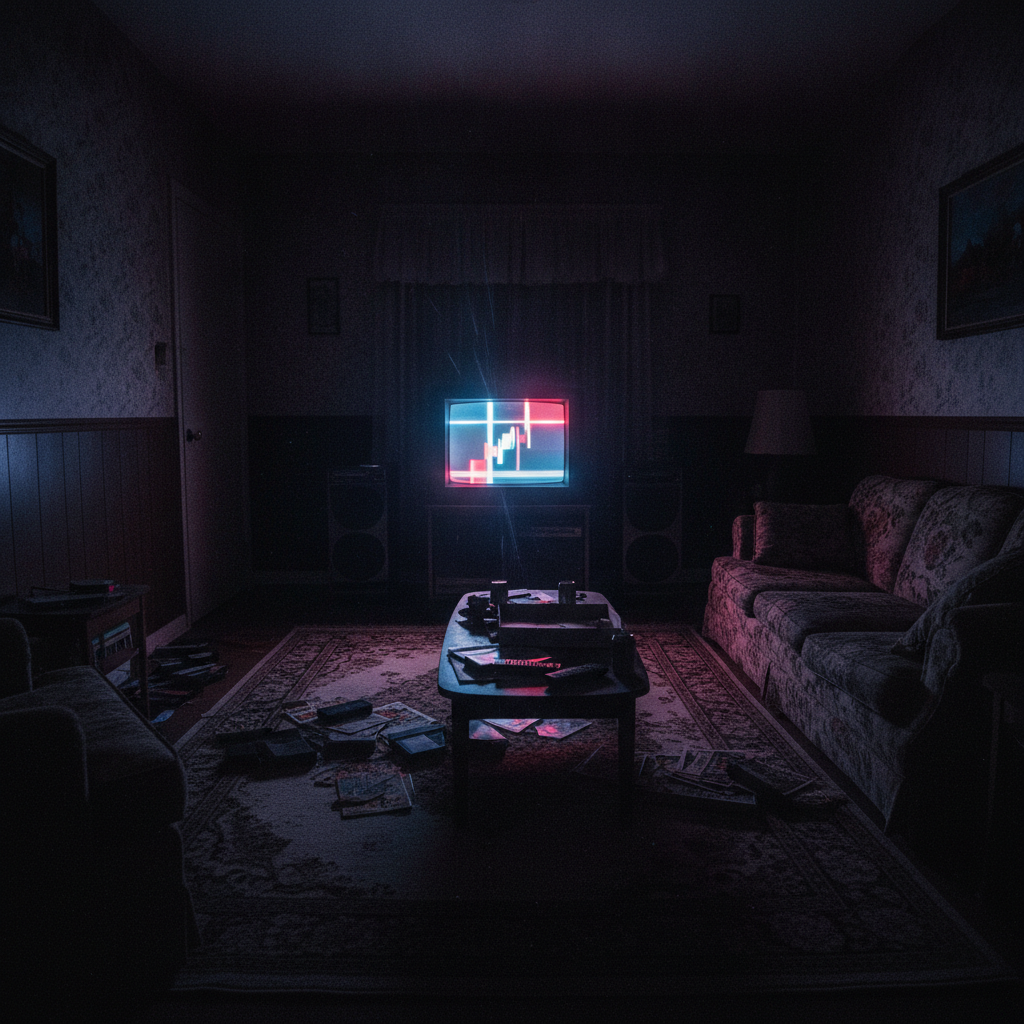
Then, roughly twenty minutes in, at around 6:51 in the evening, Pikachu used its Thunderbolt attack to destroy a wave of what were, in the story, virtual vaccine missiles. The animators depicted the explosion using a technique the industry calls paka-paka, alternating full-frame flashes of red and blue, cutting from one color to the other on every frame at a rate of about twelve flashes per second. For roughly four seconds, tens of millions of young retinas were hit with intense, saturated, strobing red and blue light filling the entire screen.
In living rooms all over the country, children began to collapse. Some complained of blurred vision, headaches, dizziness and nausea. Others seized outright, their bodies convulsing, some losing consciousness. Parents who had been in the kitchen heard the thud of a child falling. Ambulances were called in numbers Japan had never seen for a single cause on a single night.
By the time the tally was assembled, 685 children had been taken to hospitals, 375 girls and 310 boys. More than two hundred were admitted. A few arrived unconscious. Two remained hospitalized for more than two weeks. Beyond the hospital cases, an estimated twelve thousand additional children reported milder symptoms, the headaches and the queasiness and the strange dread, that never required a trip to the emergency room.
The shape of the event was unlike any ordinary public health emergency. It did not build over weeks. It arrived in a single instant, simultaneously, in millions of homes, at the same second of the same broadcast. A mother in Osaka and a father in Hokkaido, hundreds of kilometers apart, heard the identical thud at the identical moment. Switchboards lit up. Hospitals that had no warning of what was coming filled within the hour with pale, frightened, vomiting children who had all been doing the same harmless thing.
There is one detail that turned a medical emergency into something stranger. That evening, as the news broke, television stations across Japan reported the incident, and in doing so some of them re-broadcast the very footage that had caused the harm. A second wave of children, watching the news coverage of children being hurt by a cartoon, were themselves hurt by the same few seconds of red and blue. After that, broadcasters learned to freeze the frame and to describe the footage rather than show it.
The official response was swift and severe. NHK broke the story just before ten that night. The next morning TV Tokyo issued an apology, pulled the program and launched an investigation. Police questioned the producers about the episode's contents and how it had been made. Video shops stripped Pokemon tapes from their shelves. Nintendo's stock fell around four hundred yen on the Tokyo exchange, and the company's president, Hiroshi Yamauchi, noted somewhat defensively that the original Game Boy games had been in black and white and could hardly be blamed. The Pokemon anime went dark for four months. The episode itself, Dennou Senshi Porygon, was pulled from rotation and has never been aired again, in Japan or anywhere else, from that day to this. It presumably still exists in an archive. No broadcaster has been willing to show it.
The medical explanation was identified quickly and is not disputed in outline. It is photosensitive epilepsy. In a susceptible brain, certain visual stimuli, above all light that flashes at particular frequencies, can trigger a cascade of abnormal, synchronized electrical activity in the visual cortex that spills over into a full seizure. The danger zone runs roughly from three to thirty flashes per second, and deep, saturated red is especially provocative, apparently because of the way it drives large populations of neurons to fire in lockstep. The Pokemon explosion sat almost exactly in the worst part of that range: high-contrast, full-field, red and blue, at around twelve hertz, for several seconds, on screens that in Japanese homes were often watched from close up in a darkened room.
Two further facts were established afterward and belong to the record. Photosensitive epilepsy is rare. The usual estimate is that only around one person in four thousand, or one in five thousand, is genuinely photosensitive, and most of those already know it because they have a diagnosed seizure disorder. And a three-year follow-up study of just over a hundred of the affected patients found that only a minority went on to develop recurring seizures. Many of the children who convulsed that night had no identifiable predisposition before it and none after.
The legacy is the least ambiguous part of the story. The incident forced an entire industry to confront what its images could do to a nervous system. Japan adopted strict broadcast guidelines: flashing images must not flicker more than a few times per second, red flashes are held to an even tighter limit, and any such sequence is capped at a short duration. Britain and other countries developed their own standards, including the Harding test, an automated system that scans footage for dangerous flash patterns before it can be broadcast. Every modern film or game that carries a photosensitivity warning before it begins traces that caution, at least in part, to one four-second explosion in a children's cartoon. The episode is cited in Guinness World Records for causing more photosensitive seizures than any television broadcast in history. It was later parodied by The Simpsons and South Park. Porygon, the creature whose name was on the episode, did not cause the flash; Pikachu did. Porygon and its evolutions have never been given a starring role in the anime since.
Conclusions and Open Questions
The mechanism is settled. The scale is not. Photosensitive epilepsy affects perhaps one child in four or five thousand, and most of the affected already carry a diagnosis. Yet on that December night hundreds of children seized who had no prior history of epilepsy, and most of them never had another seizure. Explaining hundreds of first-and-only seizures from a population that should statistically have yielded a small handful is where the experts stop agreeing.
One school of thought holds that the arithmetic is simpler than it looks. Four million viewers is an enormous number, the trigger was uniquely powerful, and even a very low base rate of latent photosensitivity, spread across millions of children watching a near-optimal stimulus from close range, could plausibly produce hundreds of seizures. On this reading there is no deep puzzle, only a rare vulnerability revealed at unprecedented scale in children who happened never to meet another trigger that strong. The weakness of this account is that it has to treat every reported case as neurological, and many of the reported cases do not look neurological.
Other researchers were not satisfied that photosensitivity alone could carry the whole weight. Some of the reported cases, on closer inspection, did not resemble classic epileptic seizures. There were children with headaches, nausea, dizziness and fainting, symptoms that overlap far more with panic, hyperventilation and simple fright than with a convulsion. And there is the second wave, the children who fell ill watching news reports about children falling ill. On this view the ingredients of mass sociogenic illness were all present: a frightening event, saturation coverage on every channel, and children watching other children get hurt. Its weakness is equally clear. It cannot account for the severe cases, the children who arrived unconscious and the two who stayed in hospital for a fortnight, and applied too broadly it risks dismissing real neurological injury in children who genuinely suffered it.
Some argue for a combined reading, that December 16, 1997 was two overlapping events under one name: a genuine, unprecedented mass photosensitive seizure among the smaller number of truly vulnerable children, wrapped inside a much larger wave of fear-driven and suggestion-driven symptoms in children who were frightened, over-excited and watching each other react. This fits the evidence better than either account alone, but it is a framework rather than a finding, and no study has separated the two groups case by case.
What remains unexplained is a short list. Why had nothing on this scale happened before, when flashing effects were hardly unique to this one episode? The specific combination of red, contrast, frequency and duration is part of the answer, but so, possibly, is the simple fact that no single stimulus had ever reached four million children at the same instant with that force. Were the milder cases the same illness as the severe ones, or a small core of true neurological events surrounded by a much larger human reaction? How much did the coverage itself enlarge the event? And what became of the 685 over the following decades, given that the published follow-up covered barely a hundred of them?
None of these gaps discredit the science. They mark the place where clean biology meets frightened people, and the mixture has never resolved into a single clean line.