Туринская плащаница: ткань, которая не выдаёт свой возраст
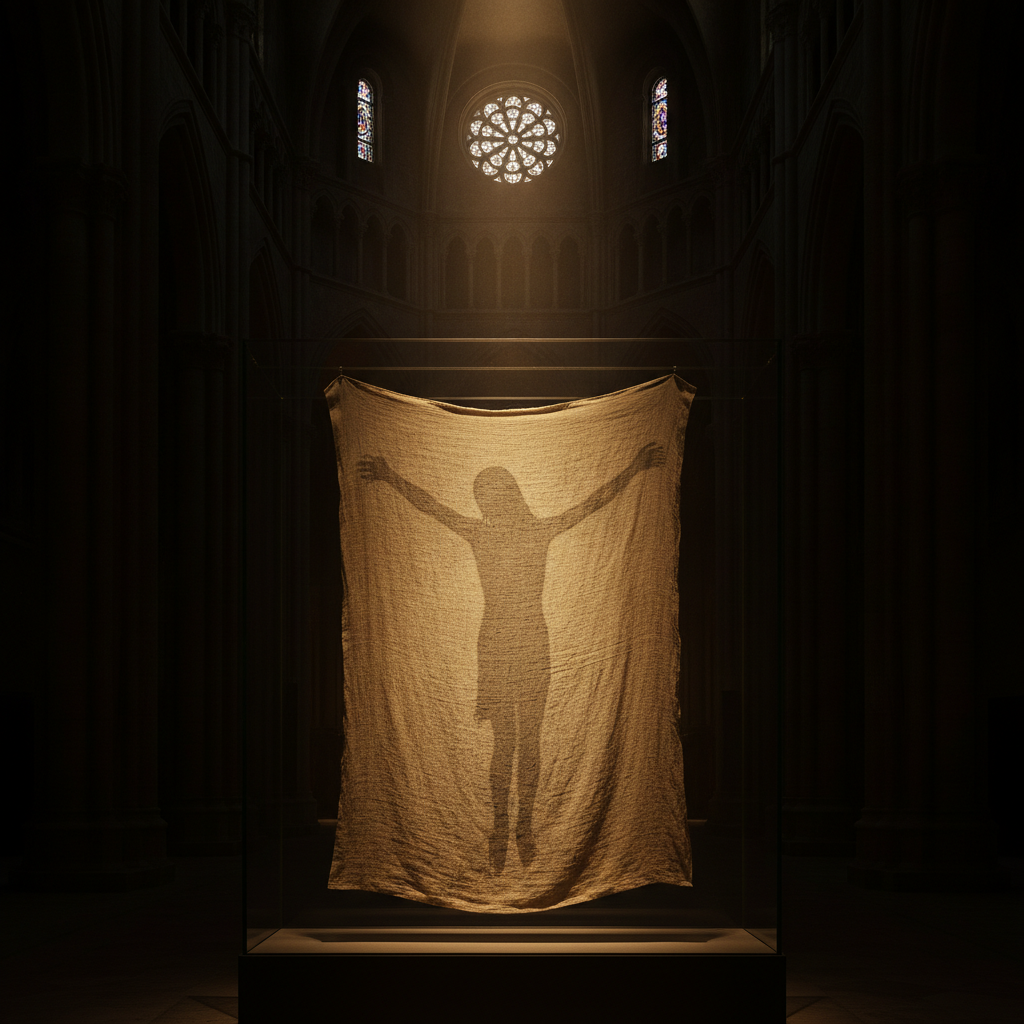
В боковой капелле Туринского собора, за пуленепробиваемым стеклом, ровно лежит полоса льна в герметичном футляре, заполненном инертным газом. Она около 4,4 метра в длину и 1,1 метра в ширину, соткана саржей "три к одному" с рисунком елочки. На ней, столь бледное, что подошедший слишком близко посетитель может вовсе его потерять, парит переднее и заднее изображение обнаженного мужчины, уложенного как для погребения. Он бородат, руки сложены на чреслах, а поперек лба, вдоль бока, сквозь запястья и стопы тянутся темные пятна цвета старой ржавчины. Это Туринская плащаница, один из самых изученных предметов на земле и один из наименее разгаданных.
Физическое описание не оспаривается. Изображение поверхностно. Оно лежит на самых верхних волокнах каждой нити и не пропитывает ткань. Нет ни мазков кисти, ни контура, ни скопления какого-либо вещества там, где рука живописца сделала бы паузу. Пятна, читающиеся как кровь, находятся под изображением, а не поверх него. Эксперты описывали отметины на фигуре как соответствующие бичеванию, ране в боку грудной клетки и гвоздям, вбитым через запястья, а не через ладони. Что бы ни создало изображение на льне, оно создало его, не оставив видимого материала.
В письменные источники ткань входит поздно. Она появляется в 1350-х годах в Лире, небольшой деревне французской Шампани, в руках семьи Жоффруа де Шарни, рыцаря, павшего в битве при Пуатье в 1356 году. Ее выставляли в основанной им коллегиальной церкви, и паломнические значки, отлитые для тех показов, сохранились, в том числе один в музее Клюни в Париже, где ткань изображена поднятой между двумя гербами. Около 1389 года местный епископ Пьер д'Арси направил авиньонскому папе Клименту VII меморандум с возражениями против выставлений. Он писал, что его предшественник, епископ Анри из Пуатье, расследовал более ранний показ, что изображение есть дело рук человека-художника и что живописец был опознан и сознался. Ни одного документа с признанием не сохранилось; меморандум остается единственным его источником. Климент VII не запретил показы. Он постановил, что ткань можно выставлять при условии, что ее будут объявлять изображением, а не подлинной погребальной пеленой Христа.
В 1453 году Маргарита де Шарни, внучка Жоффруа, передала ткань Людовику, герцогу Савойскому, и та стала достоянием одного из правящих домов Европы, хранившимся в Сент-Шапель в Шамбери. В ночь на 4 декабря 1532 года там вспыхнул пожар. Жар расплавил часть серебряного реликвария, в котором лежала сложенная ткань, и расплавленный металл прожег слои, оставив симметричный ряд подпалин, видимых и поныне. Вода, которой тушили огонь, оставила новые пятна. В 1534 году монахини-клариссы нашили треугольные заплаты поверх прожогов и пришили с изнанки сплошную подкладку из голландского полотна. В 1578 году герцог Эммануил Филиберт перевез реликвию в Турин, где она остается по сей день.
Следующие три столетия ткань была предметом периодического почитания и почти никакого исследования. А затем, вечером 28 мая 1898 года, во время выставления в Турине, итальянскому адвокату и фотографу-любителю по имени Секондо Пиа позволили ее сфотографировать. Когда он вынул стеклянную пластину из проявочной ванны, смутное бурое пятно на льне сложилось на негативе в цельное, почти скульптурное человеческое лицо. Пятно на ткани ведет себя как фотографический негатив, где свет и тень поменялись местами. Пластины Пиа немедленно объявили артефактом темной комнаты. В 1931 году профессиональный фотограф Джузеппе Энрие повторил работу в контролируемых условиях при свидетелях и получил тот же эффект. Свойство негатива сегодня признают исследователи по обе стороны спора.
Прямой научный доступ появлялся медленно. В 1969 и 1973 годах архиепископ Турина созывал небольшие комиссии для осмотра ткани, а бельгийскому текстильщику Жильберу Раэсу дали образец, отрезанный от края. Швейцарский криминалист Макс Фрай прижимал к поверхности липкую ленту в 1973 и снова в 1978 году и собирал пыль и пыльцу. Крупнейшее исследование состоялось в октябре 1978 года, когда команда примерно из тридцати американских и итальянских ученых, работавшая как Исследовательский проект Туринской плащаницы, STURP, провела около 120 часов непрерывных испытаний на самой ткани, применив рентгеновскую флуоресценцию, инфракрасную и ультрафиолетовую спектроскопию, микрофотосъемку и снятие проб липкой лентой. Опубликованный вывод гласил, что красочного слоя, способного объяснить изображение, не найдено, а судебные эксперты команды сообщили, что красноватые пятна соответствуют человеческой крови.
В марте 1983 года изгнанный бывший король Италии Умберто II умер и завещал плащаницу Святому Престолу, впервые сделав Ватикан ее полноправным владельцем. Пять лет спустя Церковь разрешила радиоуглеродный анализ. 21 апреля 1988 года единственная полоска размером с почтовую марку была вырезана из угла ткани при свидетелях и разделена между тремя лабораториями: Университетом Аризоны в Тусоне, Швейцарской высшей технической школой в Цюрихе и Оксфордским университетом. Четвертую часть, "Riserva", оставил у себя архиепископ. Лаборатории работали независимо. Аризона сообщила о возрасте около 646 радиоуглеродных лет назад, Цюрих около 676, Оксфорд около 750. Совокупный калиброванный результат был объявлен на пресс-конференциях в Турине и Лондоне 13 октября 1988 года и опубликован в журнале Nature в феврале следующего года: диапазон 1260-1390 годов н. э. с достоверностью 95 процентов, помещающий лен в то же столетие, когда ткань впервые появилась в Лире.
С тех пор плащаница пережила одну чрезвычайную ситуацию и одно крупное вмешательство. В ночь на 11 апреля 1997 года в капелле Гварини, где она хранилась, вспыхнул пожар, и туринский пожарный Марио Трематоре пробил кувалдой пуленепробиваемое стекло и вынес футляр наружу. Лен не пострадал. В 2002 году Ватикан заказал реставрацию швейцарскому текстильному реставратору Мехтильд Флури-Лемберг, которая сняла заплаты 1534 года и голландскую подкладку, очистила мусор между слоями и разместила полотно плоско. С тех пор оно хранится горизонтально в герметичном футляре с контролируемым микроклиматом и показывается публике редко: главные современные выставления пришлись на 1998, 2000, 2010 и 2015 годы. Католическая церковь никогда не выносила решения о подлинности ткани. Папы почитали ее и называли иконой, образом для созерцания, оставляя вопрос о происхождении формально открытым.
Выводы и открытые вопросы
Все изложенное выше задокументировано. Почти все, что следует ниже, оспаривается, и спор идет между серьезными людьми, действующими добросовестно.
Радиоуглеродная дата 1988 года остается самым весомым пунктом дела. Ее защитники указывают, что три независимые лаборатории, не видевшие чужих чисел, сошлись на одном ответе и что этот ответ точно совпадает с документальной историей: ткань всплывает в Лире в 1350-х, а епископ сообщает о признании живописца уже через поколение. Слабость этой позиции в том, что никакого документа с признанием не сохранилось, а меморандум д'Арси есть враждебный пересказ с чужих слов, написанный в разгар спора о юрисдикции.
Ряд исследователей оспорил образец, а не метод. Химик Рэймонд Роджерс из команды STURP 1978 года сообщил в 2005 году, что волокна из испытанного угла содержали хлопок, краситель и следы ванилина, отсутствовавшие в основном полотне, и увидел в этом свидетельство невидимого средневекового ремонта, сдвигающего дату вперед. В 2019 году группа под руководством Тристана Казабьянки получила по судебному запросу сырые измерения лабораторий и доказывала, что отдельные результаты статистически менее однородны, чем должно быть у единого образца. Слабость здесь столь же очевидна: нигде нет записи о таком ремонте, опытные ткачи оспаривают саму возможность невидимой штопки такого размера, а простейшее объяснение согласию трех лабораторий состоит в том, что все они датировали один и тот же средневековый лен.
В 2022 году появились соперничающие часы. Итальянский исследователь Либерато Де Каро с коллегами применил широкоугловое рентгеновское рассеяние, чтобы измерить структурный распад целлюлозы льна, и сообщил, что молекулярное старение плащаницы напоминает лен из Масады в Израиле, надежно датированный 55-74 годами н. э. Метод предполагает известную историю температуры и влажности, а плащаница провела века в неизвестных условиях, включая пожар 1532 года. Сама группа Де Каро призвала другие лаборатории воспроизвести результат, и до сих пор ни одна не опубликовала подтверждения.
У изображения есть собственные соперничающие объяснения. Микроскопист Уолтер Маккрон доказывал по пробам с липкой ленты, что это разбавленная красная охра и киноварь в желатиновой темпере, гризайль, живопись и не более; возражение в том, что полный набор приборов STURP не обнаружил такого слоя на ткани. Историк искусства Николас Аллен предположил, что средневековый мастер использовал камеру-обскуру, кварцевую линзу и светочувствительную соль серебра, чтобы спроецировать изображение на лен, что прямо объяснило бы свойство негатива; возражение в том, что ни такого аппарата, ни мастерской, ни сопоставимого изделия так и не нашли. Инженер Джулио Фанти доказывал вспышку энергии, коронный разряд или излучение, опалившее поверхностные волокна; Роджерс ответил, что электрический разряд в воздухе оставляет на льне химические следы, которых здесь просто нет.
Другие нити тянут к древности, ничего не решая. Макс Фрай сообщал о пыльце растений, растущих вокруг Иерусалима и в анатолийской степи, но работал он в основном в одиночку, его образцы так и не были полностью проверены другими, а ранее он подтвердил подлинность поддельных дневников Гитлера. Венгерский Кодекс Прая, датированный примерно 1192-1195 годами, изображает нагую распятую фигуру со скрещенными руками и без видимых больших пальцев, лежащую на ткани с L-образным узором отверстий; одни утверждают, что это доказывает существование плащаницы до 1260 года, другие считают, что сходство объясняется общей художественной условностью. Некоторые исследователи говорят, что пятна крови на Судариуме из Овьедо, отдельном лицевом плате с более длинной документированной историей, совпадают с лицом плащаницы, хотя это соответствие независимо не подтверждено.
Необъясненное остается узким и упрямым. Почему изображение ведет себя как фотонегатив за пять столетий до фотографии? Почему нет вещества? Почему кровь лежит под изображением, а не над ним? И почему за шестьсот лет никто не воспроизвел весь эффект на льне никаким способом? Два метода датировки дают два несовместимых ответа, а повторно взять образец нельзя без разрешения, которое не дано. Для тех, кто ее почитает, плащаница остается иконой, чей смысл не зависит от лаборатории. Для всех прочих это необычайно хорошо изученный предмет, который до сих пор не выдал свой возраст.