Documented

The Book No One Can Read: Six Centuries of the Voynich Manuscript

2026-06-15 · Unsolved Ciphers · 2 min read

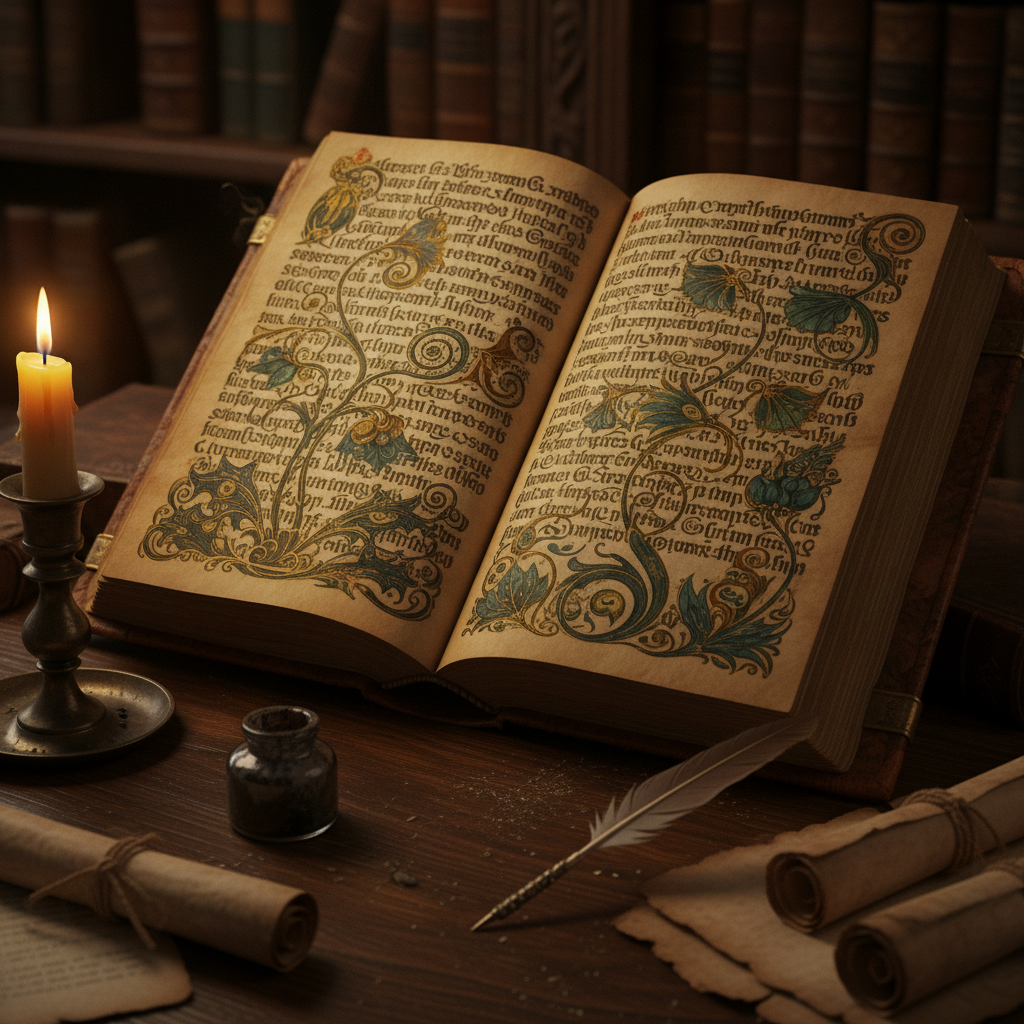
In 1912, a Polish-born rare-book dealer named Wilfrid Voynich was sifting through chests of old volumes at Villa Mondragone, a Jesuit college near Rome, when he found a small codex unlike anything he had ever handled. Its vellum pages were covered in an elegant, flowing script that belonged to no known alphabet — and in paintings of plants that belonged to no known world.

At first glance, the manuscript — roughly 240 surviving pages — looks like an ordinary medieval scientific compendium: botanical drawings, zodiac wheels, astronomical diagrams, pharmaceutical jars, and page after page of dense text. Look closer, and everything dissolves. The plants match no species botanists can identify. Naked women bathe in pools of green liquid connected by strange tubes. And the writing — dubbed "Voynichese" — flows confidently from left to right, with almost no corrections, as if its author knew exactly what it meant.

In 2009, researchers at the University of Arizona radiocarbon-dated the parchment to between 1404 and 1438, ruling out a modern forgery. The book's later trail is fragmentary: a 1665 letter to the scholar Athanasius Kircher claims that Emperor Rudolf II of Bohemia once bought it for 600 ducats, believing it to be the work of Roger Bacon. That claim, like almost everything else about the book, has never been verified.

Ad

What is certain is who failed to read it. William Friedman — who led the American team that cracked Japan's Purple cipher in World War II — studied the manuscript for decades together with his wife Elizebeth, one of the great codebreakers of the century, and got nowhere. Computers have fared no better: in 2018, an artificial-intelligence analysis at the University of Alberta announced the text was encoded Hebrew, a claim specialists dismissed within days. Statistical studies only deepen the puzzle — the text obeys Zipf's law and other patterns typical of real languages, something a careless hoax should not produce.

The theories keep multiplying: an unbreakable cipher, a lost natural language, an invented one, an elaborate 15th-century fraud, meaningless glossolalia — even, in a much-debated 2024 study, a coded manual of women's medicine and sexuality. Every theory has its champions. None has proof.

Today the manuscript rests in Yale University's Beinecke Rare Book and Manuscript Library, catalogued as MS 408, fully digitized and free for anyone to examine. Thousands of scholars and amateurs pore over it every year. Yet the core questions stand exactly where they stood six hundred years ago: Who wrote it? What language — if any — hides inside its loops and flourishes? And does the most mysterious book in the world actually say anything at all?


Share this story:

Reader comments (0)