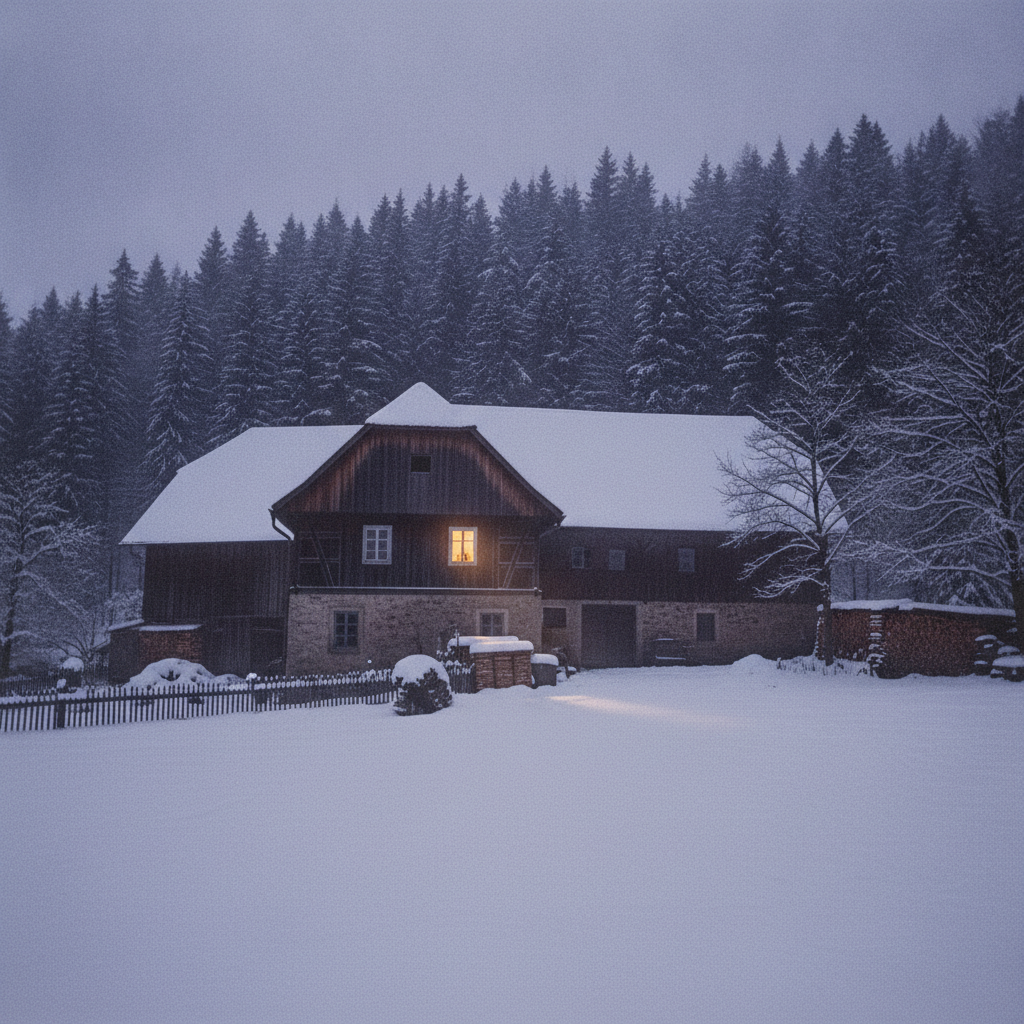
Footprints in the Snow: The Hinterkaifeck Farm Murders
In the last days of March 1922, a Bavarian farmer named Andreas Gruber found a set of footprints in the fresh snow around his land. They came out of the forest and led up to his farmstead, to the door of the machine room, whose lock had been broken. What unsettled him was what he could not find: there were no tracks leading away. Whoever had crossed the snow had walked to the farm and, so far as the snow showed, had never left it. Gruber mentioned the tracks to his neighbours. He did nothing further. Within about a week he and five other people were dead.
Hinterkaifeck was not a village but a single farm, an Einoedhof standing alone in the fields between Ingolstadt and Schrobenhausen, north of Munich. Six people lived there. Andreas Gruber was sixty-three; his wife Cäzilia was seventy-two. Their widowed daughter, Viktoria Gabriel, was thirty-five and lived on the farm with her two children, seven-year-old Cäzilia and two-year-old Josef. The sixth resident was the maid, Maria Baumgartner, forty-four, who had arrived to take up her post only on the afternoon of the killings. Her predecessor, Kreszenz Rieger, had left the farm about six months earlier, and it was later widely reported that she gave notice because she had heard unexplained noises in the house and believed it to be haunted.
You have used your free reads for this month.
Unlock all 208 documented mysteries - in 8 languages, ad-free.
Get full access