Documented

The Money Pit: 230 Years of Digging on Oak Island

2026-06-20 · Enigmatic Places · 2 min read

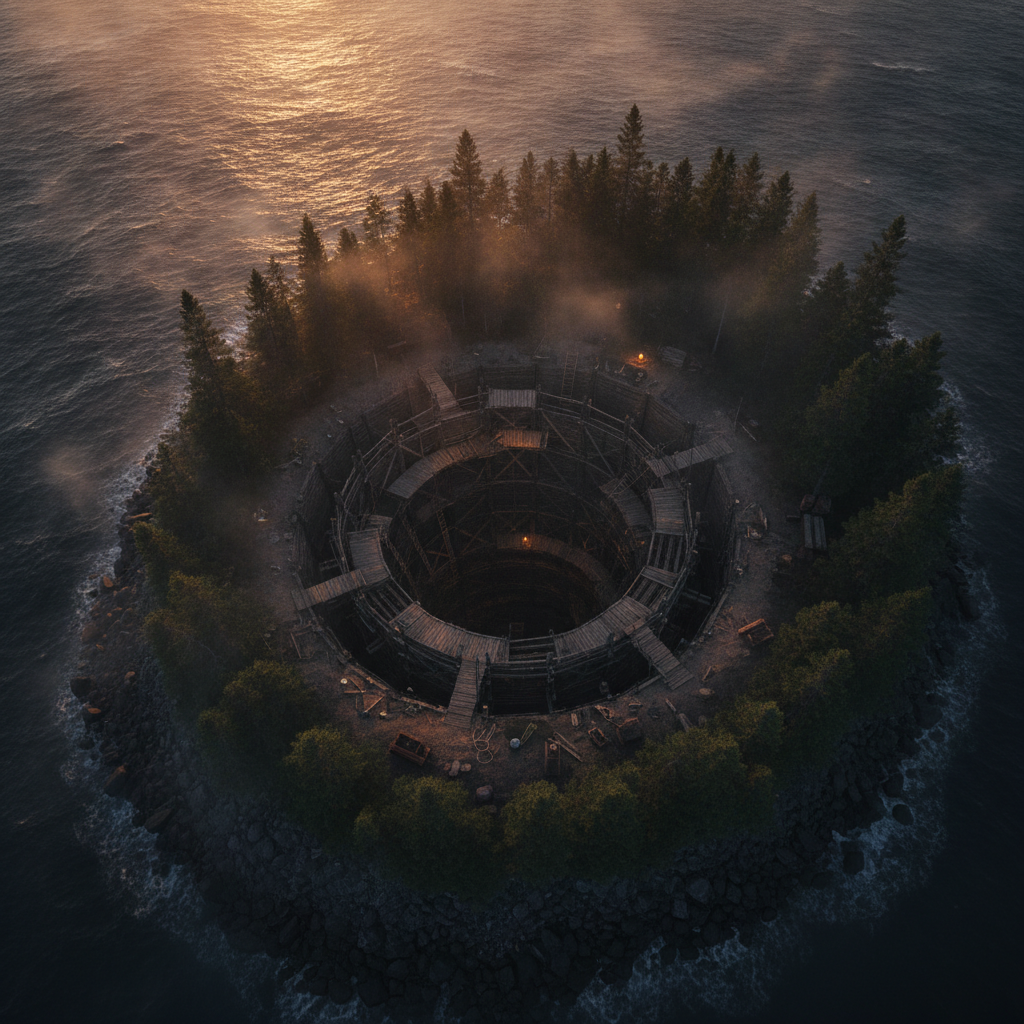
In the summer of 1795, a teenager named Daniel McGinnis noticed a circular depression in the ground on Oak Island, a small wooded island off the coast of Nova Scotia, Canada. With two friends, John Smith and Anthony Vaughan, he began to dig — and struck a layer of flagstones just below the surface, then what looked like platforms of old logs at regular depths. The boys gave up around thirty feet down, convinced they were inches from a pirate's fortune. The longest treasure hunt in history had begun.

Around 1802, the Onslow Company took over and reportedly reached a depth of about ninety feet, describing layers of charcoal, ship's putty and coconut fibre — a material whose nearest natural source lay well over a thousand miles to the south. The diggers also claimed to have raised a stone carved with strange symbols, later said to promise two million pounds buried forty feet below. The stone has long since vanished, with no reliable record of its inscription. Then, overnight, the shaft flooded with sixty feet of water, and no bailing could empty it.

That flood became the legend's engine. Later searchers found what they described as man-made box drains at Smith's Cove and concluded the pit was protected by engineered flood tunnels — a booby trap channeling seawater into the shaft. Geologists offer a cooler explanation: the island sits on limestone and gypsum-rich rock riddled with natural cavities and sinkholes, and seawater may simply be finding its own way through. Whether the trap was built by human hands or by geology remains one of the site's central disputes.

Ad

The hunt has exacted a brutal price. Across two centuries it has consumed fortunes and at least six lives: a worker fatally scalded when a pump boiler burst in 1861, searcher Maynard Kaiser, who fell down a shaft in 1897, and four men — Robert Restall, his son and two others — overcome by toxic gas in a shaft in 1965. Local legend insists that seven must die before the island gives up its secret. Even a young Franklin D. Roosevelt took part in a dig there in 1909.

Since 2014, brothers Rick and Marty Lagina have led the modern search, chronicled in the long-running TV series The Curse of Oak Island. Their teams have produced intriguing finds — centuries-old coins, fragments of human bone, and a small lead cross that tests featured on the show traced to European ore. Coconut fibre from the island has been radiocarbon-dated to centuries before 1795. Yet after massive drilling, damming and digging, no vault, no chest and no treasure have ever been found.

So the questions endure. What, if anything, did the first diggers really strike in 1795? Who carved the vanished stone, and what did it say? Are the flood tunnels a masterpiece of pre-modern engineering or an accident of geology? And after 230 years, six deaths and millions spent — is there anything at the bottom of the Money Pit at all?


Share this story:

Reader comments (0)