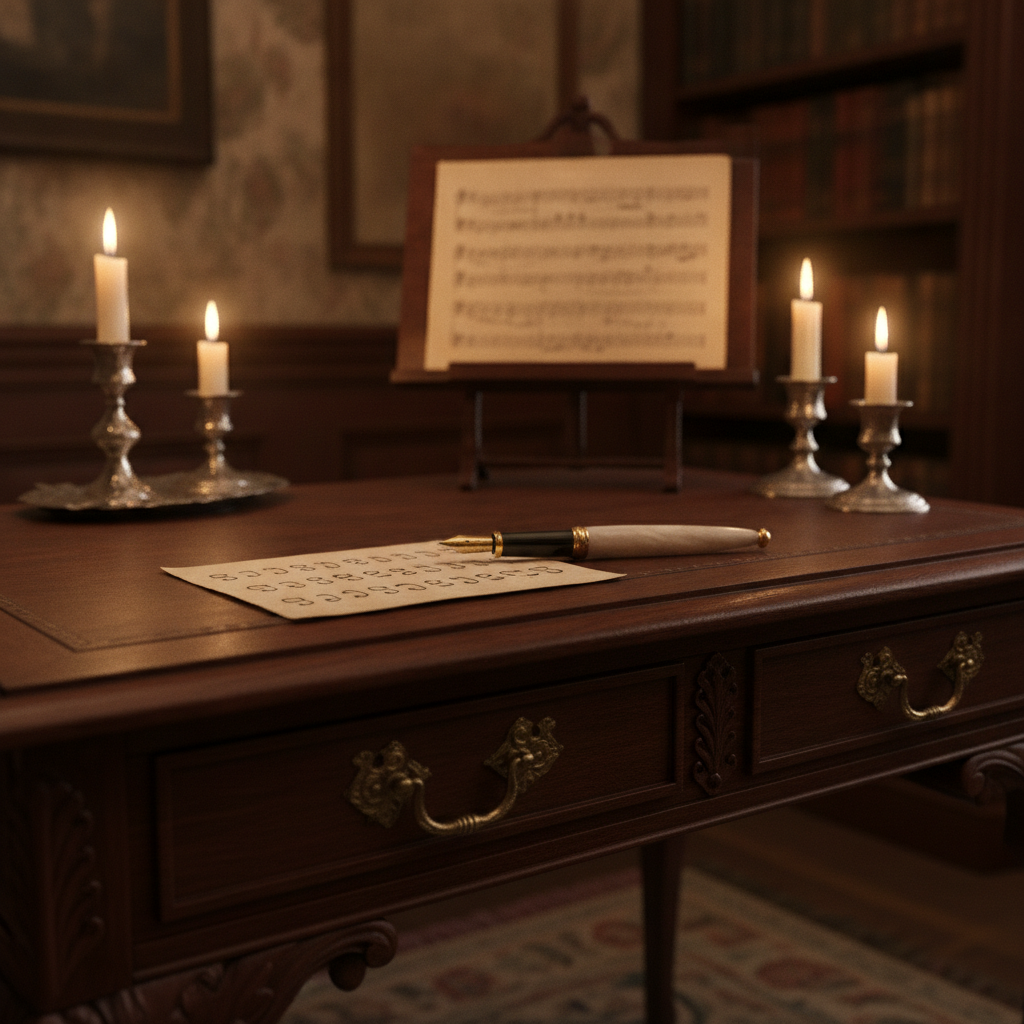
The Dorabella Cipher: 87 Squiggles a Great Composer Never Explained
In the summer of 1897, a thank-you note arrived at the Wolverhampton rectory of the Reverend Alfred Penny. The composer Edward Elgar and his wife Alice had just spent a few days there as guests, and the letter, dated 14 July, was ordinary politeness. What travelled with it was not. Tucked inside was a small card addressed to the reverend's daughter Dora, not yet twenty-three, covered in three fluid lines of curling, hook-like symbols: eighty-seven of them, dashed off in a single confident hand. Dora turned the card over and over, looking for a way in. She could not read a word of it. Neither, in the 129 years since, has anyone else.
At the time none of it looked like history. Elgar was forty, a provincial music teacher who had not yet written the work that would make his name; the Enigma Variations lay two years ahead, the knighthood eight. Dora Penny, born in 1874, was almost seventeen years his junior, the lively and musical daughter of a country clergyman. The two had taken to each other at once and would remain friends for the rest of the composer's life.
You have used your free reads for this month.
Unlock all 208 documented mysteries - in 8 languages, ad-free.
Get full access