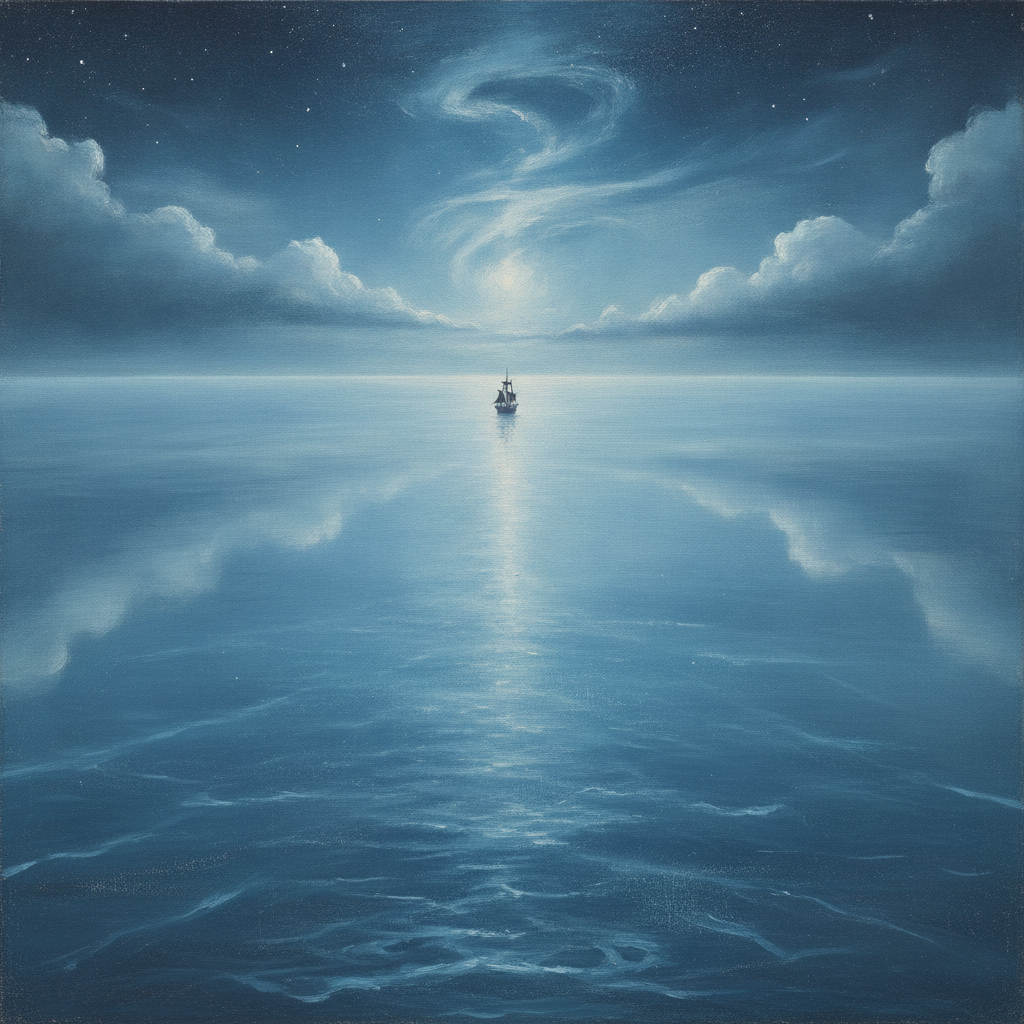
The Sea That Glows: Chasing the Milky Seas Science Has Touched Only Once
On the night of 25 January 1995, the British merchant vessel SS Lima was steaming through the Arabian Sea about 150 nautical miles east of the Somali coast when the ocean began to glow. It was not the familiar sparkle of a ship's wake on a dark night, that flicker of disturbed plankton breaking against the hull. A pale, steady, whitish light spread out in every direction to the horizon, uniform and even, so that the ship seemed to be sailing not on water but across a field of fresh snow, or through a bank of low cloud lit softly from beneath. The glow held for more than six hours. The crew logged it carefully, fixing their position, and later described a sea that shone with a soft milky radiance under an otherwise pitch dark sky. They had sailed into one of the ocean's rarest and least understood spectacles, a milky sea.
Sailors have been reporting these glowing waters for a very long time, at least since the 1600s. Hundreds of accounts are scattered through ships' logs and, over some eighty years, through the pages of a journal called The Marine Observer. The phenomenon reached literature as well: Jules Verne sent the Nautilus gliding through a luminous sea of milk in Twenty Thousand Leagues Under the Sea, drawing on the real tales of mariners. For centuries the reports were filed as curiosities, sailors' yarns, the sort of thing that earned a raised eyebrow back in port.
You have used your free reads for this month.
Unlock all 209 documented mysteries - in 8 languages, ad-free.
Get full access