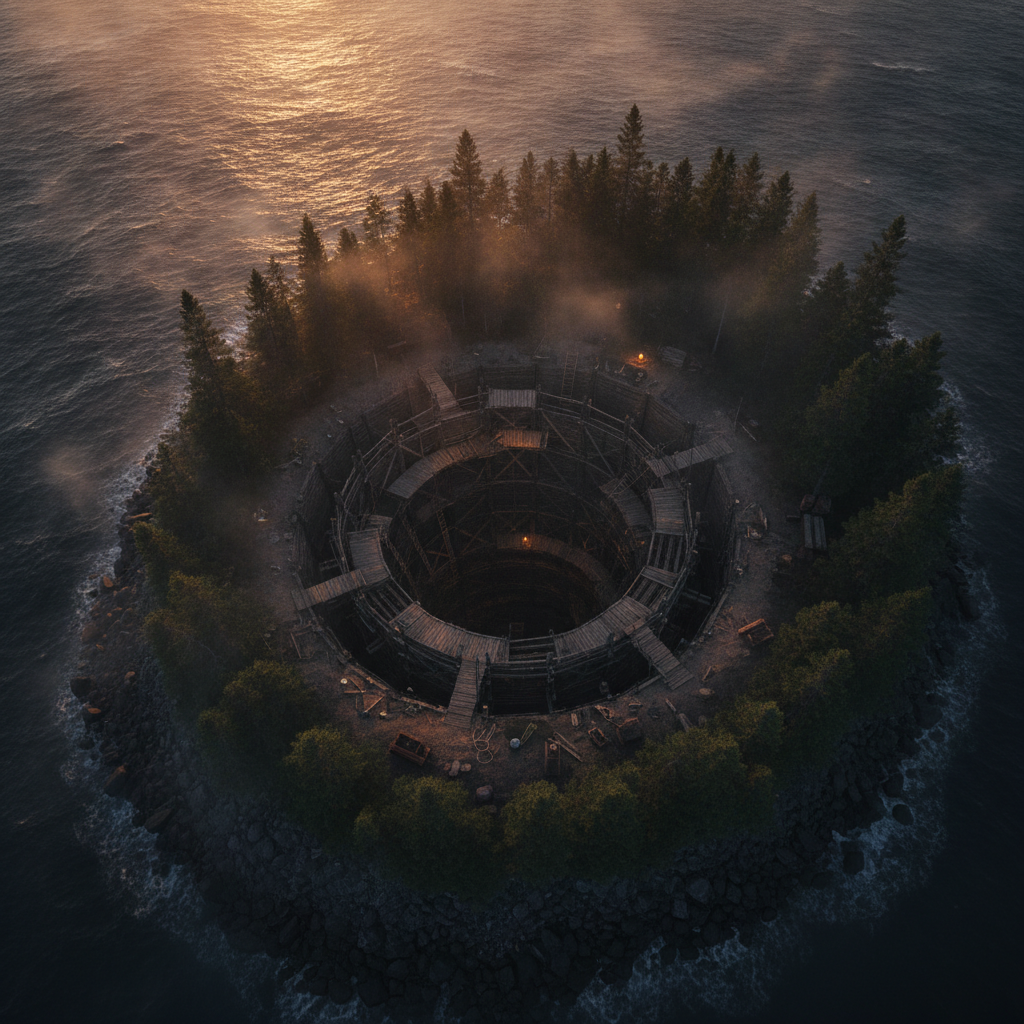
The Money Pit: 230 Years of Digging on Oak Island
In the summer of 1795 a teenager named Daniel McGinnis rowed out to a small wooded island in Mahone Bay, off the coast of Nova Scotia in Canada. In a clearing he found an old oak and, directly beneath one of its limbs, a shallow saucer shaped depression in the ground, as though something heavy had once been lowered there. Accounts written decades later add a ship's tackle block hanging from the limb. McGinnis rowed back with two friends, John Smith and Anthony Vaughan, and the three began to dig.
A few feet down they struck a layer of flagstones that did not belong in that soil. Below it the walls of the shaft carried the marks of old picks, and at about ten feet they reached a platform of oak logs set into the clay, their ends notched into the sides of the pit. At roughly twenty feet there was a second platform, and a third at thirty. The boys stopped at about thirty feet, out of strength and daylight. Whatever the shaft was, someone had dug it before them and filled it back in.
You have used your free reads for this month.
Unlock all 208 documented mysteries - in 8 languages, ad-free.
Get full access