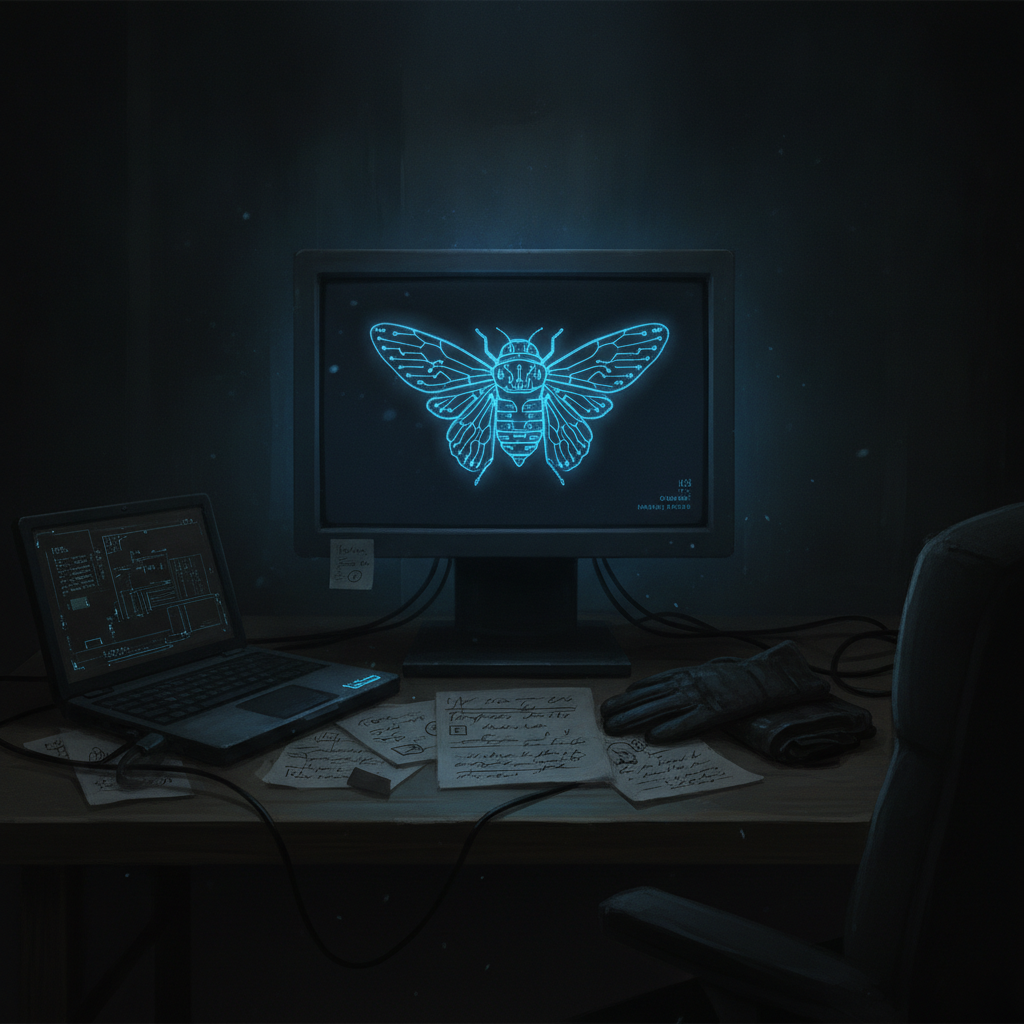
Cicada 3301: Das schwerste Rätsel des Internets verriet nie seinen Urheber
In einer Winternacht Anfang 2012 begannen an Laternenpfählen und Ladenwänden in vierzehn Städten auf vier Kontinenten gedruckte Plakate aufzutauchen. Jedes Blatt trug nur zwei Dinge: eine schroffe schwarze Zikade und einen QR-Code. Warschau erwachte zu einem. Ebenso Paris, Seoul, Sydney und eine Handvoll amerikanischer Orte. Keine Werbeagentur hatte sie in Auftrag gegeben. Kein Künstler hatte für sie unterschrieben. Und doch waren sie da, geklebt innerhalb derselben wenigen Tage, Tausende Kilometer voneinander entfernt, als hätte ein einziger Verstand zugleich in ein Dutzend Länder gegriffen. Sie waren der erste harte, physische Beweis, dass ein Spiel, das nur Wochen zuvor als einzelnes Bild auf einem anonymen Forum begonnen hatte, nun Hände in der wirklichen Welt besaß und in stiller Abstimmung über den Planeten hinweg vorging.
Das Bild war am 4. Januar 2012 auf 4chan erschienen und war fast aggressiv schlicht: Weiße Buchstaben auf schwarzem Grund verkündeten, die Urheber suchten "hochintelligente Individuen", sie hätten "eine Prüfung entworfen", und im Bild selbst verberge sich eine Botschaft. Das Ganze war mit nichts als einer Zahl unterschrieben: 3301. Die meisten scrollten weiter. Einige nicht. Unter ihnen war ein schwedischer IT-Sicherheitsforscher namens Joel Eriksson, der die Datei öffnete, sie durch Steganographie-Werkzeuge laufen ließ und feststellte, dass über einen verborgenen Text eine einfache Verschiebechiffre gelegt war. Entschlüsselt führte sie weiter, zum Bild einer Ente und einer spöttischen Zeile aus Worten. Zwei dieser Worte, "out" und "guess", waren der eigentliche Hinweis: Sie nannten ein zweites Steganographie-Programm, OutGuess, und das Entenbild dadurch laufen zu lassen, spuckte einen Buchcode und einen Link zu einer Reddit-Seite aus, gekrönt von einer Reihe Maya-Zahlzeichen.
Sie haben Ihre kostenlosen Artikel für diesen Monat aufgebraucht.
Schalten Sie alle 208 dokumentierten Ratsel frei - in 8 Sprachen, werbefrei.
Voller Zugang