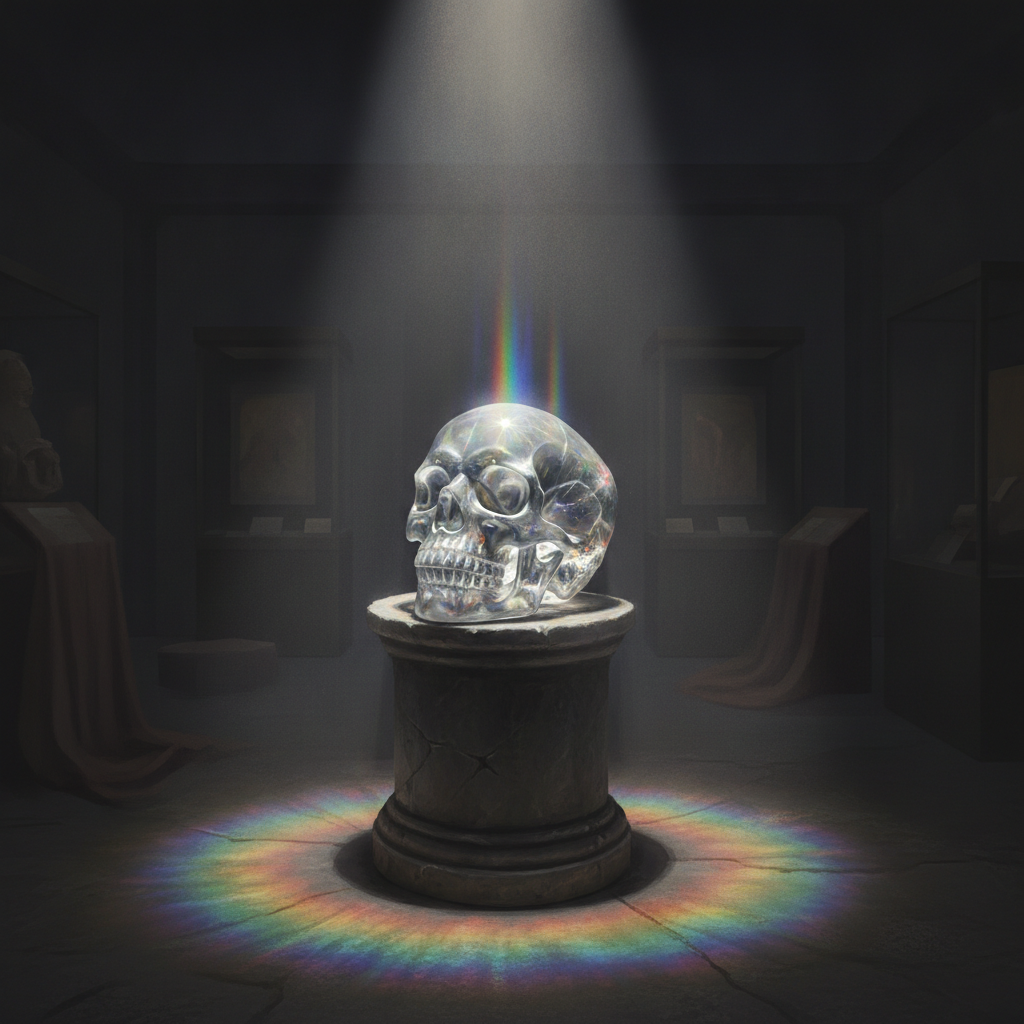
גולגולות הקריסטל: איך אבן משחזת של צורף חשפה את אגדת המאיה העתיקה
ב-1881 הוצעה למכירה בחנותו הפריזאית של סוחר העתיקות אז'ן בובאן גולגולת אדם בגודל טבעי, מגולפת מגוש אחד של בדולח סלע מלוטש. בובאן לא היה דמות שולית. הוא שימש כאנתיקוואר הרשמי בחצרו של הקיסר מקסימיליאן בימי ההרפתקה הקיסרית הצרפתית הקצרה במקסיקו, והבין היטב מה יהיה שוק אירופי, צמא לעולם החדש שנעלם, מוכן לשלם. עוד קודם לכן ניסה - ונכשל - למכור גולגולות בדולח למוזיאון הלאומי של מקסיקו, בטענה שהן ממצאים אצטקיים אמיתיים. הגולגולת הפריזאית עברה דרך מכירה פומבית ומשם אל הצורף הניו-יורקי טיפאני אנד קו', שקנה אותה מבובאן ב-950 דולר. ב-1897 העביר אותה טיפאני למוזיאון הבריטי, שקטלג אותה כאצטקית והציג אותה לראווה. גולגולת שנייה, שגם עקבותיה מוליכים אל בובאן, הגיעה לאוספים ציבוריים בצרפת, והיא שמורה כיום במוזיאון קה ברנלי בפריז.
ביולי 1936 קיבלו קוראי Man, כתב העת של המכון האנתרופולוגי המלכותי בלונדון, מחזה פורנזי משונה: שתי גולגולות אדם בגודל טבעי, עשויות בדולח מלוטש, מצולמות ונמדדות נקודה מול נקודה. אחת הייתה של המוזיאון הבריטי. השנייה ניצבה בגלריה הלונדונית של סוחר האמנות סידני ברני. האנטום ג'. מ. מוראנט דיווח שהשתיים דומות זו לזו יתר על המידה מכדי להיות יצירות עצמאיות. אדריאן דיגבי מהמוזיאון הבריטי השיב לו בדפוס. איש בחילופי הדברים המנומסים ההם לא העלה בדעתו שגולגולתו של ברני תסיים את הקריירה שלה כשריד המאיה המפורסם בעולם.
שובל המסמכים שמאחורי הגולגולת של ברני ספציפי מאוד. ב-17 בפברואר 1933 כתב ברני למנהל המוזיאון האמריקאי לתולדות הטבע בניו יורק והציע, במילותיו שלו, גולגולת בדולח סלע בגודל טבעי עם לסת נפרדת, שרכש זה עתה ממקסיקו. המוזיאון לא קנה. באוקטובר 1943 עלתה הגולגולת למכירה בסות'ביס בלונדון, ושם קנה אותה ההרפתקן הבריטי פ. א. מיטשל-הדג'ס תמורת כ-400 לירות. מכתב שכתב לאחיו בדצמבר אותה שנה מאשר את הרכישה.
ואז הגיעה האגדה, והיא הייתה מפוארת. מיטשל-הדג'ס הפיץ שהגולגולת נמצאה, לא נקנתה. בתו המאומצת אנה, כך אמר, גילתה אותה סמוך ליום הולדתה השבעה-עשר ב-1924, מתחת למזבח מתמוטט בחורבות המאיה של לובאנטון שבהונדורס הבריטית, בליז של ימינו: חפץ מושלם, קריר למגע, שהוא עצמו החל לכנות גולגולת האבדון. בספר זיכרונותיו מ-1954, Danger My Ally, כתב רק שיש לו סיבות שלא לגלות כיצד הגיעה לידיו. רישומי החפירות בלובאנטון אינם מזכירים שום גולגולת בדולח, ואיש מחברי המשלחת מעולם לא מיקם את אנה באתר. בתיעוד, נמצאה ב-1924 פירושו נקנתה ב-1943.
אנה נשאה את הסיפור עד סוף חיים ארוכים מאוד. היא הציגה את הגולגולת בתשלום דמי כניסה, דיברה על כוחותיה לכל מי שבא, וחזרה על סיפור לובאנטון, בתאריכים ובפרטים משתנים, עד מותה ב-2007 בגיל מאה.
עד אותה עת צמחה סביב חפצים כאלה מערכת אמונות שלמה: גולגולות שמרפאות, מזמזמות, זוהרות ואוגרות זיכרון, ומערכת של שלוש-עשרה שנועדה להתאחד ולחשוף סודות קוסמיים. פרנק דורלנד, משחזר האמנות שהחזיק בגולגולת מיטשל-הדג'ס שנים, תיאר הילות סביבה, דמויות הנוצרות בתוך הבדולח וצלילי רפאים. את רעיון שלוש-עשרה הגולגולות אין לייחס לשום מקור מאיה או אצטקי. הוא צמח במאה העשרים מתוך חוגים ספיריטואליסטיים, והורחב בידי חובבים שקשרו אותו לסיום ספירת הלוח הארוך של המאיה ב-2012.
הבדיקה המעבדתית הראשונה נערכה ב-1970, כשמעבדת הקריסטלוגרפיה של יולט-פקארד בסנטה קלרה שבקליפורניה בחנה את גולגולת מיטשל-הדג'ס עבור דורלנד. המעבדה קבעה שהגולגולת והלסת הנשלפת נחתכו מגוש קוורץ יחיד. הטענות הדרמטיות יותר שנצמדו אחר כך לאותה בדיקה - שהגולגולת גולפה נגד ציר הגביש הטבעי, שהיא הייתה אמורה להתנפץ, שנדרשו דורות של ליטוש יד - הגיעו מסיפוריו המאוחרים של דורלנד ולא מממצא שפרסמה יולט-פקארד, כפי שתיעד החוקר ג'ו ניקל.
העבודה המכרעת התחילה במקרה. ב-1992 הגיעה למכון הסמית'סוני בוושינגטון חבילה ללא כתובת שולח. בתוכה הייתה גולגולת בדולח, מגולפת גרוע, ולצדה פתק שהתעקש שזו יצירה אצטקית אמיתית. האנתרופולוגית ג'יין מקלארן וולש מהסמית'סוני החלה למשוך בחוט: השוותה את המתנה האנונימית לפריטי המוזיאונים בלונדון ובפריז ועקבה אחר מוצאם דרך סוחרי המאה התשע-עשרה. החקירה העסיקה אותה כמעט שני עשורים.
יחד עם מרגרט סאקס, מדענית המוזיאון הבריטי, הניחה את המשטחים תחת מיקרוסקופ אלקטרונים סורק. הן מצאו חריצים ישרים וסדירים שנחתכו בגלגלים מסתובבים מוזני חומרי שחיקה קשים: חתימתו של מחרט ליטוש מסתובב, טכנולוגיה שלאמריקה הטרום-קולומביאנית מעולם לא הייתה. עבודות ליטוש מזואמריקניות אותנטיות נושאות דווקא סימנים לא סדירים של כלי יד וחול שוחק. מחקרן על שתי הגולגולות, המקור של שתי גולגולות בדולח מקסיקניות כביכול טרום-קולומביאניות, פורסם בכתב העת Journal of Archaeological Science ב-2008. על גולגולת הסמית'סוני חשפה עקיפת קרני רנטגן עקבות של סיליקון קרביד, חומר שחיקה סינתטי שלא יוצר בשום מקום לפני שנות ה-90 של המאה התשע-עשרה. כשהגיעה גולגולת מיטשל-הדג'ס עצמה אל המיקרוסקופ של וולש ב-2007, היא הראתה את אותם סימני כלי סיבוב בדיוק. בדיקות מעבדה צרפתיות על הגולגולת הפריזאית השיבו את אותה תשובה: מלאכת המאה התשע-עשרה, לא עתיקה יותר.
גם צורת החפצים מצביעה לאותו כיוון. עבודות אצטקיות ומישטקיות אמיתיות בקוורץ אכן שרדו, והן קטנות, מסוגננות ומעובדות באבן ובחול שוחק לצורות שונות לגמרי מן הראשים החלקים והמעוגלים אנטומית האלה, עם ארובות העיניים המקודחות ושורות השיניים המסודרות. שום מסורת מזואמריקנית לא יצרה דבר הדומה להם. מקום הייצור הסביר הוא אירופה, ובראש ובראשונה עיירת ליטוש אבני החן הגרמנית אידר-אוברשטיין, שסדנאותיה גילפו מוזרויות קוורץ עבור סחר הקוריוזים של המאה התשע-עשרה, וכפי הנראה הייתה המקור של בובאן עצמו. ניתוח גמולוגי של גולגולות המוזיאונים הצביע על קוורץ שאולי כלל אינו מקסיקני, ומתיישב עם מקורות רחוקים כמו ברזיל או מדגסקר.
חשבון הנפש הגיע ב-2008. גם הסמית'סוני וגם המוזיאון הבריטי הודו בפומבי שגולגולות הבדולח שלהם הן תוצרת המאה התשע-עשרה ולא אמנות אמריקאית עתיקה. נדיר שמוזיאון מכריז שאחד מפריטיו המהוללים הוא זיוף, ונדיר עוד יותר ששניים עושים זאת באותה שנה. המוזיאון הבריטי מציג כיום את גולגולתו עם תווית הקובעת שהיא נעשתה כנראה באירופה של המאה התשע-עשרה. באותה שנה עצמה עלה בבתי הקולנוע בעולם הסרט אינדיאנה ג'ונס וממלכת גולגולת הקריסטל, והאגדה הגיעה לקהל גדול בהרבה מכל קהל שהיה לה בימים שבהם עוד האמינו בה.
מסקנות ושאלות פתוחות
בעיקר, המדע הכריע. סימני כלי סיבוב וחומר שחיקה תעשייתי מתארכים את גולגולות המוזיאונים למאה התשע-עשרה, והחפצים הם עבודות סדנה אירופיות שנמכרו כעתיקות אמריקאיות. מה שהמעבדה אינה יכולה לספק הוא יוצר. שום פנקס סדנה, שום שם של אומן ושום חשבונית על גילוף אף גולגולת לא צצו מעולם. הזייפנים נותרו אנונימיים בדיוק כמו כוהני המאיה שהאגדה המציאה עבורם.
לגבי הגולגולת המפורסמת מכולן, וולש הרחיקה לכת מעבר למה שהבדיקות מתירות. היא טענה שגולגולת מיטשל-הדג'ס מעתיקה את זו של המוזיאון הבריטי בצורה כה הדוקה - בהד לדבריו של מוראנט מ-1936 - שהיא כנראה גולפה ממנה, ומכאן שגולגולת הבדולח הידועה בעולם צעירה מ-1897. החולשה היא שדמיון אינו מוצא. איש לא הציג מסמך הקושר בין שני החפצים, והטענה נשענת על צורה ולא על ניירת.
החורים ברשומה האנושית הם המקום שבו התיק נשאר פתוח. סידני ברני סחר בגלוי תחת שמו שלו, ובכל זאת מעולם לא אמר מניין הגיעה גולגולתו. מי שלח גולגולת בדולח לסמית'סוני ב-1992 בלי כתובת שולח, ומה ידע השולח, או ממה חשש? שתי השתיקות האלה לא הוסברו.
מיטשל-הדג'ס עצמו נותר בלתי מוכרע. תיאוריה אחת אומרת שהיה רמאי פשוט, שקנה חפץ במכירה פומבית והמציא גילוי בג'ונגל כדי למכור ספרים וכרטיסים להרצאות. קריאה אחרת, שממעטים לנסח במפורש, מקלה יותר: שאיש מופע מזדקן, שהתפרנס מסיפורי סכנה בג'ונגל, לא כל כך הסתיר זיוף אלא קנה לעצמו, ב-400 לירות, את האגדה שביקש להשאיר אחריו. שום מסמך אינו מגלה לנו במה האמין באמת, ואותה אי-ודאות חלה גם על אנה, שהגנה על סיפור לובאנטון שבעים שנה. האם האמינה בסיפור שירשה או הגנה ביודעין על סיפור שידעה כי אינו אמת - את זה אין לחלץ מן התיקיות.
יש הטוענים שבובאן היה פחות תככן בודד ויותר הקצה הגלוי של קו אספקה מסודר: סוחר עם אישורי חצר במקסיקו, עיירת ליטוש אירופית שיכולה לייצר לפי הזמנה, ומוזיאונים שמוכנים לשלם. החולשה היא שוב הפנקס החסר, שכן לא נמצאה ולו הזמנה אחת של גולגולת ברשומות אידר-אוברשטיין. אחרים מציעים שהאבן עצמה תכריע בשאלת המקור, אך זיהוי גמולוגי של מוצא הוא מכוון ולא חותך, וקוורץ ברזילאי או מדגסקרי הגיע לסדנאות אירופה דרך ידיים רבות.
המאמינים בכוחות הגולגולות לא ויתרו, וטענתם ראויה להצגה הוגנת: מעבדה יכולה לתארך גילוף בלי לגעת כלל בתכונות שמייחסים לו. הקושי הוא שאף אחת מן הטענות האלה - ריפוי, זמזום, אגירת זיכרון, או השלוש-עשרה שחייבות להתאחד - לא שרדה מעולם ניסוי מבוקר, והמסורת שאליה הן שייכות צעירה מן החפצים שהיא מסבירה.
שתי שאלות נותרות בלי תשובה אמיתית. מדוע הצליחו הזיופים להטעות את הארכיאולוגיה המקצועית יותר ממאה שנה, לשבת בלי עוררין באוספים הגדולים בעולם בעוד חוקרים רציניים דנים במשמעותם בכתבי עת מלומדים? ומדוע החשיפה כמעט לא שינתה דבר במיתוס, שבריא היום יותר משהיה ב-1936? הקוורץ אמיתי, המלאכה מעולה, הגיל כמאה וחמישים שנה. את הקסם סיפקו כל העת הקונים, והם מספקים אותו גם כעת.