Documented

The Dorabella Cipher: 87 Squiggles a Great Composer Never Explained

2025-11-08 · Unsolved Ciphers · 2 min read

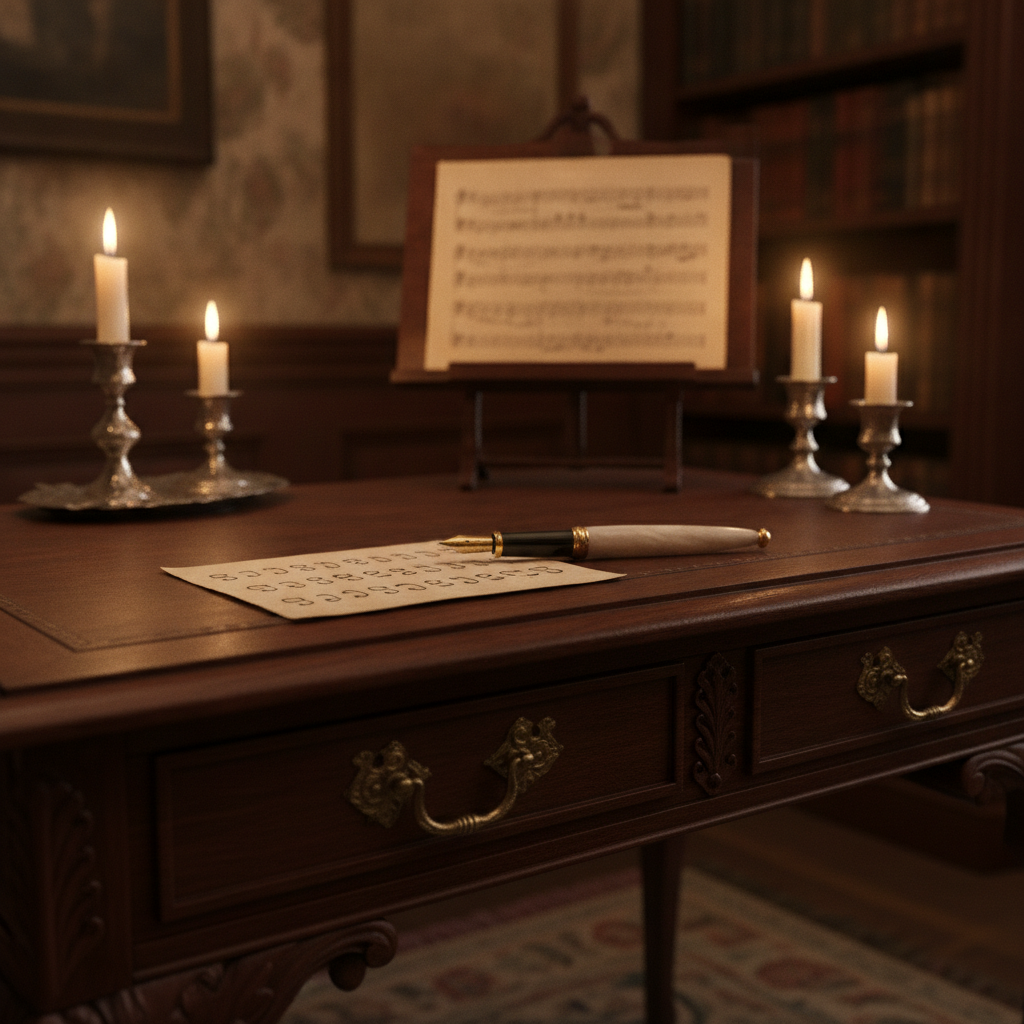
On 14 July 1897, the composer Edward Elgar sent a thank-you note to the family of the Reverend Alfred Penny, whose Wolverhampton rectory he and his wife had just visited. Tucked in with it was something odd: a small card addressed to the reverend's daughter, Dora, covered in three lines of curling, hook-like symbols. It looked like a message. If it is one, no person on Earth has ever read it.

The note, now known as the Dorabella Cipher, contains 87 characters drawn from an apparent alphabet of 24 symbols. Each symbol is built from one, two, or three little semicircular arcs, rotated into one of eight orientations. The writing is fluid and confident, as if Elgar dashed it off without effort — which only deepens the puzzle of what, exactly, he was dashing off.

Dora Penny, then in her early twenties, could make nothing of it. By her own account she asked Elgar about the note years later, and he seemed surprised she had never worked it out — but he offered no key. She kept the card for four decades and finally published it in her 1937 memoir of the composer, inviting the world to succeed where she had failed. The world has not.

Ad

The frustration is sharpened by who wrote it. Elgar adored puzzles, codes, and wordplay all his life. In the 1890s he cracked a supposedly insoluble challenge cipher published by John Holt Schooling in the Pall Mall Magazine, a feat he was proud enough of to preserve. Two years after the Dorabella note, he built an entire masterpiece around a riddle: the Enigma Variations, whose tenth variation, "Dorabella," is a portrait of Dora Penny herself — and whose hidden theme, if there is one, also remains unidentified.

So what is the note? The classic assumption is a substitution cipher, each squiggle standing for a letter. But 87 characters is a cruelly small sample for cryptanalysis, and the letter frequencies sit awkwardly with normal English; a 2023 algorithmic study concluded a simple one-to-one substitution in English or Latin is unlikely. Rival theories hold that the symbols encode a private shorthand or in-joke that only Elgar and Dora could unlock, or that they are not language at all but a compressed sketch of a melody. Elgar demonstrably liked these symbols — similar arc-shaped marks appear elsewhere in his private notebooks.

Every few years a claimed solution appears, from tender love notes to musical phrases, yet none has convinced scholars: with so short a text, many keys can be forced to yield something. What remains unanswered today is everything: whether the Dorabella Cipher hides English, music, or nothing but a composer's teasing doodle — and whether the one woman it was written for was ever truly meant to read it.


Share this story:

Reader comments (0)