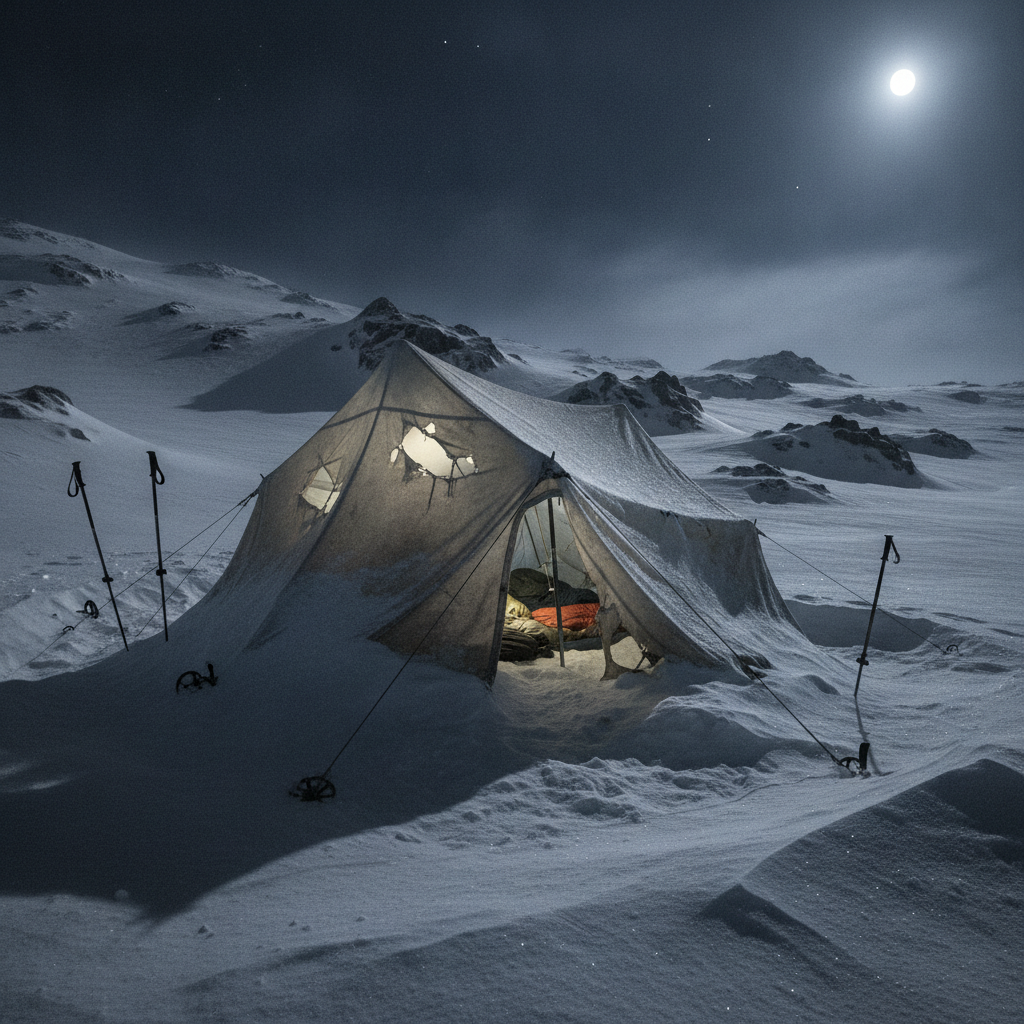
Dead Mountain: Why Nine Hikers Cut Their Way Out of Their Tent and Ran Into the Night
They set out laughing. The photographs later recovered from their cameras show ten young people in high spirits, mugging for the lens in the snow, loading a truck, clowning on the train north - a student ski expedition like a hundred others in the Soviet Union of 1959. In late January, ten students and graduates of the Ural Polytechnical Institute in Sverdlovsk set out on a punishing Category III winter trek through the northern Urals, the hardest grade the Soviet system recognised, bound for a remote peak called Otorten. The plan carried them for days on skis through frozen, thinly inhabited country, far from any road or ready rescue, hauling everything they needed to survive. One of them, Yuri Yudin, fell ill early on with rheumatic pain and turned back not long after the group left the last settlement. That accident of health saved his life. He would help bury his friends within weeks, and outlive the mystery until his own death in 2013. He was the last person to see the other nine alive.
The nine who went on were not amateurs. Their leader, twenty-three-year-old Igor Dyatlov, was a gifted radio engineer who designed and built his own equipment. Around him were Zinaida Kolmogorova and Lyudmila Dubinina, both seasoned and well-liked, along with Yuri Doroshenko, Rustem Slobodin, Georgy Krivonischenko, Alexander Kolevatov, and Nikolai Thibeaux-Brignolle, a descendant of a French engineer. The oldest by far was Semyon Zolotaryov, thirty-seven, a decorated veteran of the Second World War who had joined the group late, more than a decade older than anyone else in it. On the night of 1 February the group pitched their single long tent high on the exposed slope of Kholat Syakhl, rather than descending to the shelter of the tree line about a mile below. The mountain's name, taken from the language of the local Mansi people, is usually rendered as Dead Mountain.
You have used your free reads for this month.
Unlock all 208 documented mysteries - in 8 languages, ad-free.
Get full access