Documented

The Girl in the Water Tank: The Death of Elisa Lam

2026-07-20 · Unexplained Deaths · 8 min read

On the last day of January 2013, a 21-year-old Canadian student named Elisa Lam walked into The Last Bookstore in downtown Los Angeles. She bought books and postcards for her family and talked with a manager, Katie Orphan, who later remembered her as warm and lively, the kind of customer who wanted to discuss what the people back home might like. Police would find those gifts neatly arranged in her hotel room. As far as anyone has since been able to establish, it was the last time a person outside the Cecil Hotel saw her alive. That same day, the daily phone calls she made to her parents in Vancouver, a fixed ritual of her solo trip along the California coast, stopped.

Lam was a student at the University of British Columbia and was travelling alone. She had come south to Los Angeles by Amtrak and was working her way back up the coast on a journey meant to end further north. For reasons of budget more than anything else she had chosen the Cecil, a faded downtown landmark on the edge of Skid Row. The building carried a heavy history: decades of suicides, violent deaths and at least a passing association with notorious residents. By 2013 part of it had been rebranded as a hostel called Stay on Main in an effort to leave that reputation behind.

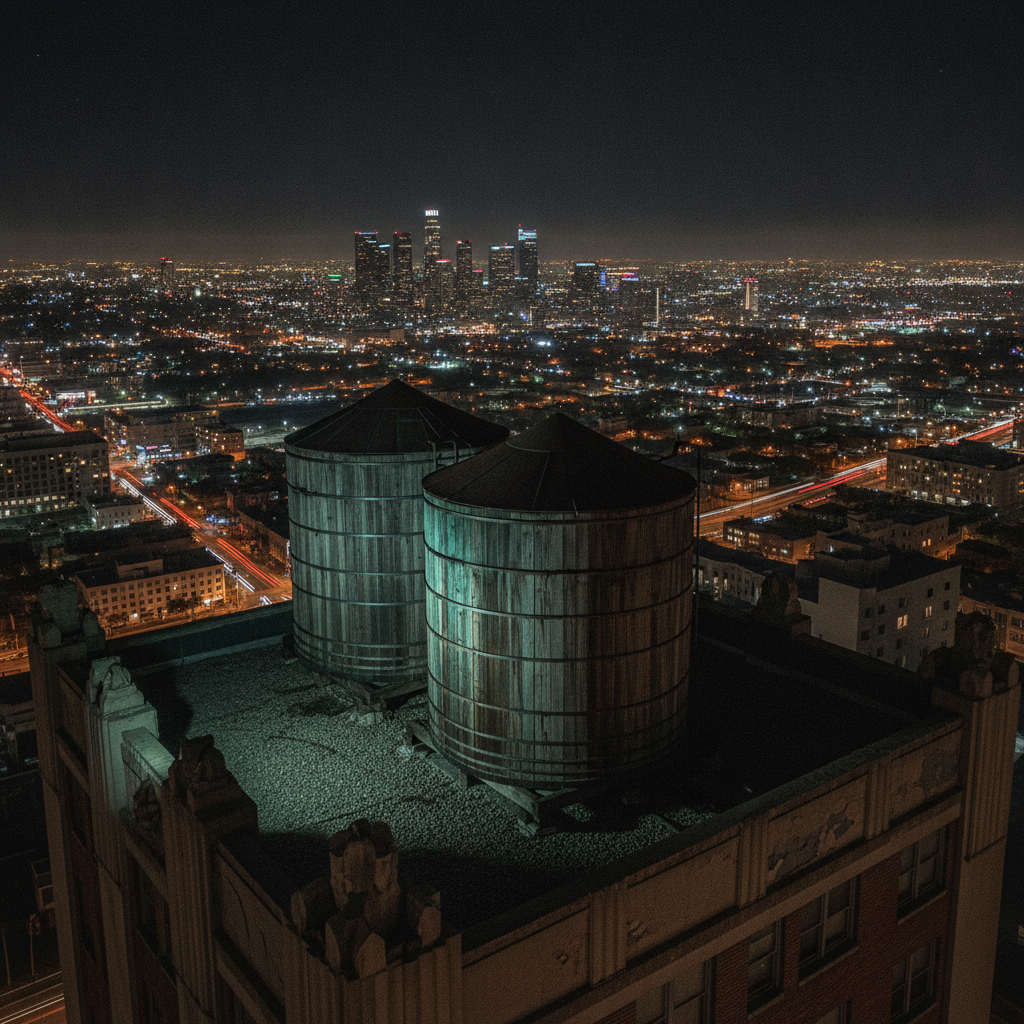
The Cecil had opened in 1924 with around six hundred rooms, built for travelling businessmen at a moment when downtown Los Angeles still expected to grow around it. The Depression arrived instead, the district declined, and by the second half of the century much of the hotel had become long-term housing for people with nowhere else to go. That was the building Lam checked into: narrow corridors, a lobby holding the remnants of its original grandeur, and a roof carrying four water tanks that fed every tap in the place.

Lam was first given a bed in a shared room. After two nights her roommates complained about her behaviour, describing notes that reportedly told them to go home and occasions on which they were locked out. Staff moved her into a room of her own. She was due to check out at the end of the month and continue her trip. When she did not appear and the calls home stopped, her parents flew to Los Angeles. On February 8 the Los Angeles Police Department announced that she was missing. Officers searched the hotel and found nothing.

On February 14 the police released roughly two and a half minutes of hotel surveillance footage as a public appeal for information. The clip had been recorded in one of the Cecil's elevators on the day she disappeared. It shows Lam pressing several rows of buttons, stepping out to peer down the corridor, drawing back and folding herself into a corner as if hiding, then emerging to wave her arms and move her hands in strange, fluid gestures, apparently speaking to someone who is not in the frame. Throughout the whole recording the elevator doors never close. Within days the video had been copied, slowed, paused and dissected frame by frame by millions of people, and the search for Elisa Lam had passed out of the hands of the police entirely.

The answer came five days later, and it came from the plumbing. Guests at the Cecil had been complaining for days about weak water pressure and about tap water with a dark colour and a strange taste. On the morning of February 19 a maintenance worker climbed to the roof and opened one of the four large cisterns that supplied the building. Elisa Lam's body was inside, floating face up in the water. Each tank held around a thousand gallons and stood roughly ten feet tall, reached by a ladder fixed to its side. The opening in the top was too small for firefighters to lift a body through, so the fire department drained the tank and cut into it from the side.

The Los Angeles County coroner ruled the death an accidental drowning and listed Lam's bipolar disorder as a significant contributing factor. The fuller report, released that June, recorded no evidence of trauma and no sign of sexual assault. Toxicology found no alcohol and no recreational drugs. The levels of her prescribed medication were low, which suggested she had not been taking it consistently. Her clothing was found floating separately in the water. In the official account there was no assailant, no struggle and no third party of any kind: a young woman, alone, in the dark, on the roof of a building. The Los Angeles Police Department later reviewed the case and stood by the coroner's finding. No credible evidence of a second person on that roof has ever surfaced.

The discovery did not close the story so much as detonate it. Guests learned that for as long as nineteen days they had been washing in and drinking from water that held a decomposing body. Public health officials issued a do-not-drink notice for the hotel. The Cecil, already a byword for dread in downtown Los Angeles, became a destination for a darker kind of tourism.

Elisa Lam's parents, David and Yinna Lam, filed a wrongful-death lawsuit against the hotel, arguing that a property with such a history should have secured its roof and its water tanks far better than it had. A judge dismissed the suit in 2015, finding that the hotel could not reasonably have foreseen what happened.

Ad

The elevator video, meanwhile, took on a life of its own. It was stitched into horror compilations, examined endlessly by amateur analysts and eventually woven into fiction, most visibly in the fifth season of American Horror Story, which drew openly on the Cecil and its legend. In 2021 Netflix released a documentary series that revisited the whole affair. A real death had become raw material, and the distance between a grieving family in Vancouver and the internet's endless replaying of a sick young woman's last recorded minutes widened with every passing year.

Lam had kept blogs on which she wrote openly about living with bipolar disorder, describing earlier depressive episodes with painful frankness and posting about the trip she was taking. She was a reader, a daughter and a sister, a 21-year-old with a future she was actively planning. That record, written in her own words, is the least disputed part of the case and the least discussed.

Conclusions and Open Questions

The coroner's finding stands and nothing has ever contradicted it. What the file does not contain is a reconstruction of the last hour, and that gap is where every competing explanation lives.

The explanation favoured by investigators and by most mental-health professionals is a severe psychotic episode, consistent with Lam's documented bipolar illness and worsened by medication she had apparently stopped taking consistently. It fits a great deal: the clean toxicology, the absence of any wound, the roommates' complaints, her own writing about earlier episodes. Its weakness is the physical feat it quietly requires. The evidence never demonstrates how she reached the roof or entered the tank. Some accounts note that a fire escape offered a route up, and that footage taken on the roof afterwards showed at least one tank lid standing open rather than sealed, but the route itself was never established.

The technical explanation for the video is narrower and better supported. People who studied the hotel's systems concluded that the elevator had been placed in a hold or inspection mode, with the doors deliberately kept open. That accounts for the doors, which is the detail most viewers found impossible. It does not account for her behaviour, and it was never meant to.

Murder theories, promoted mainly by online sleuths, seize on the improbability of the climb and insist no ordinary accident could place her where she was found. Their weakness is total. After years of scrutiny there is no wound, no assailant and no forensic trace. The one man publicly named as a suspect, a musician who performed under the name Morbid and had once stayed at the Cecil, was in Mexico at the time and was cleared by police. That came only after online crowds had hounded him toward a breakdown, which is the clearest documented harm the case has produced.

Supernatural readings, fed by the hotel's long death toll and by a resemblance to the horror film Dark Water, have the opposite problem. They explain everything and therefore nothing, and are unfalsifiable by design. The detail that unsettled the internet most, a tuberculosis test being distributed on Skid Row that same season under the trade name LAM-ELISA, dissolves on inspection into coincidence, since the acronym predates her by years.

What remains unexplained is specific. The roof was reportedly reached through a door said to be locked and alarmed, yet no camera recorded her route there, though the elevator recorded her vividly. The tanks were tall and their lids heavy. Accounts disagree on whether the lid above her was open or closed when she was found. And a body remained undiscovered for more than two weeks while guests below drank and showered in the water it floated in.

Some argue that the discomfort the case still produces says more about the audience than about Elisa Lam: that a solitary mental-health emergency feels too random and too sad to accept, and that hidden hands are easier to imagine. That is an open question and not a finding. The documented position is that the mechanism of her final hour went unrecorded, and that no amount of frame-by-frame analysis can produce a witness who was never there.

Free reads left this month: 0

Share this story:

Reader comments (0)
Only active subscribers with verified payment can post comments. Get full access