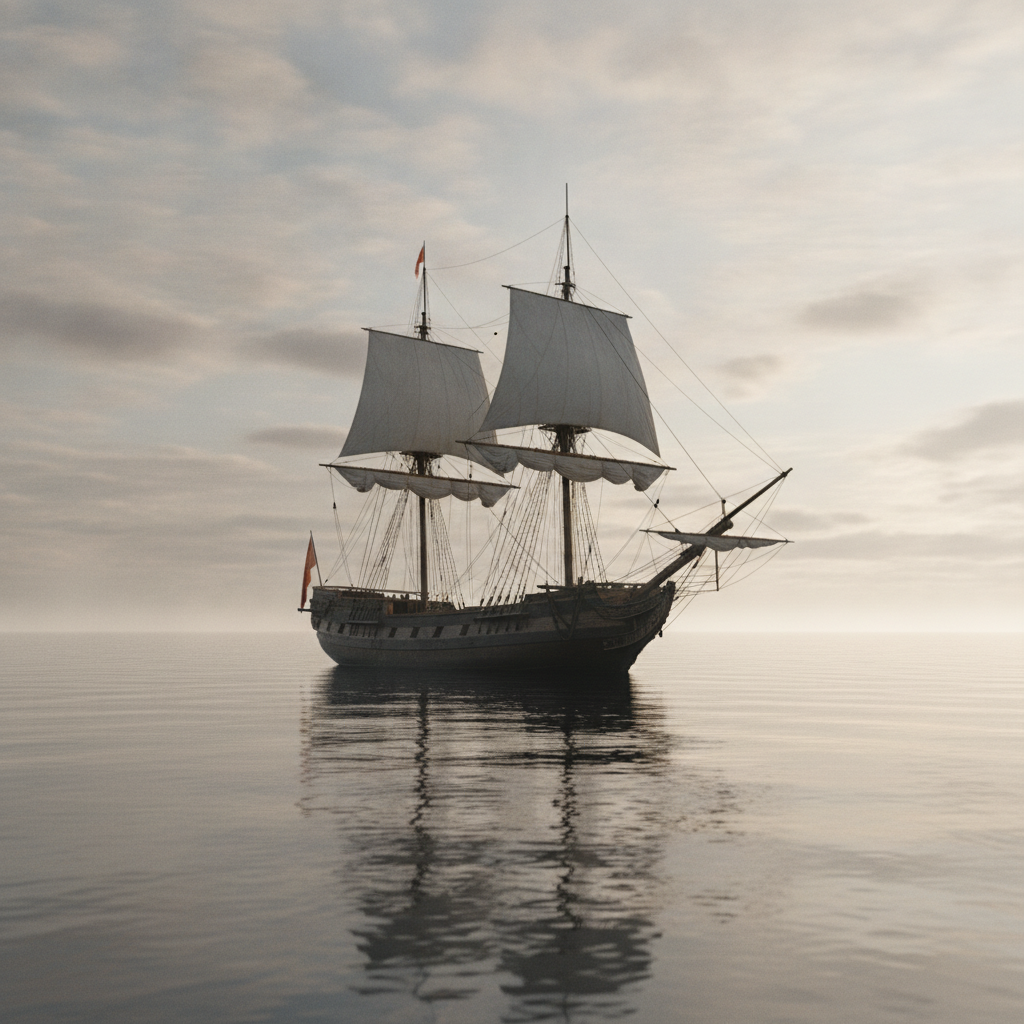
Das Geisterschiff, das allein weitersegelte: Was geschah an Bord der Mary Celeste?
Die Mary Celeste verließ New York am 7. November 1872 mit Ziel Genua. Sie war eine amerikanische Brigantine von etwa 282 Tonnen, und in ihrem Laderaum standen 1.701 Fässer Industriealkohol, bestimmt zum Aufspriten italienischen Weins. Ihr Kapitän war Benjamin Spooner Briggs, ein siebenunddreißigjähriger Seemann aus Massachusetts, gläubig, nüchtern und nach allen Zeugnissen umsichtig und geachtet. Er fuhr nicht allein. Bei ihm waren seine Frau Sarah, ihre zweijährige Tochter Sophia und eine handverlesene Mannschaft von sieben Männern, unter ihnen die friesischen Brüder Volkert und Boz Lorenzen und die deutschen Matrosen Arian Martens und Gottlieb Goudschaal, die Briggs selbst als friedlich und erstklassig beschrieben hatte. Ihr siebenjähriger Sohn Arthur war bei Verwandten zu Hause geblieben, um die Schule nicht zu versäumen. Zehn Menschen liefen aus.
Der letzte Eintrag auf der Logtafel des Schiffes war auf den 25. November, nahe der azorischen Insel Santa Maria, datiert. Er verzeichnete nichts Ungewöhnliches.
Der Nachmittag des 4. Dezember 1872 war grau und unruhig, etwa auf halbem Weg zwischen den Azoren und der Küste Portugals, als der Rudergänger der kanadischen Brigantine Dei Gratia ein Segel bemerkte, das sich nicht richtig verhielt. Das andere Schiff gierte, fiel vom Wind ab und kam wieder an, und seine Segel standen so lose und achtlos, wie es keine arbeitende Mannschaft dulden würde. Kapitän David Morehouse betrachtete es zwei Stunden lang durch sein Glas, während der Abstand schrumpfte. Er kannte das Schiff; er hatte nur wenige Wochen zuvor in New York mit dessen Kapitän gespeist. Als sein Erster Steuermann Oliver Deveau schließlich hinüberruderte und sich über die Reling zog, fand er ein unversehrtes Schiff, das sich selbst segelte, ohne eine Hand am Steuer und ohne eine Menschenseele an Bord.
Deveau durchsuchte es. Der Rumpf war dicht und das Schiff offenkundig seetüchtig. Unter Deck lagen unangetastete Vorräte an Nahrung und Frischwasser für volle sechs Monate. Die Ölzeugstiefel und Pfeifen der Mannschaft standen unberührt im Vorschiff. Sarahs Harmonium stand in der Kajüte, Noten daneben. Im Laderaum standen vielleicht dreieinhalb Fuß Wasser, genug, um bemerkt zu werden, aber weit von dem entfernt, was das Schiff versenken würde, und eine der beiden Pumpen war zerlegt. Die vordere Luke und eine kleine hintere Luke lagen offen, ihre Deckel umgedreht auf dem Deck, während die Hauptluke über der Ladung verschlossen blieb. Das Kompassgehäuse war aus seiner Halterung geschlagen und das Glas zerbrochen. Das Beiboot, das einzige des Schiffes, fehlte, und die Spuren legten nahe, dass es absichtlich von seinem Platz über der Hauptluke ausgesetzt worden war.
Mit dem Boot verschwunden waren das Schiffsregister, der Chronometer des Kapitäns, sein Sextant und das Navigationsbuch, also genau jene Dinge, die ein Kapitän zusammensuchen würde, wenn er geordnet fortgehen und danach seine Position bestimmen wollte. Die Daten liefern die härteste Tatsache des Falls. Die Logtafel endet am 25. November, das Schiff wurde am 4. Dezember betreten. Neun oder zehn Tage lang segelte ein leeres Schiff über den offenen Ozean und hielt annähernd seinen Kurs.
Deveau und zwei Männer brachten die Mary Celeste nach Gibraltar, und vor dem Vice-Admiralty Court begannen die Bergungsverhandlungen. Frederick Solly-Flood, der Generalstaatsanwalt, der die Untersuchung führte, behandelte den Fall von Anfang an als Verbrechen. Er brachte eine Meuterei Betrunkener vor, dann Piraterie, dann eine Verschwörung von Morehouse und den eigenen Leuten der Dei Gratia, die Mannschaft zu ermorden und die Bergungsprämie zu kassieren. Ein Gutachter namens John Austin wurde an Bord geschickt und berichtete von Einschnitten am Bug, die er für das Werk eines scharfen Werkzeugs hielt; Flecken auf dem Schwert des Kapitäns und Spuren an der Reling wurden für Blut erklärt.
Der Fall löste sich bei der Prüfung auf. Die Alkoholladung war nicht trinkbar, was einen Rausch ausschloss. Die vermeintlichen Blutflecken erwiesen sich bei der Untersuchung nicht als Blut. Es gab keine Kampfspuren, nichts war gestohlen, es gab keine Leichen. Nach Monaten konnte das Gericht kein Unrecht nachweisen. Es sprach den Männern der Dei Gratia eintausendsiebenhundert Pfund zu, nur etwa ein Fünftel des Gesamtwerts von Schiff und Ladung, eine ungewöhnlich niedrige Summe für eine Bergung dieser Größe.
Die Ladung selbst lieferte ein Detail, das später wichtig werden sollte. Als der Alkohol in Genua abgeliefert wurde, fanden sich neun der 1.701 Fässer leer. Diese neun, als einzige der ganzen Sendung, waren aus porösem Roteichenholz gebaut und nicht aus dem Weißeichenholz der übrigen, und ihr Inhalt war durch die Dauben ausgetreten und verdunstet.
1884, zwölf Jahre nach den Ereignissen, veröffentlichte ein junger Arzt namens Arthur Conan Doyle eine reißerische Kurzgeschichte über ein Schiff, das er Marie Celeste nannte, erzählt von einem angeblichen Überlebenden und voller Morde auf hoher See. Es war Fiktion, und Doyle behauptete nie etwas anderes, aber sie setzte sich im öffentlichen Gedächtnis fest, und mit ihr setzten sich Erfindungen fest, die heute noch als Tatsachen umlaufen: warme Mahlzeiten, die auf dem Kajütentisch dampften, noch heißer Tee, ein halb gegessenes Frühstück und der falsch geschriebene Name selbst. Nichts davon steht in den Akten.
Das Schiff hatte vor 1872 eine schwierige Geschichte und danach eine schlimmere. Es wurde 1861 in Nova Scotia unter dem Namen Amazon gebaut. Sein erster Kapitän erkrankte und starb wenige Tage nach Übernahme des Kommandos, und es folgte eine Reihe von Kollisionen und Grundberührungen, bis das Schiff geborgen, umgebaut, umbenannt und zurück in See geschickt wurde. Nach den Verhandlungen in Gibraltar ging es von Eigner zu Eigner, mit wachsendem Ruf als Unglücksschiff, bis sein letzter Kapitän, Gilman Parker, es 1885 bei einem Versicherungsbetrug absichtlich auf ein Riff vor Haiti setzte und endgültig zerstörte. Selbst das Wrack widersetzt sich der Zuordnung: Überreste, die 2001 als Mary Celeste vermeldet wurden, stammten nach der Datierung der Hölzer von Bäumen, die noch Jahre nach ihrem Untergang wuchsen.
Von den zehn Menschen, die im November 1872 New York verließen, wurde nicht ein einziger gefunden. Kein Körper wurde an Land getrieben, kein Wrackteil des Beiboots wurde je identifiziert, und in den anderthalb Jahrhunderten seither ist keine bestätigte Spur von einem von ihnen verzeichnet worden.
Schlussfolgerungen und offene Fragen
Die Erklärung, die die meisten Historiker heute bevorzugen, beginnt bei jenen neun porösen Fässern. Die Theorie besagt, dass durch die Roteichendauben austretender und verdunstender Alkohol Dämpfe im Laderaum ansammelte und dass ein plötzliches Entweichen durch die geöffneten Luken, oder ein schäumendes Auslaufen, das wie eindringendes Wasser klang, Briggs von einer unmittelbar drohenden Explosion überzeugte. Er hätte alle ins Beiboot gesetzt und sich in sicheren Abstand gelegt, das Boot mit einer Leine am Schiff, um wieder an Bord zu gehen, sobald die Gefahr vorbei war. Dann riss die Leine, oder eine Bö trieb das Schiff schneller fort, als Riemen folgen konnten. Die Theorie passt zu den offenen Luken, zur verschlossenen Hauptluke und zu den sorgsam zusammengesuchten Instrumenten. Ihre Schwäche ist physikalisch: Dämpfe, dicht genug, um einen erfahrenen Kapitän zu erschrecken, hätten den Laderaum versengen oder verfärben müssen, und es fand sich keine Brandspur. Auch ist nicht selbstverständlich, dass Briggs, der seine Ladung kannte, überhaupt in Panik geraten wäre.
Andere Theorien drängen sich darum. Eine Wasserhose, die seegehende Verwandte des Tornados, würde das Wasser im Laderaum und die Unordnung im Rigg erklären; doch eine Hose, heftig genug, um zehn Menschen vom Schiff zu treiben, hätte wahrscheinlich weit schlimmere Schäden hinterlassen, als die Mary Celeste zeigte. Ein Seebeben hätte die Mannschaft erschrecken können, hätte aber Spuren am Rumpf hinterlassen oder die Ladung verschoben, und das tat es nicht. Auch ein einfacherer mechanischer Schreck ist vorgeschlagen worden: Bei einer zerlegten Pumpe und einem auf Deck liegen gelassenen Peilstab könnte Briggs eine falsch gelesene Wassertiefe für ein schnelles, tödliches Leck genommen haben. Das passt gut zu den Befunden, verlangt aber die Annahme, dass ein erfahrener Kapitän sein Schiff wegen einer Zahl verließ, die er in Minuten hätte nachprüfen können.
Solly-Floods Verbrechenstheorien sind nie ganz gestorben. Manche argumentieren noch heute, Morehouse und Deveau, die Briggs und das Schiff kannten, hätten den Fund für die Bergungsprämie inszeniert, oder die Mannschaft habe gemeutert und sei geflohen. Dagegen steht alles, was das Gericht nicht finden konnte: kein Blut, kein Kampf, nichts gestohlen, eine nicht trinkbare Ladung, keine Leichen. Am äußeren Rand der Debatte sitzen Riesenkalmare, Seeungeheuer, Entführung durch Außerirdische und paranormale Wirbel. Eine Theorie hält es für ausgemacht, dass nur etwas außerhalb der gewöhnlichen Erfahrung ein Schiff so sauber leeren konnte; die Schwierigkeit ist, dass jede solche Darstellung immer noch Register, Chronometer und Sextant erklären muss, mitgenommen von jemandem, der klar dachte.
Unerklärt bleibt die Form der Entscheidung selbst. Was die Mary Celeste leerte, wirkte in einem engen Streifen zwischen Panik und Ordnung: schnell genug, um zehn Menschen von einem seetüchtigen Schiff zu treiben, ruhig genug, dass sie innehielten, um die Navigationsgeräte einzusammeln. Vielleicht ist keine einzelne Ursache nötig, sondern nur eine Folge, in der jeder Schritt im Augenblick vernünftig war: grobes Wetter, Wasser im Laderaum, eine zerlegte Pumpe und eine falsche Peilung, die den Eindruck erzeugten, das Schiff fülle sich schneller als in Wirklichkeit, ein echter Alkoholgeruch aus den porösen Fässern und ein Kapitän mit Frau und Kleinkind an Bord, der beschloss, im Boot abzuwarten. Eine einzige gerissene Leine hätte dann genügt.
Die offenen Fragen sind einfach und unbeantwortet. Wo, in neun oder zehn Tagen unbemannter Fahrt, verließen die zehn tatsächlich das Schiff? Warum wurde in einem von Schifffahrt gequerten Gebiet nie eine Spur des Beiboots oder seiner Insassen gefunden? Und welche Gefahr stellt sich gleichzeitig als unmittelbar und als in einigen hundert Metern Abstand überlebbar dar? Zehn Menschen starben, darunter ein zweijähriges Kind, und die Überlieferung ihrer letzten Stunde besteht aus einer offenen Luke, einem zerbrochenen Kompassgehäuse, einem fehlenden Boot und einer leeren Logtafel.