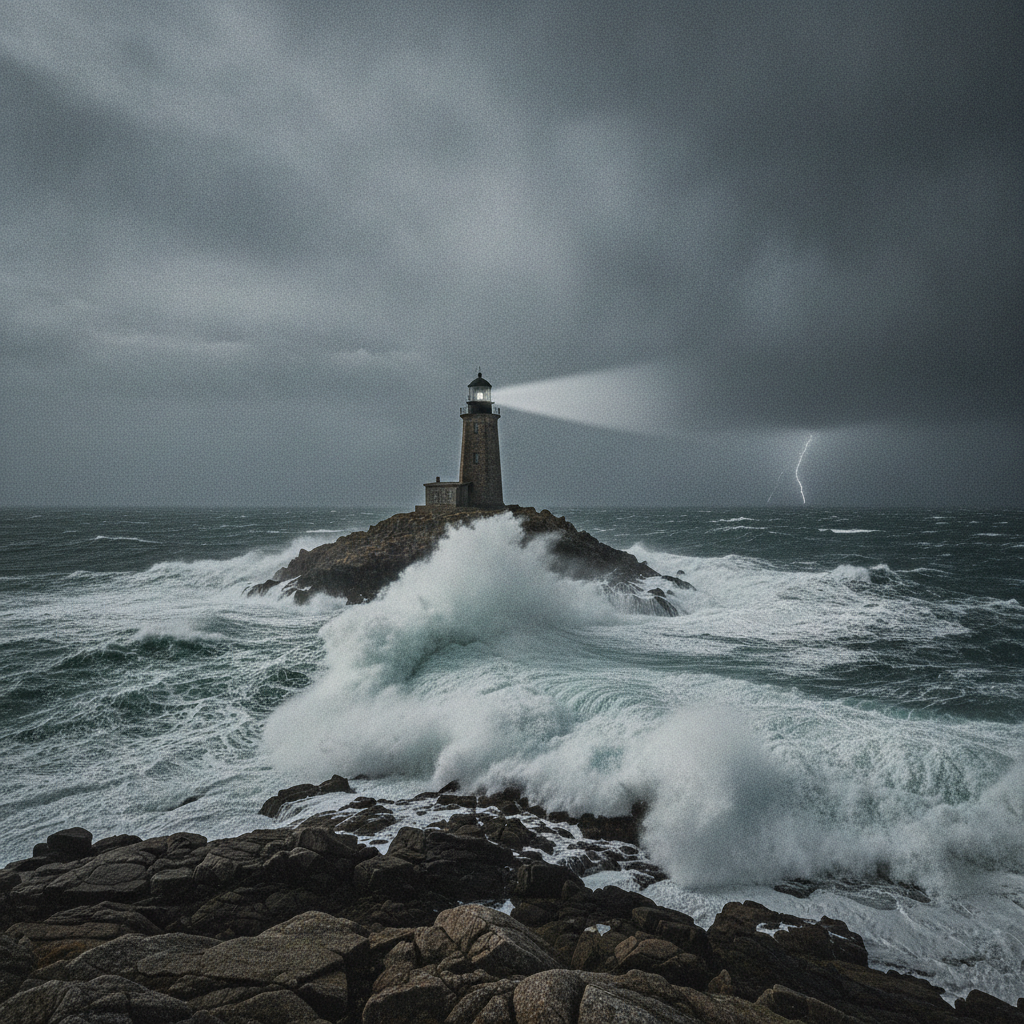
O farol que se apagou: três faroleiros desaparecem de Eilean Mòr
Eilean Mòr é a maior das ilhas Flannan, um punhado de rochas nuas e desabitadas a cerca de dezessete milhas a oeste das Hébridas Exteriores da Escócia. Tem pouco mais de meia milha de comprimento. Em dezembro de 1899 acendeu-se ali, pela primeira vez, um farol projetado pelo engenheiro David Alan Stevenson, e desde aquela noite a estação foi mantida em turnos por faroleiros do Northern Lighthouse Board. Viver na rocha era uma questão de escadas de pedra, gruas de ferro e vigilância constante contra a água. Dois desembarcadouros, um a leste e outro a oeste, permitiam a aproximação de um barco conforme o vento. Cada um tinha uma grua para içar mantimentos pelo penhasco, e a cada um se chegava apenas por longos lanços de degraus, mais de cem, que ziguezagueavam pela face da rocha. O desembarcadouro oeste recebia todo o impulso do Atlântico aberto.
Em dezembro de 1900 havia três homens de serviço. James Ducat, o faroleiro principal, era um homem experiente com família no continente. Thomas Marshall era o segundo auxiliar. O terceiro, Donald MacArthur, não era membro permanente da guarnição. Era um faroleiro ocasional, um morador da região convocado para um turno porque um dos faroleiros efetivos, William Ross, havia adoecido e não podia cumprir sua vez.
Voce usou as suas leituras gratuitas deste mes.
Desbloqueie todos os 208 misterios documentados - em 8 idiomas, sem anuncios.
Acesso completo