Documented

The Zodiac Ciphers: Four Codes, Two Solutions, No Name

2026-06-30 · Unsolved Ciphers · 2 min read

In the winter of 1968, a murderer began stalking couples on the lonely roads of Northern California. Over the following year he shot or stabbed seven young people, killing five, and then did something almost no killer had done before: he wrote to the newspapers. Signing himself Zodiac and marking his letters with a crossed-circle symbol, he claimed as many as 37 victims and wrapped his taunts in code.

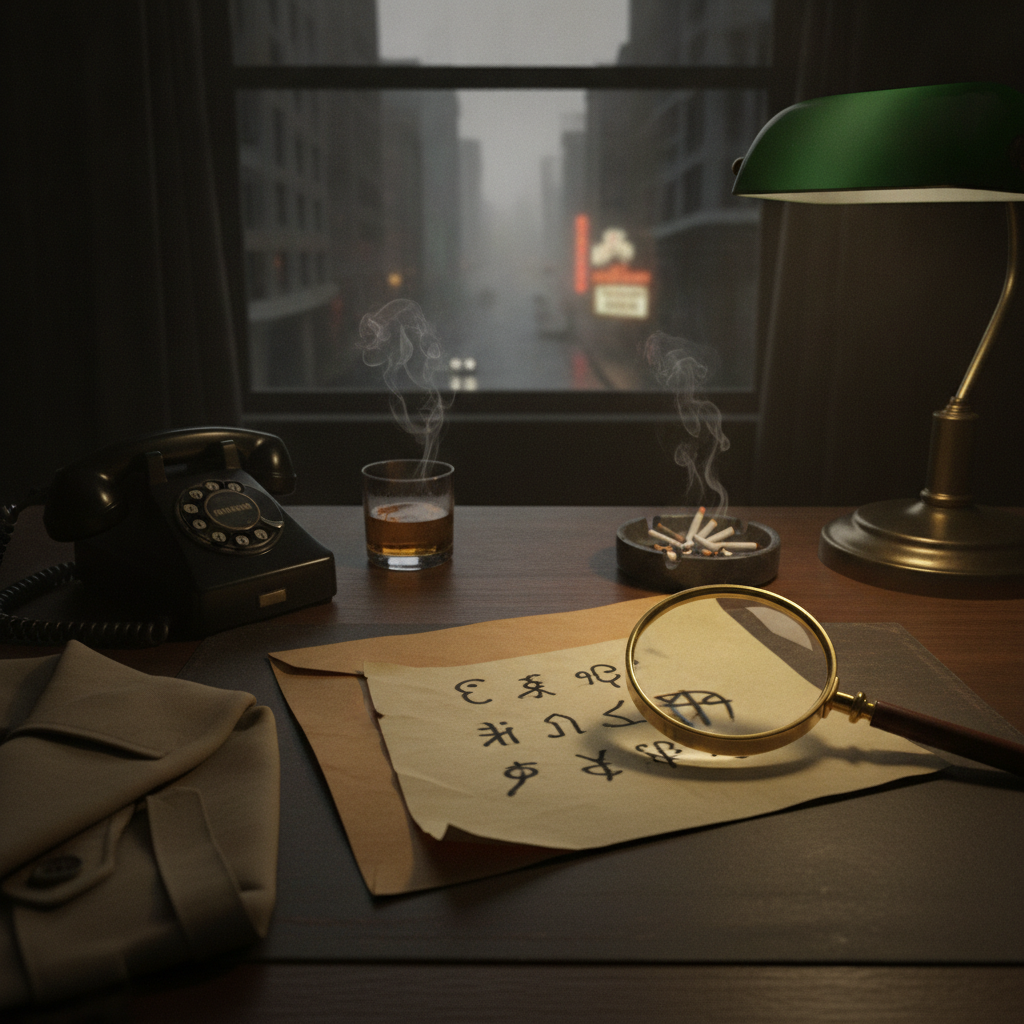
On July 31, 1969, three Bay Area papers — the Vallejo Times-Herald, the San Francisco Chronicle and the San Francisco Examiner — each received a letter containing one third of a 408-character cryptogram, with a demand that it be printed on the front page. Barely a week later, on August 8, a Salinas schoolteacher named Donald Harden and his wife Bettye solved it at their kitchen table. Bettye reasoned that an egotist would open with the word "I" and would boast about killing — and she was right. The decoded message began, "I like killing people because it is so much fun," but the killer kept his promise to hide nothing useful: no name appeared, and the final 18 characters remain unexplained filler to this day.

His next puzzle was crueler. The 340-character cipher mailed to the Chronicle on November 8, 1969, known as Z340, defeated the FBI, the NSA's admirers, and generations of amateur codebreakers. It was not a simple substitution: the text also had to be read along shifted diagonals, a transposition twist no one confirmed for half a century.

Ad

Then, in December 2020, an international trio cracked it: American software developer David Oranchak, Australian mathematician Sam Blake, and Belgian codebreaker Jarl Van Eycke, whose program AZDecrypt tested vast numbers of candidate readings. The FBI publicly confirmed their solution within days. The message mocked the police — "that wasn't me on the TV show" — and declared the killer unafraid of the gas chamber. Once again, it contained no identity.

Two ciphers still stand. The 13-character code from April 1970 teasingly follows the words "My name is," and a 32-character cipher from June 1970 came with a map of Mount Diablo and a claim that it pointed to a buried bomb. Both are so short that many plausible solutions exist and none can be proven, which is exactly why cryptologists consider them effectively unbreakable without new evidence.

The Zodiac case remains open. A private group announced a suspect in 2021, but investigators dismissed the claim, and no charge has ever been filed. What remains unanswered today is the only question that ever mattered: who he was — and whether thirteen unbroken characters really spell his name.


Share this story:

Reader comments (0)