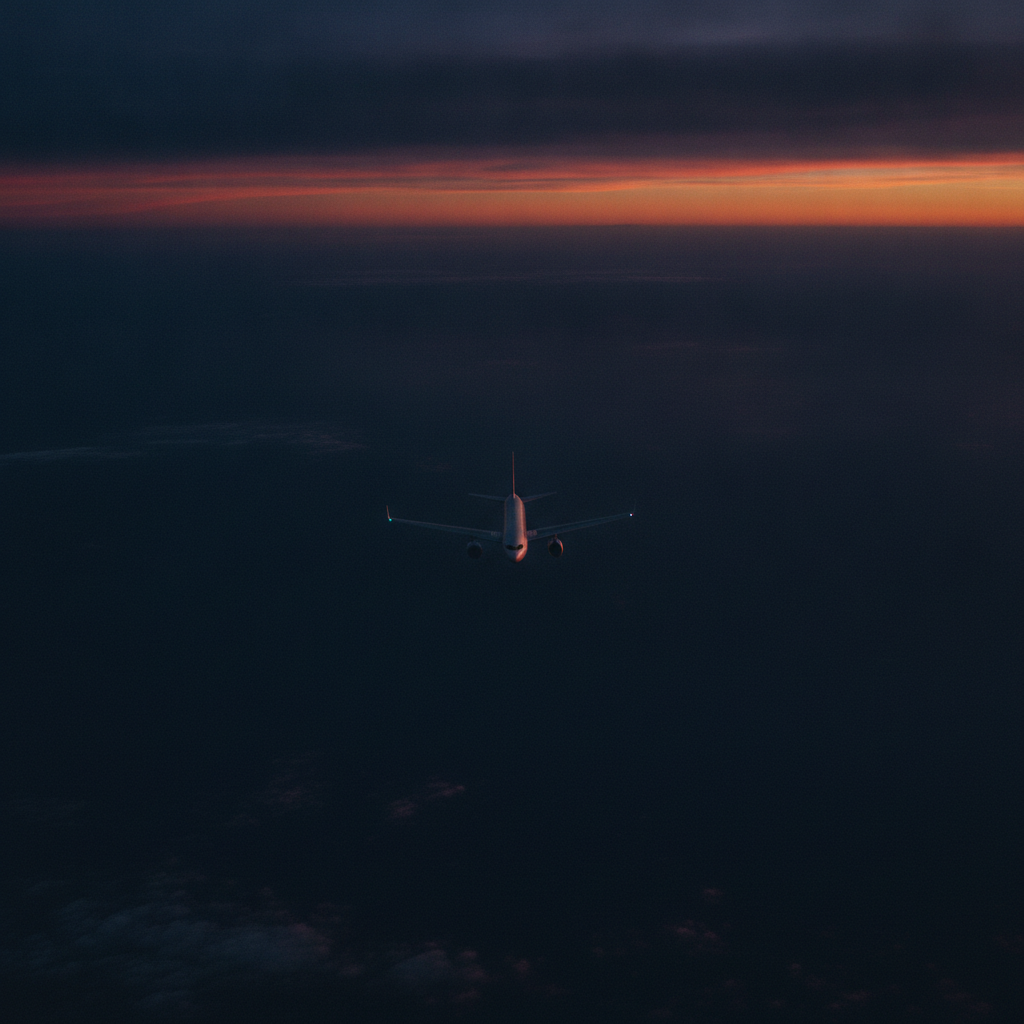
MH370: The Airliner That Vanished — and the Search That Refuses to End
A few minutes past 1 a.m. on March 8, 2014, the crew of Malaysia Airlines Flight 370 signed off with Kuala Lumpur air traffic control: "Good night, Malaysian three seven zero." It was the last thing anyone ever heard from the Boeing 777. Moments later its transponder went dark, and the aircraft — carrying 227 passengers and 12 crew bound for Beijing — disappeared from civilian radar screens.
Military radar later revealed a baffling turn. Instead of continuing northeast, the jet doubled back, crossed the Malay Peninsula and flew up the Strait of Malacca before slipping out of range. The only trace it left was almost accidental: hourly automated "handshakes" between the aircraft and an Inmarsat communications satellite. Using mathematics never before applied to an air crash, engineers showed the plane had flown on for nearly six more hours, ending along a curve known as the seventh arc, deep in the southern Indian Ocean. The final signal came at 8:19 a.m.
What followed was the most expensive search in aviation history. An Australian-led operation scanned 120,000 square kilometers of remote seabed before being suspended in January 2017. In 2018, the American firm Ocean Infinity swept a further 112,000 square kilometers on a no-find, no-fee basis. Both efforts found nothing.
The ocean, however, gave up fragments. On July 29, 2015, a barnacle-encrusted flaperon — a wing control surface — washed ashore on Réunion Island and was confirmed as part of MH370. In the years since, more than 30 suspected pieces of debris have been recovered along western Indian Ocean coastlines, several positively identified, all consistent with drift models pointing back to the seventh arc.
In 2025 the hunt resumed. Ocean Infinity returned under a new agreement with Malaysia worth about 70 million dollars — payable only if the wreckage is found. Its robotic vessels surveyed a fresh high-priority zone until January 23, 2026, once again without result. Malaysia has since extended the contract to June 2027, and the company is expected to return to finish the remaining area of roughly 7,400 square kilometers after fulfilling other commitments.
Malaysia's official 2018 investigation could not determine what happened. It noted that the aircraft's turns were likely made under manual control — but declined to say by whom. Theories of pilot action, hijacking or crew incapacitation remain exactly that: theories, each disputed, none proven.
Twelve years on, the flight recorders still lie somewhere on the ocean floor. Until they are found, the essential questions remain unanswered: where MH370 rests, who or what turned it off course, and why 239 people never arrived in Beijing.