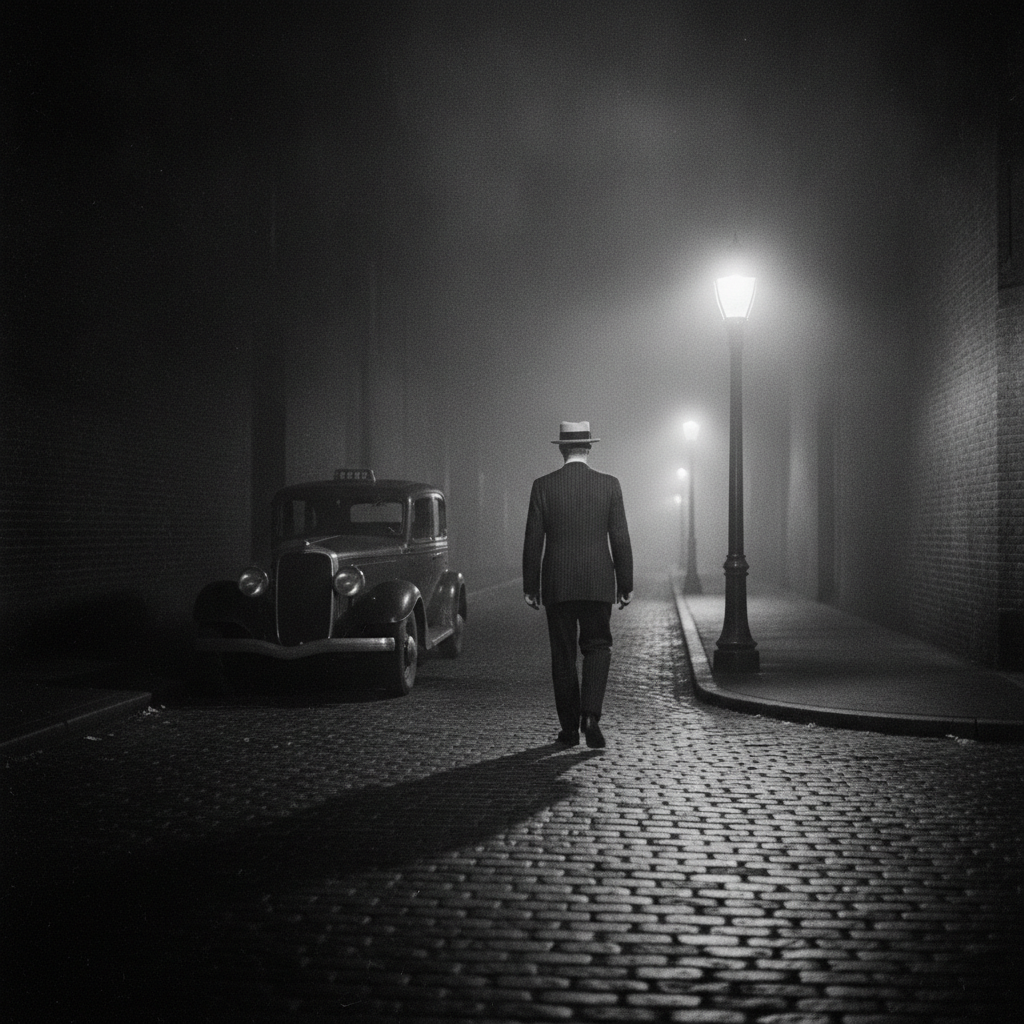
Judge Crater: The Judge Who Walked Out of a Restaurant and Was Never Seen Again
It was a hot evening in New York, on 6 August 1930, a little after 9 o'clock at night.
In a steak restaurant on 45th Street, a few minutes' walk from Times Square, 3 people were finishing dinner. One of them was a man of 41 in a brown suit with thin stripes.
His name was Joseph Force Crater. 4 months earlier he had been made a judge.
The other 2 at the table were a lawyer he knew well and a young showgirl who was a friend of both men.
At about half past 9, they all went out onto the pavement and said goodnight.
That was the last time anyone who knew him ever saw him.
This is the case of Judge Crater, the man American newspapers called "the missingest man in New York." A senior judge walked away from a restaurant in the middle of a busy city and disappeared. No body was ever found. No clear clue was ever found. A grand jury, 16,000 tips and nearly 100 years of theories have not answered one simple question: did he run away, did he take his own life, or was he killed?
A new judge, and a nervous summer
Crater was a lawyer who had risen through the city's political machine. The party organisation that ran New York in those years was famous for corruption. Getting a good job often meant owing someone a favour.
In April 1930, the governor of New York State appointed him to an empty seat on the New York Supreme Court. Despite its name, it is not the highest court. It is the state's main trial court. But it was an important and well-paid post.
That same spring, he did something that would later attract a lot of attention. He sold investments worth about 16,000 dollars, and took another 7,000 dollars out of his bank account.
At the time, there was a rumour in New York that a seat on the bench could be bought for roughly one year of a judge's salary. That rumour was never proven in his case. But a large sum of money, taken out just before his appointment, made people wonder.
That summer, a major investigation into corruption in the city's courts was also beginning. It was led by a respected former judge, and 2 years later it would bring down the mayor of New York.
In July 1930, Crater and his wife were on holiday at their summer cabin by a lake, more than 400 km north of New York. At the end of the month, he received a phone call. He told his wife only that he had to go back to the city "to straighten those fellows out." He did not say who they were.
He went to New York, came back to the lake, and then left again. On 3 August he returned to the city. His wife never saw him again.
The last day
Now the day he disappeared, 6 August 1930, in order.
In the morning, he went to his office at the court. According to his assistant, he spent about 2 hours going through his files. Some papers, the assistant said, he destroyed.
Then he sent the assistant to the bank with 2 cheques. The assistant came back with 5,150 dollars in cash. In today's money, that is roughly 75,000 dollars.
At noon, the 2 of them carried 2 locked briefcases full of files to the judge's apartment. Then the judge told the assistant he could go home for the day.
Later that day, the judge asked a ticket agency for a single seat at that night's show in a Broadway theatre. It was a comedy. The ticket was to be collected at the box office.
In the evening, he went to the restaurant on 45th Street. The lawyer and the showgirl were there, and the 3 of them ate together.
At about 9:30, they stepped outside.
2 versions of the last minute
Here the story splits in 2, and it has never been joined back together.
At first, the lawyer told investigators that the judge got into a taxi outside the restaurant and drove off west along 45th Street.
Later, the lawyer and the showgirl told a different story. Now it was they who got into the taxi. The judge, they said, stayed on the pavement and walked away down the street, towards the theatre.
The theatre was a few minutes' walk away. Someone collected the single ticket at the box office that night. Whether it was the judge, and whether anyone sat in that seat, was never established.
**From this moment on, there is no confirmed sighting of Judge Crater. None. Everything that follows is investigation, rumour and theory.**
Nobody raised the alarm
What happened next is almost as strange as the disappearance itself.
He did not come back to his wife at the lake. She waited. After about 10 days, she began phoning friends in the city. She did not call the police.
The court was on its summer break. On 25 August it opened again, and the judge did not come to work. The other judges were worried. They did not call the police either. They hired private investigators and tried to find him quietly.
The police were officially told only on 3 September 1930. That was almost 4 weeks after the dinner.
By then the trail was cold. In a big city, 4 weeks is a very long time. If there had been a taxi, it could no longer be traced.
When detectives finally went into his apartment, what they found worried them. His luggage was there. His clothes were there, all his suits except the one he had been wearing. His pocket watch and his pen were there.
The 2 briefcases of files that his assistant had helped him carry in were not found.
The biggest search the city had seen
Once the story reached the newspapers, it became a national sensation.
His photograph was printed across the country. People reported seeing him in other cities and in other countries. Over the years, the police received about 16,000 tips. Not one of them led to him.
In October 1930, a grand jury was called. This is a panel of ordinary citizens that hears evidence and decides whether anyone should be charged with a crime. It questioned 95 witnesses and filled 975 pages of testimony. His wife refused to appear before it.
In January 1931, the grand jury gave its answer. In plain words, it said it did not know. The evidence, it wrote, was not enough to say whether Crater was alive or dead, whether he had left of his own free will, whether he was suffering from loss of memory, or whether he was the victim of a crime.
The drawer that had been empty
That same month, January 1931, his wife came back to the apartment in New York.
She opened a drawer in a dresser and found envelopes in it. The police had searched that apartment, and that drawer, and had found it empty.
Inside the envelopes were cheques, about 6,600 dollars in cash, stocks and bonds, and insurance policies on the judge's life worth 30,000 dollars. There was his will. There was a list, in his handwriting, of people who owed him money.
And there was a note to his wife. It was a practical memo, about money and matters she would need to deal with. It ended with 5 words: "Am very weary. Love, Joe."
Nobody ever established who put the envelopes in the drawer, or when. The sources do not even agree on small details, like the exact amount of cash, or whether it was the 20th or the 21st of the month. What is clear is that the drawer was searched and found empty, and later it was full.
Another mystery beside it
In February 1931, a woman was found murdered in New York. She had worked in the city's world of expensive escorts. 5 days before her death, she had met a lawyer from the corruption investigation to talk about police bribes.
Newspapers reported that a jacket belonging to Crater had been found in her apartment. That report was never confirmed. Her murder became a scandal of its own, and it gave the corruption investigation new force. In 1932, the mayor of New York resigned.
The case of the judge stayed exactly where it was.
Closed, but never solved
In 1933, a Hollywood studio released a film called "Bureau of Missing Persons." As a publicity stunt, it offered the judge 10,000 dollars if he would come to the box office and collect it in person. He did not come.
On 6 June 1939, a court declared him legally dead. His wife received about 20,000 dollars from his life insurance.
In 1979, the New York police officially closed the missing person file. It had been open for 49 years.
Then, in 2005, something new appeared.
A woman in New York died at the age of 91. Among her papers was an envelope that was to be opened only after her death. In it, she wrote that her late husband had once told her a secret. According to her, a police officer and his brother, a taxi driver, together with others, had killed the judge on the night he vanished. They had buried him under the boardwalk at Coney Island, the seaside amusement area in the south of the city.
Both men had died long before. Neither was ever charged with anything. Her story was second-hand, written down about 75 years after the event, about people who could no longer answer. Both men must be regarded as innocent.
The police checked. The spot she described is where the New York Aquarium now stands. When that ground was dug up in the 1950s to build the aquarium, no human remains were recorded there.
So this is what is known. Crater ate dinner on 45th Street, walked out onto the pavement, and was carrying a large amount of cash. He left all his clothes and luggage at home. What is not known is where he went next, whether he was alive the next morning, and who filled that drawer.
Conclusions and Open Questions
There are 4 main explanations. None of them fits all the facts.
**He ran away and started a new life.** The evidence: he took a lot of cash, he destroyed papers, and a corruption investigation was starting. The city's police commissioner at the time believed the disappearance had been planned. The problem: he left all his clothes and his luggage. A man planning a new life usually takes something with him. And out of 16,000 tips, not one ever led to him.
**He took his own life, and hid it so it would look like a disappearance.** An American researcher from a magazine that investigates unexplained claims set out this theory in 2023. He points to the note, "Am very weary," to the money left in order for the wife, and to reports that the judge seemed depressed that summer. A disappearance, unlike a suicide, would have spared the family shame. The problem: it explains his mood, but not the body. Hiding one's own body in the middle of a city is very hard, and nothing was ever found.
**He was murdered.** The evidence: he was carrying cash, he may have known secrets about corruption, and he moved in a world where people who knew too much sometimes died. The 2005 letter points the same way. The problem: there has never been a body, a weapon or a proven motive. The 2005 story is second-hand, decades late, and the ground where it placed him was dug up in the 1950s with nothing recorded.
**He lost his memory and wandered off.** The grand jury itself listed this as a possibility. The problem: his face was in every newspaper in the country. A lost man with no memory is usually found and recognised. He never was.
And the questions that remain open:
Did he get into the taxi, or did he walk away?
Who collected the theatre ticket?
Where did the 2 locked briefcases of files go?
And who opened the drawer that the police had found empty, and filled it?
Nearly 100 years later, those 4 questions have exactly the same answer they had in 1931. Nobody knows.