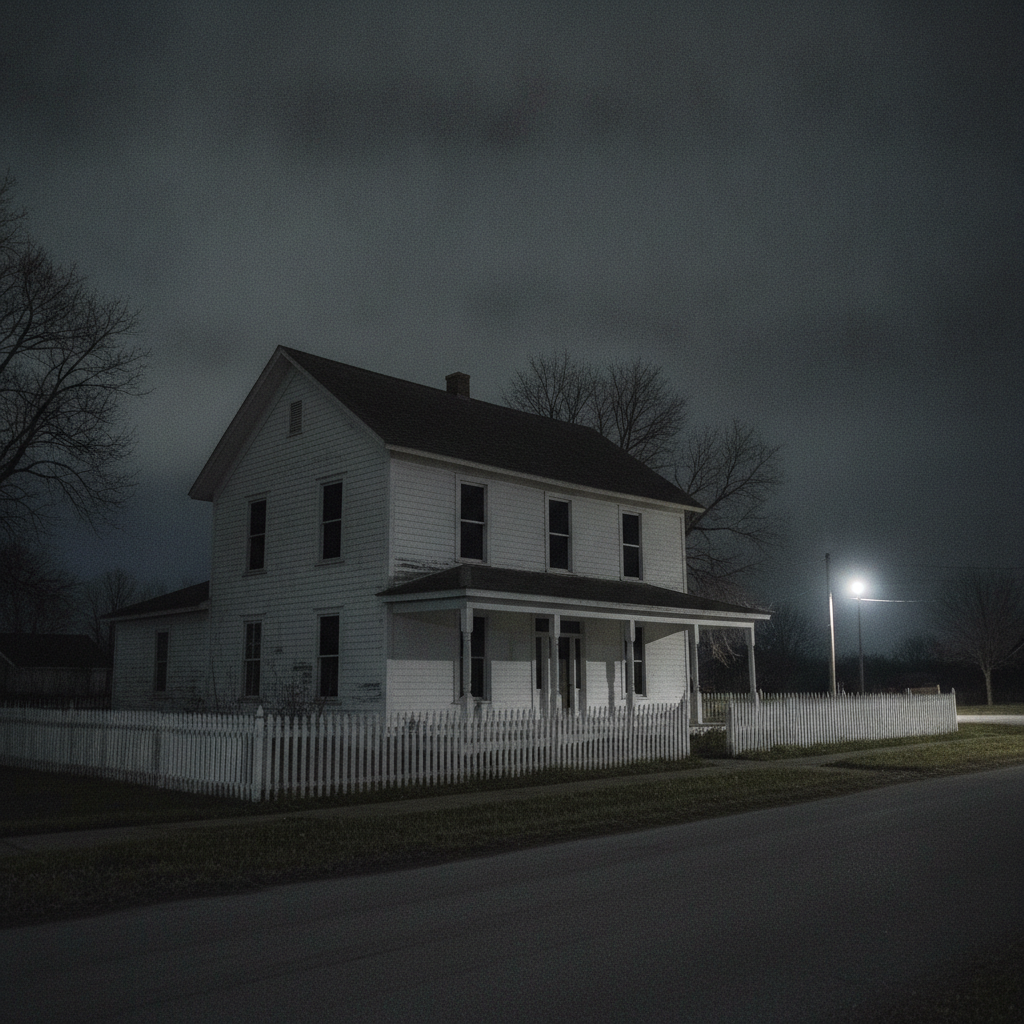
Acht Betten, eine Axt: Die Morde von Villisca, die Iowa nie aufklärte
Villisca, im Südwesten von Iowa, war im Sommer 1912 eine wohlhabende Eisenbahnstadt mit etwa zweitausendfünfhundert Einwohnern. Am Abend des Sonntags, dem 9. Juni, verbrachte die Familie von Josiah Moore die letzten Stunden des Tages in der presbyterianischen Kirche, wo Josiah das Programm zum Kindertag mit organisiert hatte und wo seine vier Kinder auftraten. Mit ihnen gingen zwei Gäste nach Hause, Lena und Ina Stillinger, Schwestern von zwölf und acht Jahren, die darum gebeten hatten, über Nacht zu bleiben, statt in ihr eigenes Haus zurückzukehren. Gegen elf Uhr waren die Lampen in dem weißen Holzhaus in der East Second Street erloschen.
Am nächsten Morgen blieb das Haus verschlossen. Eine Nachbarin, Mary Peckham, bemerkte, dass die Moores nicht zu ihren Arbeiten herausgekommen waren, dass die Rollos unten waren, die Tiere nicht gefüttert und niemand auf ihr Klopfen antwortete. Sie rief Josiahs Bruder Ross Moore an, der mit seinem eigenen Schlüssel kam, das Gästezimmer im Erdgeschoss betrat und sofort wieder herauskam, mit den Worten, sie solle den Sheriff rufen.
Im Inneren lagen acht Tote. Alle waren im Schlaf mit einer Axt am Kopf getroffen worden: Josiah, 43; seine Frau Sarah, 39; ihre Kinder Herman, 11, Katherine, 10, Boyd, 7, und Paul, 5, in den Schlafzimmern im Obergeschoss; und die beiden Schwestern Stillinger im Zimmer im Erdgeschoss. Ein örtlicher Arzt setzte die Todeszeit zwischen Mitternacht und fünf Uhr morgens an. Nichts deutete darauf hin, dass eines der acht Opfer wach gewesen war. Die Waffe war eine Axt, die Josiah selbst gehörte und von seinem eigenen Holzstapel stammte; der Täter ließ sie zurück, die Klinge abgewischt, an eine Wand im Erdgeschoss gelehnt.
Der Zustand des Hauses war so seltsam wie das Verbrechen. Jeder Spiegel war mit Stoff verhängt worden, wie es bei einer Totenwache üblich war, und die Gesichter der Toten waren mit Bettzeug und Kleidung bedeckt. Die Fenster waren mit Schürzen und Röcken verhängt. Eine Petroleumlampe stand mit abgenommenem Glaszylinder und heruntergedrehtem Docht da, als habe derjenige, der sie benutzte, nur mit dem schwächsten Licht arbeiten wollen.
In der Küche fanden die Ermittler einen Teller mit unberührtem Essen und eine Schüssel mit blutigem Wasser, in der sich offenbar jemand die Hände abgespült hatte. Ein knapp zwei Kilogramm schweres Stück Speck lehnte neben der Axt an der Wand, und ein zweites Stück, in ein Handtuch gewickelt, lag auf dem Boden des Schlafzimmers im Erdgeschoss neben dem Bruchstück eines Schlüsselanhängers, der nicht den Moores gehörte. Auf dem Dachboden lagen zwei ausgedrückte Zigaretten. In der Scheune fand sich ein Abdruck im Heu neben einem Astloch, durch das man das Haus sehen konnte.
Fast nichts wurde getan, um den Tatort zu sichern. Die Nachricht raste durch die Stadt, und innerhalb weniger Stunden liefen neugierige Nachbarn durch die Zimmer; nach manchen Berichten gingen bis zu hundert Menschen hindurch, bevor die Nationalgarde von Iowa das Haus versiegelte. Gegenstände wurden angefasst und verschoben. Die Daktyloskopie steckte in den Anfängen und wurde im ländlichen Iowa kaum genutzt, und jede Spur, die der Täter hinterlassen hatte, wurde zertreten und ging verloren. Binnen eines Tages hatte sich der Sachbeweis praktisch aufgelöst.
Zwei Feststellungen überlebten das Durcheinander. Es gab keine Spuren eines gewaltsamen Eindringens, und nichts von Wert fehlte, was Raub ausschloss und nahelegte, dass der Täter entweder eingelassen worden war oder, wahrscheinlicher, sich in das leere Haus geschlichen hatte, während die Familie in der Kirche war, und dort wartete. Und die Axt war Josiahs eigene, was bedeutet, dass der Täter ohne Waffe gekommen war und nahm, was das Haus bot.
Die Ermittlungen zogen sich über Jahre und führten zu keiner Verurteilung. Spürhunde wurden eingesetzt, Privatdetektive angeheuert, und eine Grand Jury tagte mehr als einmal. Andrew Sawyer, ein Landstreicher, der sich in den Tagen nach den Morden auffällig verhalten hatte, wurde entlastet, als ein Sheriff in Osceola bestätigte, dass er ihn wegen Landstreicherei eingesperrt und noch in derselben Nacht in einen Zug aus Villisca hinaus gesetzt hatte. Sam Moyer, mit Josiah Moore durch Familie und Geschäft verbunden, wurde wegen Gerüchten über Spannungen befragt und legte ein Alibi vor. Henry Lee Moore, mit der Familie nicht verwandt, tötete später im selben Jahr seine eigene Mutter und Großmutter mit einer Axt, doch nichts verband ihn je mit Iowa.
Eine Spur reichte bis in die Führungsschicht der Stadt. Frank F. Jones war Senator des Bundesstaates und der mächtigste Geschäftsmann von Villisca, und Josiah Moore hatte für ihn gearbeitet, bevor er ging, um einen konkurrierenden Handel mit Landmaschinen zu eröffnen und die einträgliche John-Deere-Vertretung mitzunehmen. Ein Privatdetektiv namens James Wilkerson von der Burns Detective Agency beschuldigte Jones öffentlich, einen Mann namens William Mansfield, genannt Blackie, für die Ermordung der Moores bezahlt zu haben. Lohnlisten und Reiseunterlagen verorteten Mansfield in der Mordnacht in Illinois. Eine Grand Jury lehnte eine Anklage ab, Mansfield verklagte Wilkerson wegen Verleumdung und gewann 2.225 Dollar, und eine spätere Zivilklage von Angehörigen der Moores gegen Jones scheiterte. Gegen Jones wurde nie Anklage erhoben.
Der einzige Mensch, der je vor Gericht stand, war Reverend Lyn George Jacklin Kelly, ein in England geborener Wanderprediger, der wegen eben jener Kindertagsfeier in Villisca gewesen war, die die Moores besuchten, und der die Stadt mit einem frühen Zug verließ, gegen 5:19 Uhr am Montagmorgen, Stunden bevor die Leichen gefunden wurden. In den folgenden Jahren schrieb er Briefe an die Ermittler und an die Familien der Opfer. 1917 wurde er verhaftet, und nach einem langen Verhör gestand er und beschrieb eine Stimme, die ihm befohlen habe zu töten. Kurz darauf widerrief er und erklärte, die Aussage sei ihm abgepresst worden. Er wurde zweimal vor Gericht gestellt. Die erste Jury kam zu keinem Urteil, Berichten zufolge elf zu eins für Freispruch, und die zweite sprach ihn 1918 frei. Kelly hatte eine dokumentierte Vorgeschichte psychischer Erkrankung.
Niemand wurde je wegen der Morde verurteilt, und der Fall gilt formal weiterhin als offen. Das Haus der Moores steht noch in der East Second Street, in den Zustand von 1912 zurückversetzt und heute als Museum geführt, und die Stadt lebt seit über einem Jahrhundert mit dieser Frage.
Schlussfolgerungen und offene Fragen
Das Dokumentierte ist schmal. Acht Menschen wurden zwischen Mitternacht und fünf Uhr morgens in einem Haus getötet, mit einer Waffe, die vom Grundstück selbst stammte; nichts wurde gestohlen; niemand brach ein; und die Sachbeweise wurden innerhalb von Stunden zertreten und vernichtet. Alles darüber hinaus ist Deutung, und keine Deutung wurde je vor Gericht bewiesen.
Die Theorie des Staates selbst war Kelly. Die Anklage stützte sie auf seine Anwesenheit in der Stadt, seine Abreise im Morgengrauen, seine spätere Beschäftigung mit dem Fall und schließlich sein Geständnis. Ihre Schwäche ist, dass das Geständnis auf ein langes Verhör folgte, dass sich die Einzelheiten von Fassung zu Fassung änderten und dass zwei verschiedene Jurys sich weigerten, darauf hin zu verurteilen. Kelly war zudem ein kleiner, gebrechlicher Mann, was sich schwer mit acht Axtmorden verträgt. Er wurde freigesprochen, und der Vorwurf gegen ihn bleibt unbewiesen.
Die Auftragsmordtheorie stammt von dem Privatdetektiv James Wilkerson und wurde jahrelang in der Lokalpresse betrieben. Sie ist die einzige Theorie mit einem klaren Motiv, der geschäftlichen Rivalität zwischen Frank F. Jones und Josiah Moore. Ihre Schwäche liegt bei den Beweisen: die Unterlagen, die Mansfield nach Illinois setzten, wurden nie widerlegt, eine Grand Jury lehnte eine Anklage ab, und ein Gericht befand die Beschuldigung für verleumderisch. Gegen Jones wurde nie Anklage erhoben, und die Behauptung gegen ihn muss als ein Vorwurf gelten, der juristisch gescheitert ist.
Die Theorie mit dem heute größten Zuspruch kam von außerhalb der Kriminologie. In ihrem Buch The Man from the Train von 2017 argumentierten der Statistiker Bill James und seine Tochter Rachel McCarthy James, Villisca sei Teil einer Reihe von Familienmorden gewesen, die ein einzelner reisender Täter um 1912 entlang amerikanischer Bahnlinien beging. Sie verweisen auf wiederkehrende Merkmale: ganze Haushalte im Schlaf getötet, die stumpfe Seite der Axt benutzt, Spiegel und Fenster verhängt, die Waffe am Tatort zurückgelassen und Häuser in Fußnähe einer Bahnstrecke. Ihre Schwäche ist, dass sie ein Muster benennt und keine Person: der Mann, den sie beschreiben, wurde nie gefasst oder sicher identifiziert, und die Verbindungen zwischen den Fällen sind indirekt.
Manche vertreten eine einfachere örtliche Erklärung: der Täter sei jemand aus Villisca gewesen, der das Haus kannte, wusste, dass die Familie an jenem Sonntag lange in der Kirche sein würde, und wusste, dass ihm die ganze Nacht ungestört blieb. Eine Theorie besagt, dies erkläre das unhastige Vorgehen am Tatort besser als ein Fremder. Über das Argument hinaus ist sie nie gelangt, weil kein örtlicher Verdächtiger je durch Beweise mit dem Haus verbunden wurde.
Ungeklärt bleibt vor allem das Gegenständliche. Niemand hat die verhängten Spiegel und Gesichter erklärt, die auf kleinster Flamme brennende Lampe, die beiden Speckstücke, die Zigaretten auf dem Dachboden oder das Bruchstück des Schlüsselanhängers, das nicht zum Haushalt gehörte. Es gibt auch keine anerkannte Erklärung dafür, wie acht Menschen, sechs davon Kinder, in einem kleinen Holzhaus getötet werden konnten, ohne dass ein Nachbar in einer warmen Nacht bei offenen Fenstern etwas hörte.
Die offenen Fragen sind noch immer die von 1912. Wer wartete in der Scheune, und wie lange? Waren die Schwestern Stillinger, die sich erst an jenem Abend zum Übernachten entschlossen, ein Zufall des Zeitpunkts oder Teil des Grundes? Und ließe sich davon heute überhaupt etwas beantworten, wo die Spuren verschwunden waren, bevor der erste geschulte Ermittler eintraf? Villisca ist nicht ungelöst, weil der Fall zu kompliziert gewesen wäre. Er ist ungelöst, weil die einzige Gelegenheit, ihn zu lösen, an einem einzigen Morgen verbraucht wurde.